

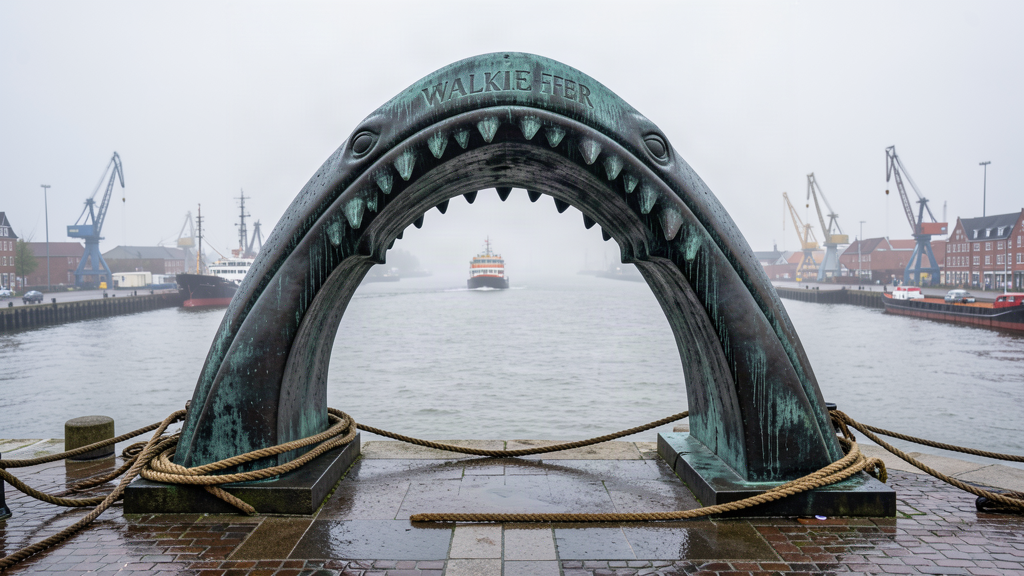
Most people who know Bremen at all know the Marktplatz: musicians, the Roland, a crowd that has already decided the city ends at the Schnoor. Vegesack sits roughly twenty-five kilometers downriver, where the Lesum slides into the Weser and the air smells less like roasted almonds and more like wet rope and ferry diesel. I come here when I want the river without the square’s performance. The first thing I look for is not a café or a museum ticket. It is the bronze Walkiefer at the Utkiek, a whale jaw raised into an arch at the old lookout, and the open water beyond it toward Lemwerder.
Stand under that arch on a grey weekday and you get the whole layout at once. Ship traffic moves on the main stream. A ferry works the crossing. Behind you, Alte Hafenstraße curves into restored houses, pubs, and the Havenhaus that once housed the harbor master. Ahead, the Weser is wide enough that the rest of the city starts to feel optional.
Oldest basin, working edges
Vegesacker Hafen is not a themed basin invented for weekend photos. Between 1618 and 1623 Bremen and the Haus Seefahrt built Germany’s first artificial river harbor here because the Weser upstream kept silting and deep ships needed a winter berth. For roughly a century and a half the basin mattered for export, Arctic whaling, and shipbuilding. When the river silted further and Bremerhaven took the deep-water trade, Vegesack shifted into yards and repair. Lürssen still keeps a presence near the Höft. Out on the water you still hear workboats and yard noise more than souvenir chatter.
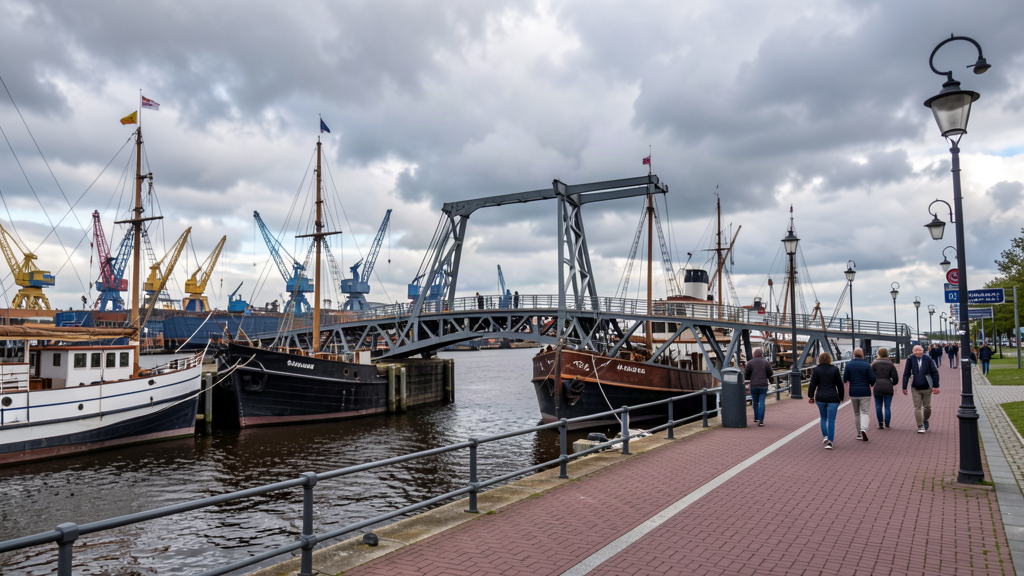
Today the basin holds museum ships and leisure craft. A steel pedestrian Klappbrücke crosses the entrance and links the Utkiek side to what used to be the yard headland. Recker’s bronze figures on the north quay stare through binoculars as if they still expect a launch. The old Speicher holds local history rooms and galleries. Walk the quay slowly. Count masts. Notice how basin water sits quieter than the Weser outside the mouth.
I like the harbor best mid-morning on a weekday, before lunch tables fill. The green market near the “Hafenwald” on certain days adds crates and chatter without turning the place into a festival. Two hours? Do the circuit: Utkiek, Walkiefer, Havenhaus façade, bridge, north quay, back. A half day stretches into the Maritime Meile, roughly a nautical mile of promenade, park, and water edge that locals use the way other towns use a central park.
Utkiek, Alte Hafenstraße, Stadtgarten
Utkiek is Low German for lookout, and the name still fits. From the southern end of Alte Hafenstraße you look Weser-up and Weser-down: Schönebecker Sand, the Lesum mouth, Lemwerder’s ferry slip, yards across the water. Turn around and you face Goden Wind, Fährhaus, Havenhaus, and old window glass that has taken decades of weather.
The Walkiefer is a bronze cast now. The original bone arch weathered out and was replaced in 1987, but it still works as a gate. People pose under it, yes. More interesting are the ones who walk through with shopping bags, because this is still a neighborhood corner. A whale-tail sculpture further along the promenade nods to the Grönlandfahrer history without a wall of plaques. Vegesack once sent whalers north; petroleum ended that economy; the bronze stays as a blunt local marker people walk past on errands.
A few steps inland, Alte Hafenstraße keeps the human scale. The Overbeck-Museum sits in the listed Altes Packhaus / Kito-Haus at Alte Hafenstraße 30, dedicated to Fritz Overbeck and related Worpswede-circle work. Go when you want paint and quiet rooms after too much river wind. Duck in, look hard at a few canvases, step back out to wet air.
Stadtgarten Vegesack terraces toward the water with plantings that still echo Albrecht Roth’s early-19th-century botanical garden. Benches, slopes, ship silhouettes through trees, dog walkers who know which path stays less muddy after rain. Pair the garden with the promenade and you get the easy middle of a Vegesack day: a few hours that do not need a ticket or a last call.
Shipyards across the stream, ferry as transport
Across the Weser, Lemwerder’s yard skyline reminds you this corridor still builds and fits boats. Abeking & Rasmussen and other yard names sit in local talk the way cathedral names do in other towns. Watch a workboat cut a wake. Listen for yard noise on a clear morning. The Vegesack–Lemwerder ferry is a short practical crossing, not a staged attraction, and it gives the best cheap view of the waterfront from mid-stream. Ride it once with no agenda. Get off, walk a block, ride back. The river starts to feel like a street instead of scenery.
Vegesack’s museum harbor fleet is the everyday ship story: timber, iron, deck gear you can study when access allows. Respect ropes and private decks. Look at how the ships are put together; leave the climbing for people with tickets and hard hats.
Evenings settle around the Utkiek pubs. Wind comes up. German and Platt get louder. You can drink a pils facing the dark water and call it a full night without hunting another quarter of town.
Places to Stay
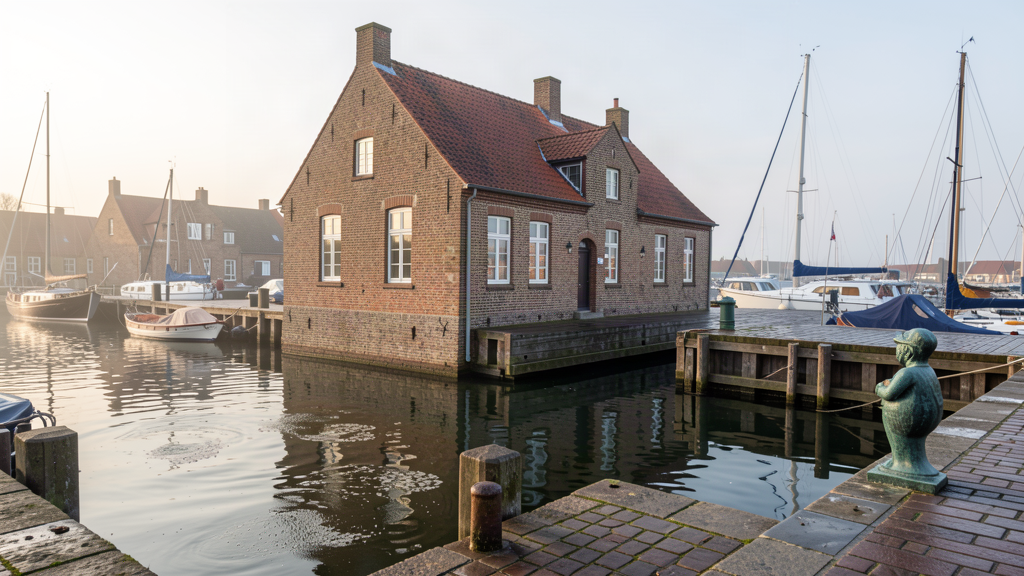
Hotel Havenhaus (budget-friendly, historic harbor house) Am Vegesacker Hafen 12, 28757 Bremen The old harbor master’s stone house from the 1640s, still right on the basin entrance. Rooms are simple; you sleep steps from the Walkiefer, the ferry slip, and Alte Hafenstraße. Fine when you travel light and care more about morning quay light than spa floors.
Hotel Strandlust Vegesack (mid-range, Weser front) Rohrstraße 11, 28757 Bremen A longer-established waterfront stay a short stroll from the Utkiek cluster, with many rooms facing the river and a full house restaurant when you do not want to hunt dinner in the rain. Useful for a two-night pause: promenade and Stadtgarten by day, ship traffic by evening. Book river-facing if you can.
ATLANTIC Hotel Vegesack (upscale comfort, near the harbor) Sagerstraße 20, 28757 Bremen Fuller service a few minutes from the basin and Bahnhof, with quiet modern rooms and reliable breakfast when you want less creak-of-history at night. Close enough to the maritime core that you are not stuck on a highway strip toward the A27. Good base if one traveler wants the Utkiek pubs and another wants a proper desk.
Weekdays outside summer school holidays keep rates saner. A Tuesday by the harbor often costs less fuss than a packaged weekend sold as “Bremen North.”
Restaurants and food
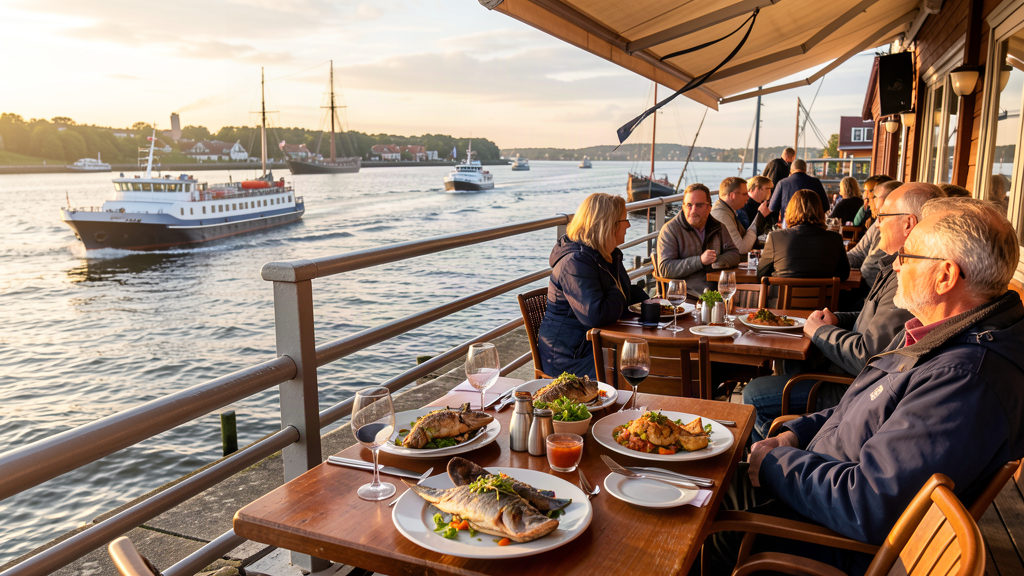
Goden Wind Rohrstraße 5, 28757 Bremen Maritime plates and a terrace edge on the Utkiek strip. Locals use it for birthdays and ordinary Saturdays alike. Come for fish when the kitchen is on, sit outside if the wind allows, and watch the ferry work while you eat. Reservations help on fair-weather evenings; lunch can be kinder for walk-ins.
Fährhaus Vegesack Am Vegesacker Hafen 14, 28757 Bremen The cult Kneipe at the water with the view Bremen-Nord people defend in arguments. Beer, grog when the weather turns mean, and a room where you stay longer than planned because the Weser keeps moving. No tasting menu. Order, sit, watch the crossing, and leave when you are ready.
Strandbude at Hotel Havenhaus Am Vegesacker Hafen 12, 28757 Bremen Casual dining tied to the Havenhaus, with Weser sightlines and a menu that works when one person wants fish and another wants something simpler. Kitchen evenings run roughly 18:00–21:30 Monday–Saturday in normal seasons; confirm before you count on a Monday plan. Terrace tables are the prize when the light holds.
Bakeries near the station handle practical hunger after the RS1 ride. Drink local pils or a simple coffee. Save the elaborate cocktail hunt for somewhere that needs one.
Getting there and around
From Bremen Hauptbahnhof, the RS1 toward Vegesack / Farge drops you at Bahnhof Vegesack in about twenty minutes. Harbor, Utkiek, and Alte Hafenstraße are a short walk downhill from the station and bus hub. VBN tickets cover the train and city buses (90s lines are the ones you will hear named). Drivers take the A27 to Bremen-Nord, then A270 toward Vegesack Hafen; park once and walk. The Lemwerder ferry is foot- and bike-friendly for the short hop across.
Inside the maritime core you barely need wheels. The Maritime Meile, Stadtgarten, and basin loop fit on foot if you are willing to feel wind. Shoes with grip help on wet stones at the Utkiek. Even in summer, pack a layer. The Weser does not read your forecast app.
I leave Vegesack the way I arrived: under the Walkiefer for one more look at the water, then uphill to the train. Bremen’s center will still be there with its musicians and polished stone. The bronze jaw and the ferry wake are what I take home.
