
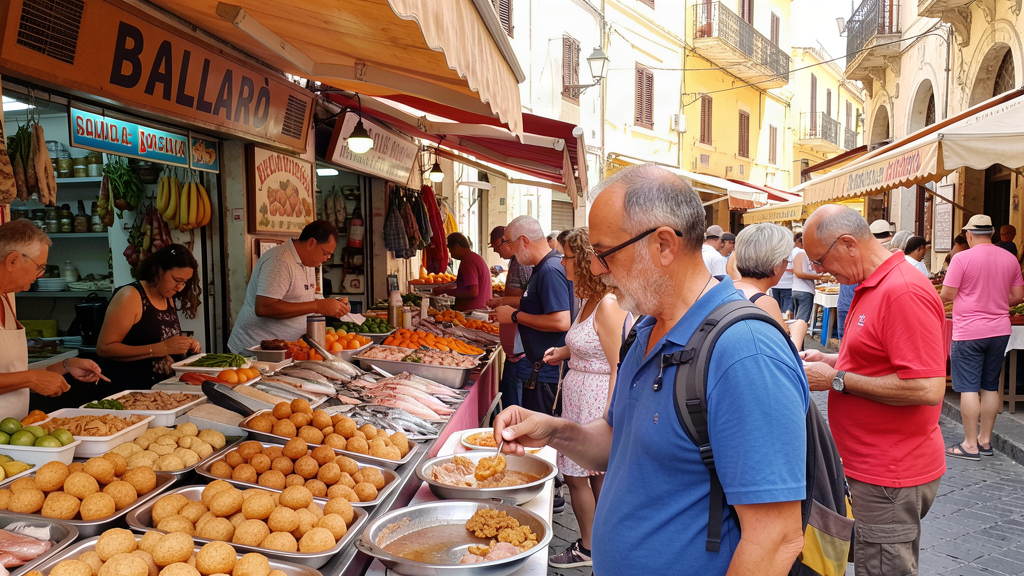
Panelle oil and swordfish ice at Ballarò in Palermo
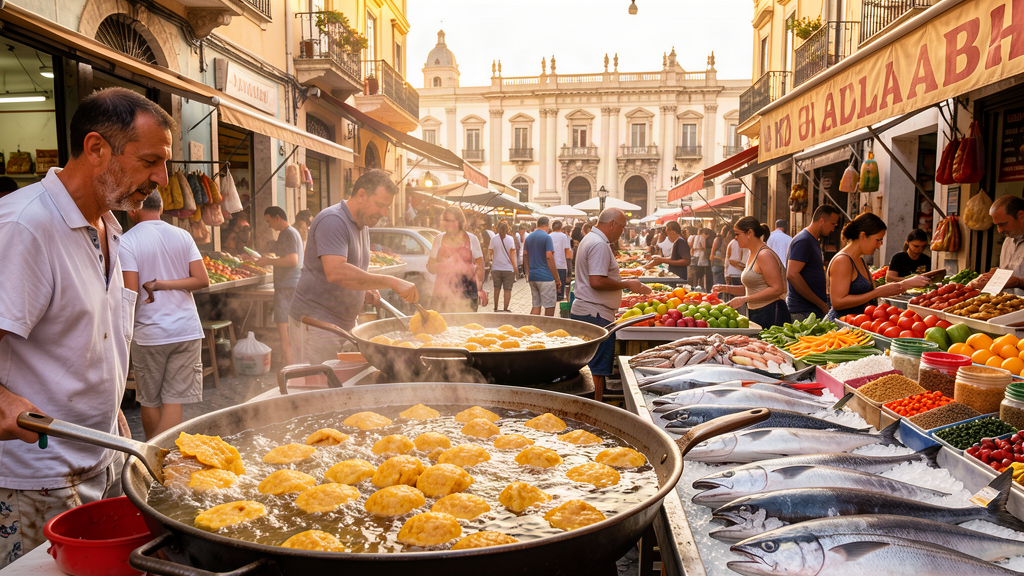
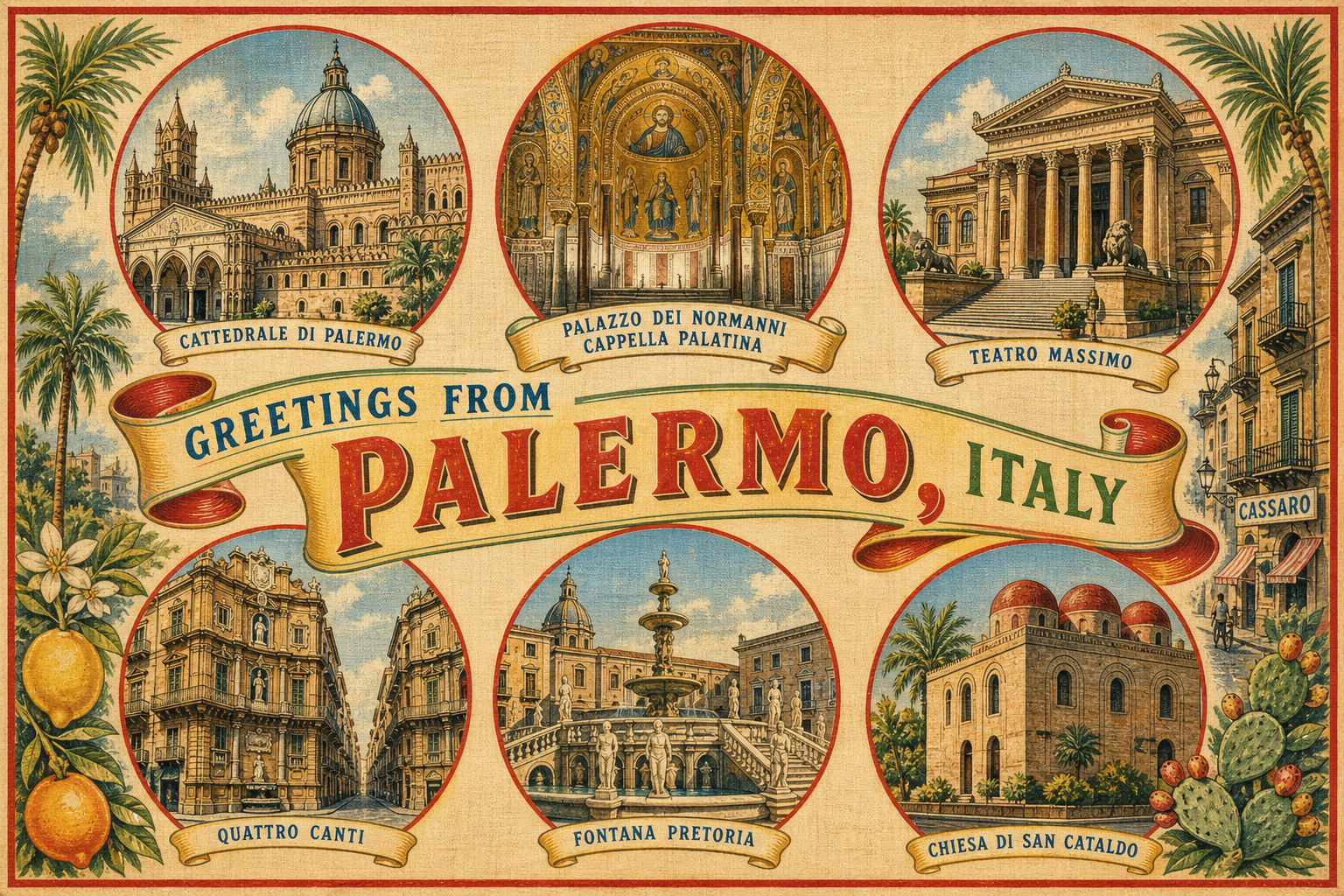
Palermo does not ease you in. You land in a city that still smells like diesel, orange peel, and hot oil before you have found your street. The postcard version sells Norman mosaics and a waterfront promenade. Fair enough. What holds me is older and noisier: the Arab-period markets that still feed neighborhoods, not itineraries. Ballarò is the one I return to first, south of the Quattro Canti, stitched through Albergheria, where swordfish sits on ice under tarps and chickpea fritters leave a film on your fingers that no napkin fully erases.
I do not come to “do” Palermo. I come to walk until the market’s morning pitch softens into afternoon chairs, then let the city argue with itself after dark.
Start where the stalls still shout
Ballarò runs through the Albergheria quarter along Via Ballarò and the lanes that peel toward Piazza Carmine and the Carmine Maggiore. Come between nine and one if you want the market as a working system rather than a photo set. Vendors call prices like sports commentary. Plastic crates of tomatoes lean against baroque doorways that look one hard winter from collapse and somehow never do.
This is not a polished food hall. Pavement is uneven. The air runs hot with frying oil, citrus, and fresh fish. Buy something you can eat standing: a paper cone of panelle (thin chickpea fritters, salt, maybe lemon) or a square of sfincione, the spongy onion-and-tomato focaccia Palermo treats as breakfast. Arancine come stuffed and heavy. Eat one if you skipped a real meal, not as a polite nibble.
Watch how locals shop. They point, pay, move. If someone offers cheese or olives, take it, then buy or walk on. The market has been here in some form since Arab rule. It does not need your wonder to continue. When the heat climbs, step into a church porch, then go back. The second pass is when you notice the knife work on the fish tables.
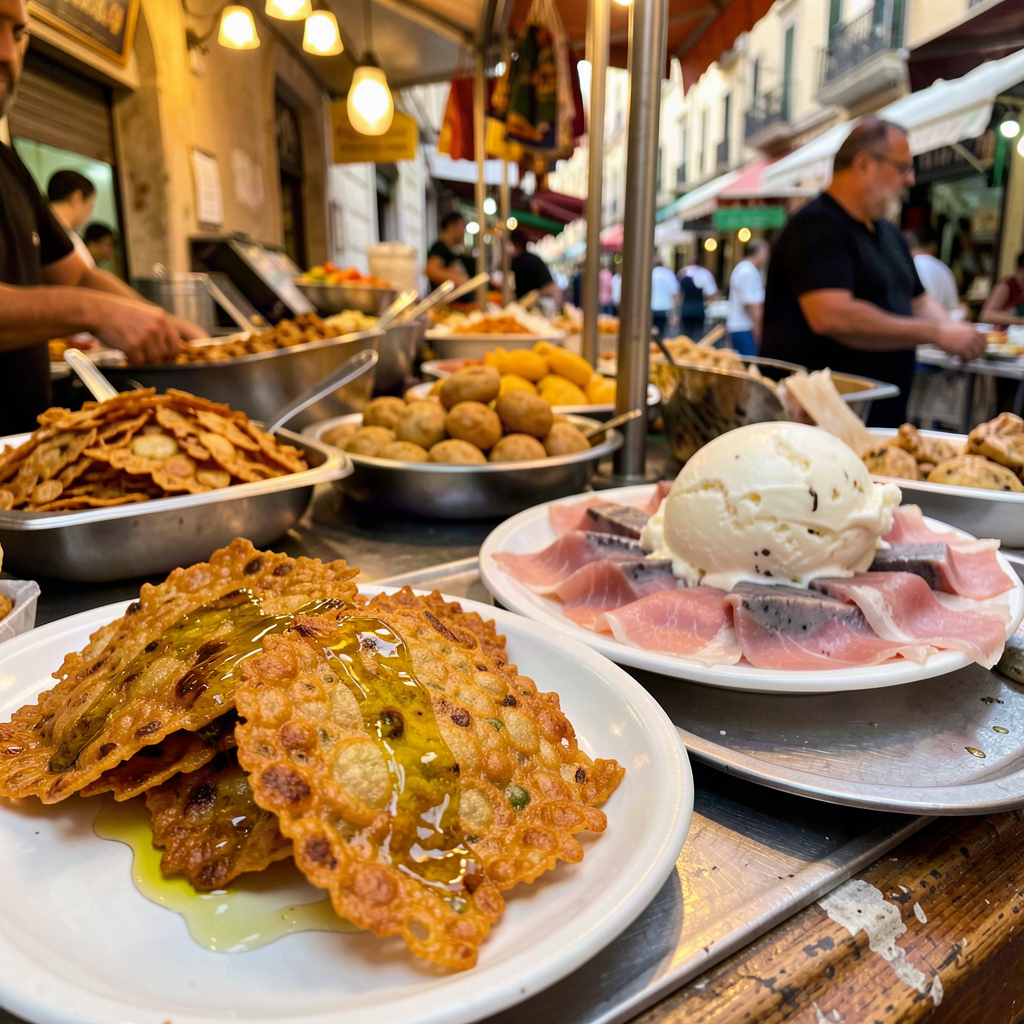
Capo for lunch heat, Vucciria after dark
Il Capo sits northwest of the center, near the Teatro Massimo orbit, along Via Sant’Agostino and the surrounding alleys. After Ballarò’s morning intensity, Capo makes a good second act. Still a real market, still fryers going hard, a little easier to thread with bags. This is where I often stop for stand-up lunch: more panelle, crocchè, maybe a panino with spleen if you are ready for pani ca meusa. It is rich, soft, and unapologetic. Order simply. Do not over-explain.
Vucciria, once the market everyone named first, is thinner by day now. Some stalls, more empty tarps, a reputation that outruns the morning trade. Come back after nine at night if you want the other Vucciria: drinks, music, people packing the lanes around Piazza Caracciolo until the stones feel sticky. Keep your bag dull and close. Leave when the fun starts to feel like obligation.
Borgo Vecchio, toward the port side of the old fabric, still runs as a neighborhood market with fewer camera straps. Useful if you want vegetables without commentary.
Walk the stone grid without a checklist
Palermo’s historic center is overlapping quarters more than a single old town. From Ballarò drift toward the Quattro Canti, the octagonal crossroads of Via Maqueda and Corso Vittorio Emanuele, then east into La Kalsa, where Spanish-era palazzi, battered facades, and slow restoration jobs sit in the same block. Piazza Marina’s big ficus trees throw real shade. The waterfront at Foro Italico is a straight shot when you need air that is not market air.
I like the stretch near Porta Felice and Via Butera when the light goes sideways in late afternoon. Palazzo facades pick up color. Scooters negotiate tourists who stop mid-street for photos. You do not need a ticketed highlight every hour. The point is texture: laundry lines, votive shrines, a bar with three plastic tables and no English menu.
If you want one paid interior tied to how this city layers itself, the Palatine Chapel inside the Norman Palace is still the one that stops conversation. Gold mosaic, Arab craftsmen’s geometry under Christian kings. Go early or book ahead in high season. Then walk back toward ordinary streets before the glow makes everything else feel like a letdown. The markets will put you back in your body.
Tables that feed the day, not the feed
Street food will try to own your itinerary. Let it for breakfast and a snack. Sit down when your legs ask.
Trattoria Ai Cascinari, Via D’Ossuna 43/45, 90138 Palermo PA, sits a short walk from the old center toward the Capuchin side. Family cooking, pasta that tastes decided, rooms that fill with people who live here. Book when you can. Closed days shift, so confirm.
Trattoria Al Ferro di Cavallo, Via Venezia 20, 90133 Palermo PA, has been feeding the center since the 1940s off the Via Roma axis. Classic plates, brisk service, the next table’s order as useful intelligence. Good after Capo when you want pasta without crossing half the city.
Osteria Mangia e Bevi, Via Alessandro Paternostro 87, 90133 Palermo PA, works the Kalsa / San Francesco pocket. Compact, colorful, Sicilian dialect on the boards, portions that respect hunger. Nearby, Antica Focacceria San Francesco at Via Alessandro Paternostro 58, 90133 Palermo PA, is the historic counter-and-table hybrid facing the church: ground-floor snacks and upstairs plates. Tourist-known, still useful for pani ca meusa or a quick sit. Treat it as a practical stop, not a pilgrimage.
Places to stay
Sleep inside the walking city if you can. A car in the centro is a negotiation you do not need every morning.
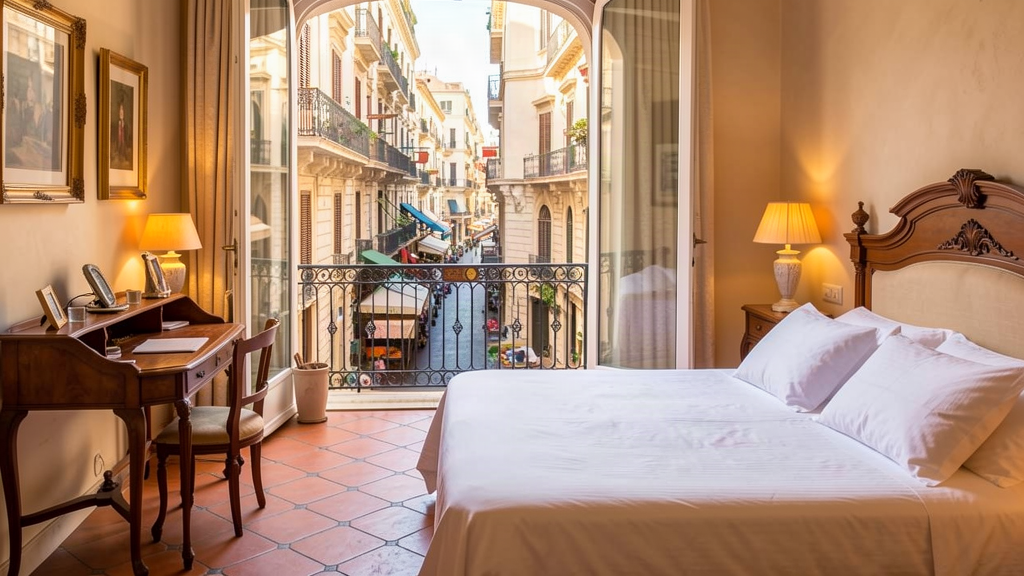
Budget: Sui Tetti di Balarm Boutique Rooms, Piazza del Ponticello 7, 90134 Palermo PA. A handful of rooms in Albergheria, near Ballarò and the old Kemonia river memory the square still names. You hear the market when it is awake. You walk to almost everything that matters for a long weekend. Book early. Small inventory disappears in shoulder season too.
Midrange: Palazzo Brunaccini Boutique Hotel, Piazzetta Lucrezia Brunaccini 9, 90134 Palermo PA. Seventeenth-century bones behind Ballarò, short walk to Via Maqueda and the UNESCO cluster, modern rooms inside the old shell. Useful if you want a real front desk and a quiet night after market mornings. GPS sometimes wants Via Ponticello. Follow local signs the last block.
Splurge: Grand Hotel et des Palmes, Via Roma 398, 90139 Palermo PA, for grand-hotel gravity on the main commercial spine, or Hotel Porta Felice & Spa, Via Butera 45, 90133 Palermo PA, if you prefer Kalsa stone, rooftop breakfast air, and evening walks toward Porta Felice and the Foro. Both cost for location and fabric. Neither replaces a morning at the stalls. They just make the walk back softer.
Ask about noise before you choose a room over a piazza. Palermo does not whisper after ten.
Getting here and moving around
Falcone–Borsellino Airport (PMO) sits west of the city. Buses and shared transfers run to the center. Taxis are straightforward if you land late. Palermo Centrale puts you near the Albergheria edge. Ballarò is a walk, not a project. Trains link the island’s north coast and interior on southern schedules. Build slack, especially on Sundays.
Inside the historic quarters, walk. Buses help for longer hops. Apps help more than printed maps once streets kink. Scooters own the corners. A rental car is for day trips (Monreale’s cloister up the hill, the cape toward Mondello, a winery inland), not for nightly parking dramas beside your B&B.
Spring and autumn keep the markets vivid without the full August melt. July and August push everyone toward the water and thin your patience in midday lanes. Winter empties some terraces and keeps the fryers honest. Call ahead for kitchen hours around holidays.
A day that tastes like oil and ice
Morning: coffee standing up, then Ballarò while the fish ice still holds and the panelle oil is clean. Eat in the lane. Buy fruit you will actually finish. Drift past Carmine without turning it into a scorecard.
Midday: walk the Quattro Canti grid toward Capo or cut east into Kalsa for shade under Piazza Marina’s trees. Lunch at Ferro di Cavallo or a counter panino if the heat wins. Rest. Museum heroics in early afternoon sun are optional and often regretted.
Late afternoon: one interior that matters (Palatine Chapel if you booked, or a lesser church whose door happens to be open), then Via Butera light and a slow circuit that ends near a bar with no theme. Evening: Ai Cascinari if you reserved, Mangia e Bevi if you are already in that pocket, or Vucciria only if you still have legs and want noise.
Monreale can take a morning when you need gold mosaic and hill air. Mondello can take a swim day when the centro feels like a closed fist. What I keep from Palermo is plainer than either: chickpea batter hitting oil at Ballarò, swordfish eyes still clear on the ice, and a city that feeds itself in public every morning whether or not anyone is watching with a camera.
