
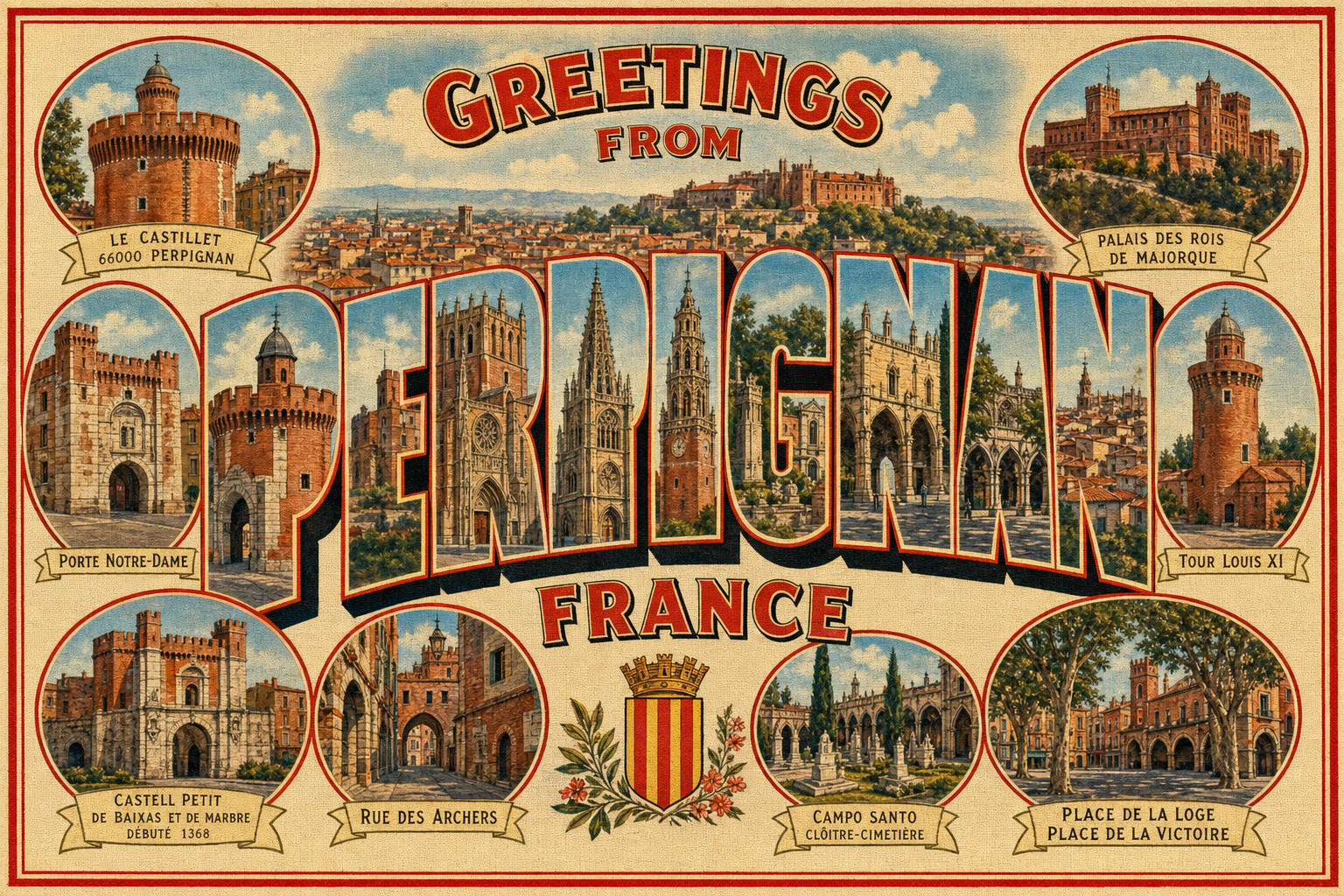
Perpignan sits where French street signs and Catalan flags share the same lamp posts. Most travelers only stop long enough to change trains for Collioure or Spain. That skips a working Roussillon capital with brick towers, a short urban river, markets that still sell anchovy paste by the jar, and evenings when Place de la République fills with people who live here.
I start at the Castillet and walk the Basse. The rest of the day hangs off those two moves.
The Castillet and the Basse
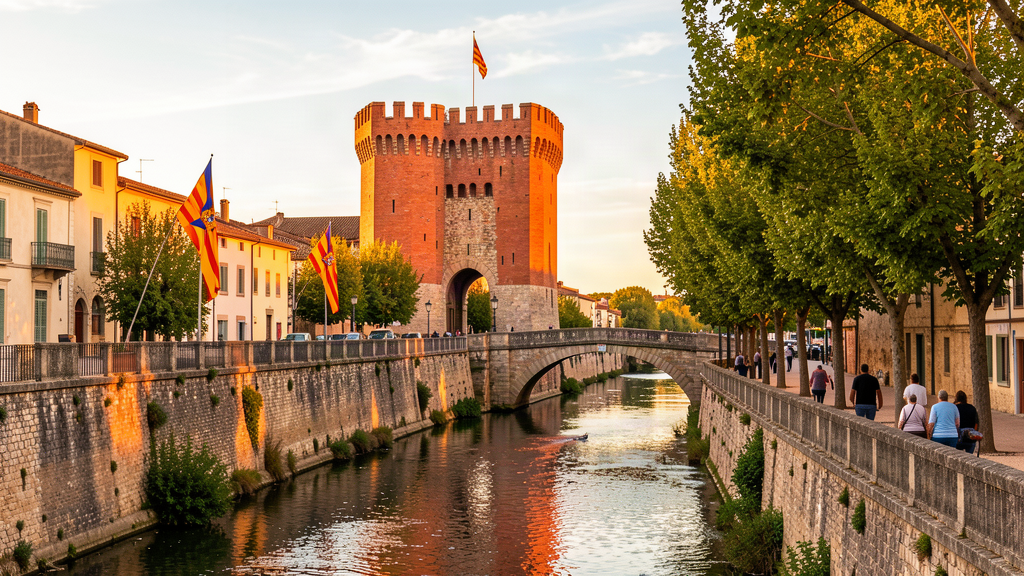
The Castillet is the brick gate you have already seen in photos — red-brown, freestanding — once a fortification, later a prison, now the Casa Pairal museum of Catalan folk life. Climb if you want the roof view and the small exhibits. Even if you skip the ticket, stand under it long enough to notice how the old town opens and closes around this one mass.
The Basse is not the Têt. The Têt is the bigger river that edges the city with plane trees and longer quays. The Basse is the tributary that threads the historic core, a canal-like ribbon you can follow on foot. From the Castillet toward Place de la Victoire and the bridges, the water keeps you oriented. Shade comes and goes. Locals cut through on bikes. Tour groups thin out three minutes from the postcard angle.
I like the Pont de Guerre stretch when the air is clear. On good days the Canigou massif sits on the horizon like a white notch — snow or pale stone depending on season — plain and Pyrenees in one glance. Seeing the mountain from town is enough to reset the scale.
Keep walking. Allées Maillol and Square Bir Hakeim offer a softer loop: trees, benches, a cactus garden that feels almost accidental here. It is not a major attraction. That is why it works between a market run and a late lunch.
Place de la Loge and the pedestrian core
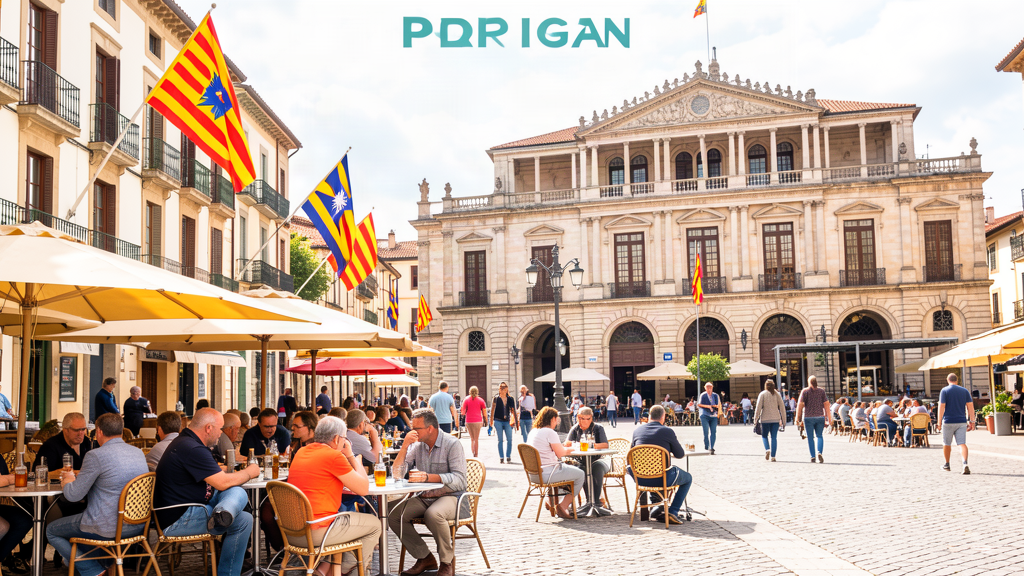
Place de la Loge is the old commercial heart — Loge de Mer, Hôtel de Ville, Députation — Gothic and Renaissance stone packed into a few tight blocks. Business used to run from these buildings; now terraces and shoppers do. The Loge itself is worth a slow look even if you never sit down. The carving still reads as money from the sea trade, spent on civic buildings that had to impress.
From here the lanes braid toward Place de la République and streets whose names still nod to workshops. Perpignan is Catalan in daily detail more than in costume: senyera red-and-gold on balconies, bilingual plaques, bakers who will answer you in Catalan if you start there. You will also hear Spanish, Arabic, French from every department. Border plain, mixed city — not a costume version of either side.
I do not race the Palace of the Kings of Majorca the first hour. The hilltop fortress-palace sits above the old town with gardens and a view that earns the climb — former seat of a short-lived Mediterranean kingdom, now museum and event space. Save it for when your legs want a destination.
Saint-Jean-Baptiste cathedral is another piece of the core: fortress-church proportions, southern Gothic, less famous than Carcassonne’s stage set and better for that. Step in, let your eyes adjust, step out. The surrounding streets still hold hardware shops and ordinary cafés between the boutiques.
A note on neighborhoods: Saint-Jacques and some edges of the historic belt have rough patches and uneven safety at night. Walk with ordinary city sense, stick to lit busy streets after dark, and ask your hotel which blocks feel fine after dinner.
Les Halles Vauban and Catalan plates
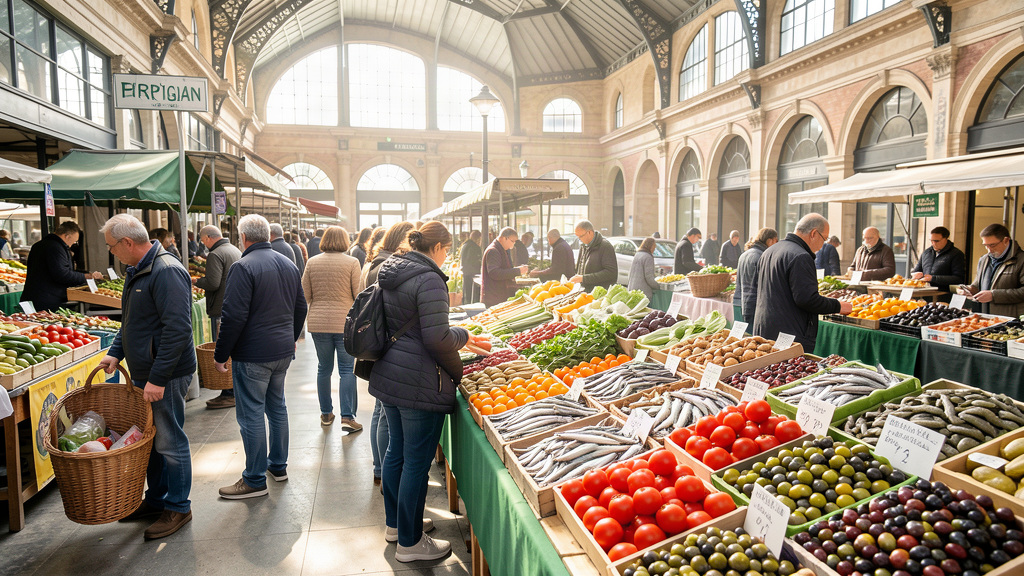
For food, start at Les Halles Vauban on Quai Sébastien Vauban — covered market and food hall in one. Catalan country shows up as charcuterie, olives, cheeses from the nearby mountains, Collioure-lineage anchovies and anchoïade, fruit that actually smells like fruit. Come hungry mid-morning. Buy something messy. Sit at a pinchos or tapas counter if a stool opens.
People shop with lists. You are in the way if you block the fish stall with a phone. Move like a customer.
Outside the hall, restaurants split between long-running Catalan rooms and brasseries on the squares. Roussillon wines show up by the glass more often than you might expect. Order local when the list allows. You taste the map that way, not a staged flight.
If you have a car day, Collioure’s harbor is close enough for a half-day without abandoning Perpignan as your bed. Without a car, the hall and the pedestrian core are already enough.
Two days without rushing the coast
Perpignan works as a base and as a stay. My preferred shape:
Day one morning: Castillet exterior, Basse walk, coffee near Place de la Loge when a table frees. Midday: Les Halles Vauban. Afternoon: either the Palace of the Kings of Majorca or aimless core lanes — not both at museum speed. Evening: a terrace on Place de la République. Locals use the square the way other towns use a living room; that is the draw, not another monument.
Day two: cathedral early, then residential detours and Allées Maillol green. If energy remains, train or drive toward Canet or Collioure, but leave room to come back for dinner in town. What I skip: treating Perpignan as a parking lot for coastal selfies, and stacking every monument before lunch.
August is hot and booked. Late spring and September into October keep the light and ease the pressure. Winter is quieter; mountain views sharpen and hotel rates soften.
Getting around
The historic center is walkable. Comfortable shoes beat clever sandals on stone. The train station sits a short walk or quick bus from the core. Driving into the old lanes is a hobby for the patient — use edge parking and walk in. For Collioure and the beach towns, check TER and local buses. Pick up a current transit map at the tourist office rather than trusting last year’s blog.
Places to stay
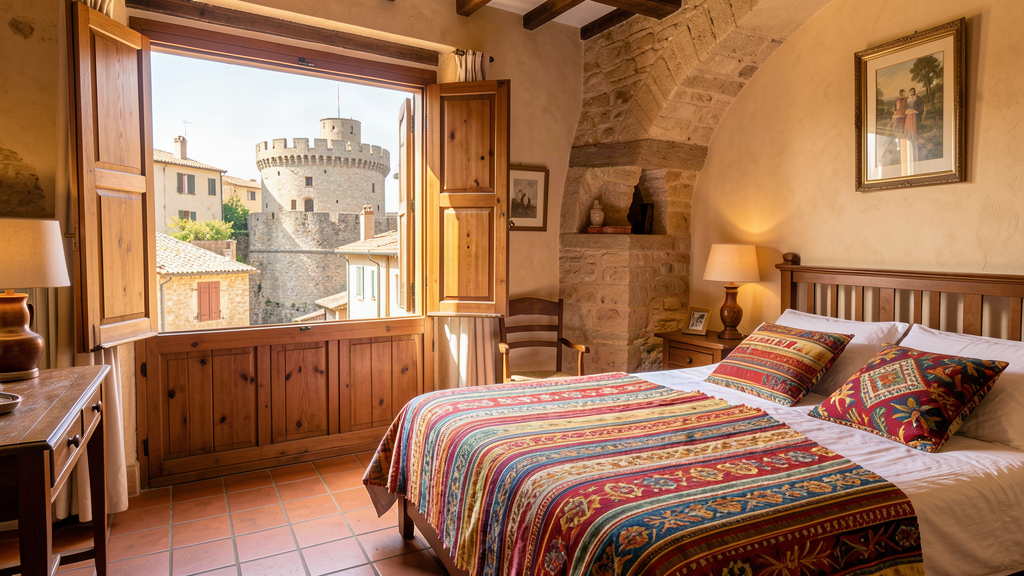
Three bases at different prices — park quiet, old-town doorsteps, or station convenience.
La Villa Duflot Hôtel & Spa (splurge)
Rond-Point Albert Donnezan, 66000 Perpignan
Four-star lodge in a wooded park of olive, cypress, and eucalyptus on the edge of town toward the coast roads. Pool, spa, serious restaurant, rooms that feel like a resort day even when you only sleep here. You will need a short drive, taxi, or bus for nightly old-town dinners. Worth it when heat is high and you want green recovery between brick streets.
Hôtel de la Loge (mid-range)
1 Rue Fabriques d’en Nabot, 66000 Perpignan
Small hotel in the historic fabric steps from Place de la Loge and the pedestrian lanes. Air-conditioned rooms, some facing an interior patio; bar and breakfast on site. My default when the trip is about the core and I want zero commute after dinner. Book ahead for summer weekends and festival dates.
ibis Styles Perpignan Centre Gare (value)
16 Cours Lazare Escarguel, 66000 Perpignan
Renovated chain comfort a few minutes from the station and a workable walk to the Castillet side of town. Predictable rooms, terrace when weather allows. Solid when trains structure the trip or the budget should favor Halles lunches and a better dinner.
Shoulder seasons ease both rates and square density. If you arrive by car for Villa Duflot, confirm parking; in the center, ask the hotel which public garage they trust.
Where to eat
Reserve when the room is small or the night is Friday. Perpignan fills its own tables.
Casa Sansa
2 Rue Fabrique d’en Nadal, 66000 Perpignan
Long-running Catalan address in the old lanes — the kind of place locals name when you ask where to eat properly. Lamb, Mediterranean plates, a room with history rather than a redesign-of-the-year look. Book dinner; walk it from Place de la Loge.
Le France
Place de la Loge, 66000 Perpignan
Bistrot-brasserie energy on the civic square: wood, terrace, southern French cooking that works for a long lunch after the Castillet and Basse. Useful when you want reliable plates and people-watching more than a tasting menu.
Les Halles Vauban (counters & Al Tapas)
37-39 Quai Sébastien Vauban, 66000 Perpignan
For market hours: graze. Pinchos, anchovy, ham, whatever the stall is proud of that morning. Lunch as movement — stand, sit, move on — and the fastest way to taste Roussillon without a white tablecloth. Go earlier rather than when every stool is a wait.
If one door is closed, the surrounding quays and République terraces usually offer a plan B within five minutes. Ask for Collioure anchovies or a Roussillon glass even if you order simply.
Practical close
Perpignan rewards two nights and more than one walk along the Basse. The Castillet is the landmark; the river path is the habit. Between them you get brick, Catalan flags, market salt, and a mountain on the horizon when the air clears. Coast towns can wait until after breakfast. Give the city the stay, not just the transfer.
