
Most people who leave Rome for Lazio chase lakes, gardens, or a hillside villa with a famous name on the ticket. Viterbo rarely makes that shortlist. It sits northwest of the capital in the Tuscia hills, a provincial city that once held popes when Rome felt too dangerous, and still holds water hot enough to fog a winter morning.
I come for the steam first, then the stone. Outside the walls, Terme dei Papi spreads a big thermal pool fed by springs the Romans already knew. Inside the walls, San Pellegrino keeps a medieval quarter dense enough that you stop checking your phone and start watching your feet. Plan the stay around both: sulfur air and arched lanes, not a quick soak bolted onto a Rome hotel night.
The pool the popes claimed
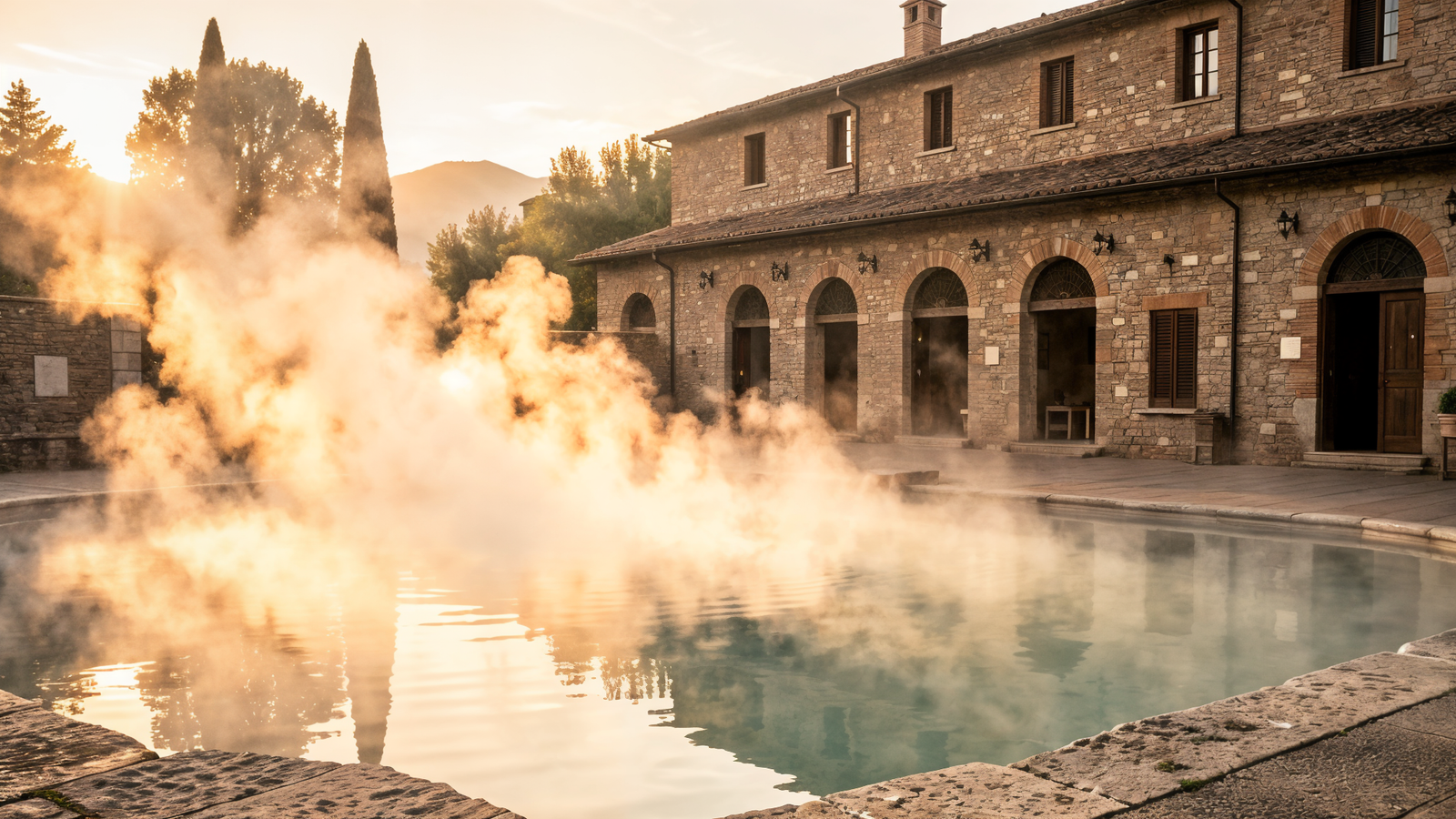
Terme dei Papi is not a boutique spa with a history story taped on. It is a big open-air basin a few kilometers west of town, mineral-heavy and genuinely hot, with a plain sulfur smell no brochure manages to hide. The complex sits along Strada Bagni. Locals and weekenders share the water with visitors who finally heard that Viterbo’s pull is wetter than its monuments.
Go in the shoulder hours if you can. Early on a weekday works, or late when the light softens and the steam shows against darker air. The main pool is enough for me: room to float, talk quietly, and loosen up after a day of cobbles. Treatments are there if you want them; I often skip the full menu. Confirm Tuesday closures and seasonal hours before you taxi out.
Around the commercial baths, older water still leaks into the countryside. Bullicame and other free or semi-open springs scatter west of town, more rustic and sometimes crowded on Sundays. Dante already named Bullicame; the plain has been steaming longer than any hotel package. Bring sandals you do not love. You do not need every pool on a map. You need enough time in the water to feel that this ground is volcanic and wet.
San Pellegrino without a costume
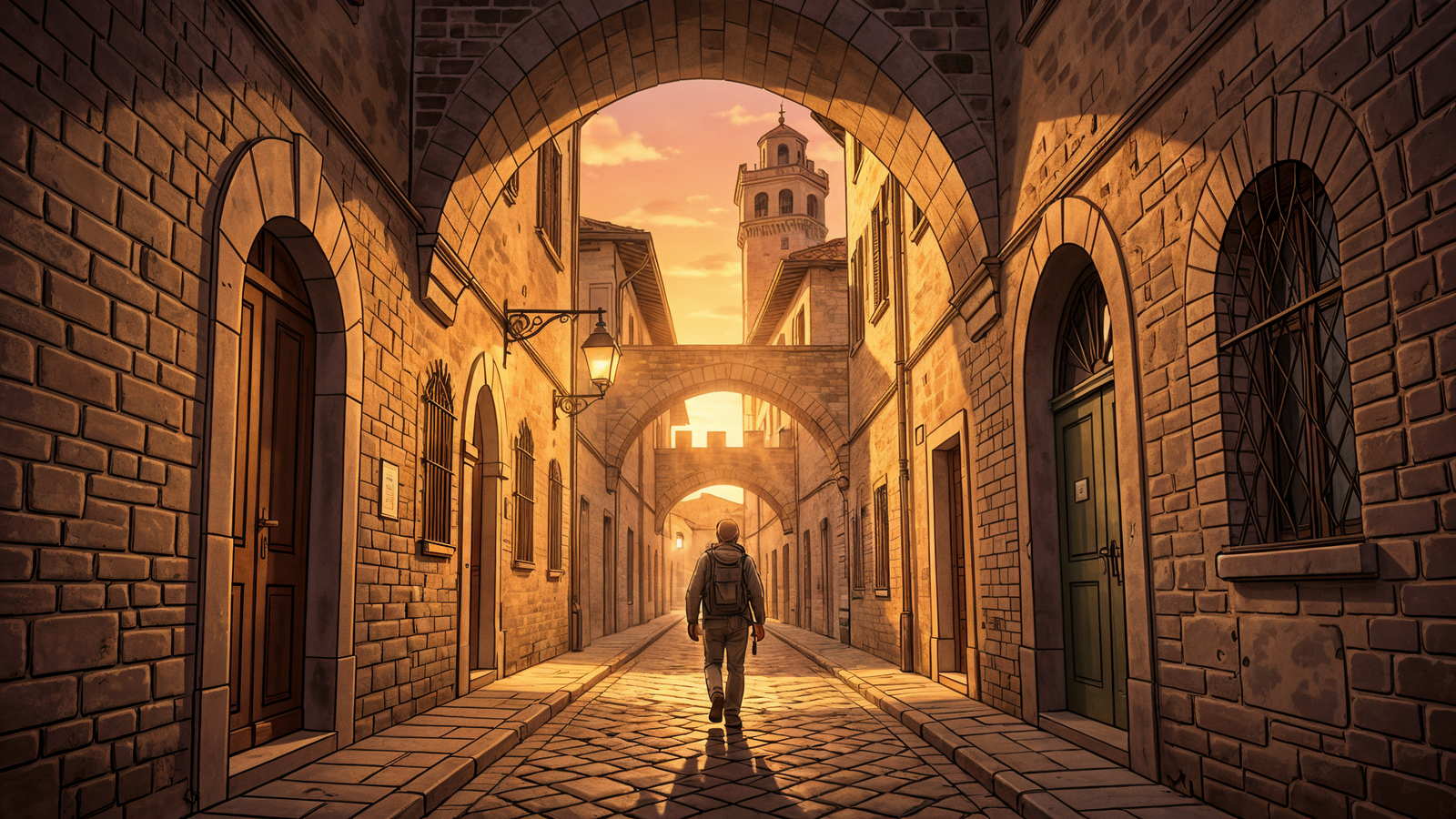
Back inside the walls, Quartiere San Pellegrino is the quarter people photograph and then leave too fast. External staircases, low arches, towers that lean into each other, streets that narrow until two people have to negotiate. It is one of the better-preserved medieval fabrics in central Italy, which means you can walk it like a stage set if you are not careful.
I try to go early, before the soft-focus crowd, or after dinner when residents reclaim the alleys. Via San Pellegrino itself is the spine; the side lanes are where it gets interesting. You hear shutters, a scooter that should not fit, someone arguing about nothing important. Ordinary noise keeps the stones from turning into a museum.
Skip the idea of “completing” the quarter. Sit once. Buy something small. Notice how the light dies early between the towers. San Pellegrino makes more sense if you sleep in town than if you give it ninety minutes and a checklist from a coach stop.
Popes, loggias, and a working centro
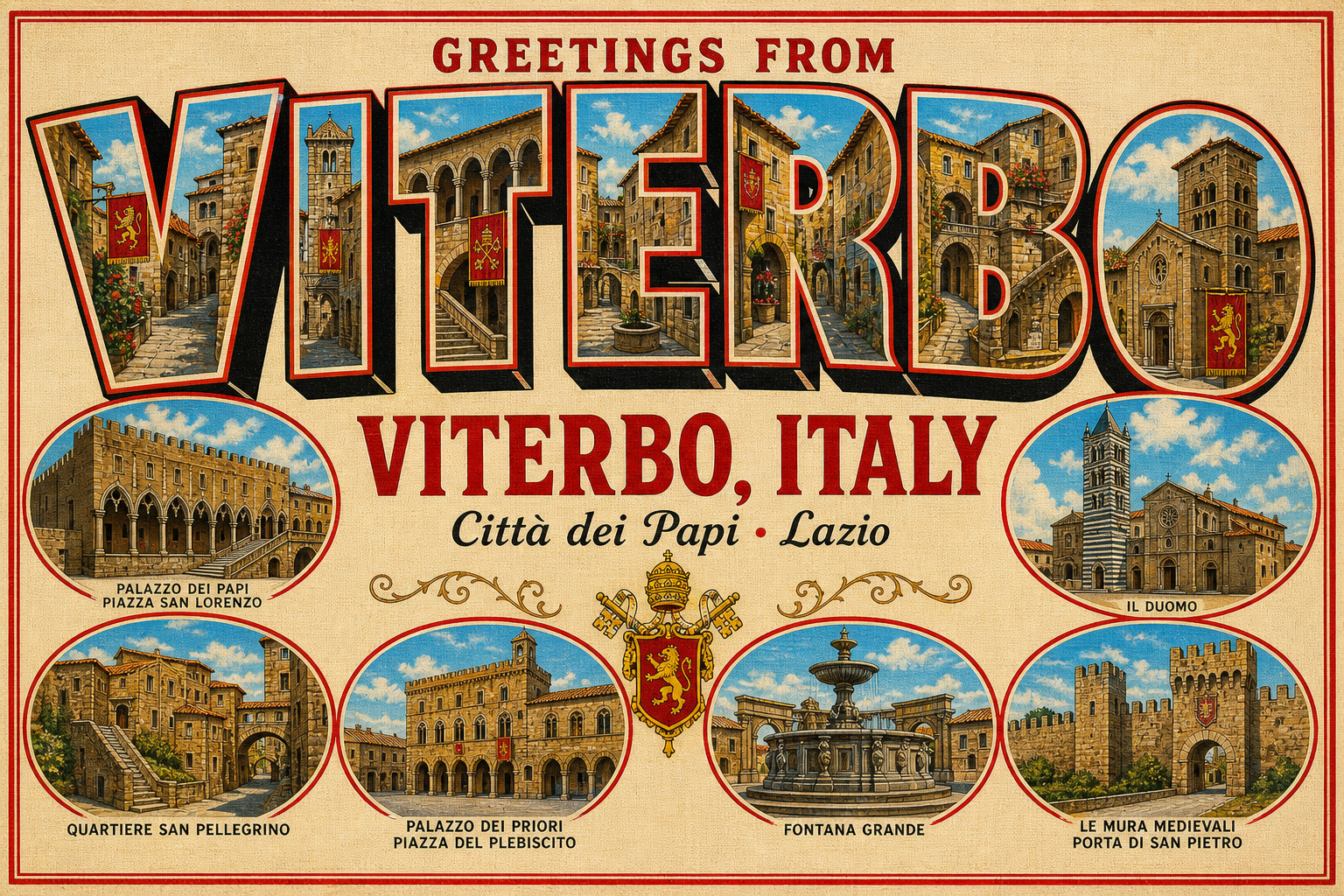
Viterbo really did host the papal court for long stretches in the thirteenth century. The Palazzo dei Papi still anchors the Colle del Duomo with its open Gothic loggia, the balcony where blessings and politics once shared the same air. The longest conclave in history dragged on in this city until the cardinals were locked in, rationed, or both, depending on which version you prefer. Stand under the loggia and the story feels less like trivia.
Next door, the Duomo di San Lorenzo has a Romanesque bell tower and a quieter interior than the drama outside suggests. The Colle is compact: palace, cathedral, museum rooms if you want depth, views that drop toward roofs rather than a postcard lake. Give it a full hour without racing to the next site.
Below the papal hill, the wider centro is a living provincial capital. Piazza del Plebiscito, fountains, shops people actually use, students mixing with market traffic. The walls still ring large parts of the old city; walk a stretch when your legs want a longer line than medieval alleys allow. September brings the Macchina di Santa Rosa, a towering illuminated structure carried on the shoulders of the facchini. Land in that window and the city becomes vertical theater for a night. Miss it, and ordinary Viterbo is still worth the train.
Plates after sulfur and stone
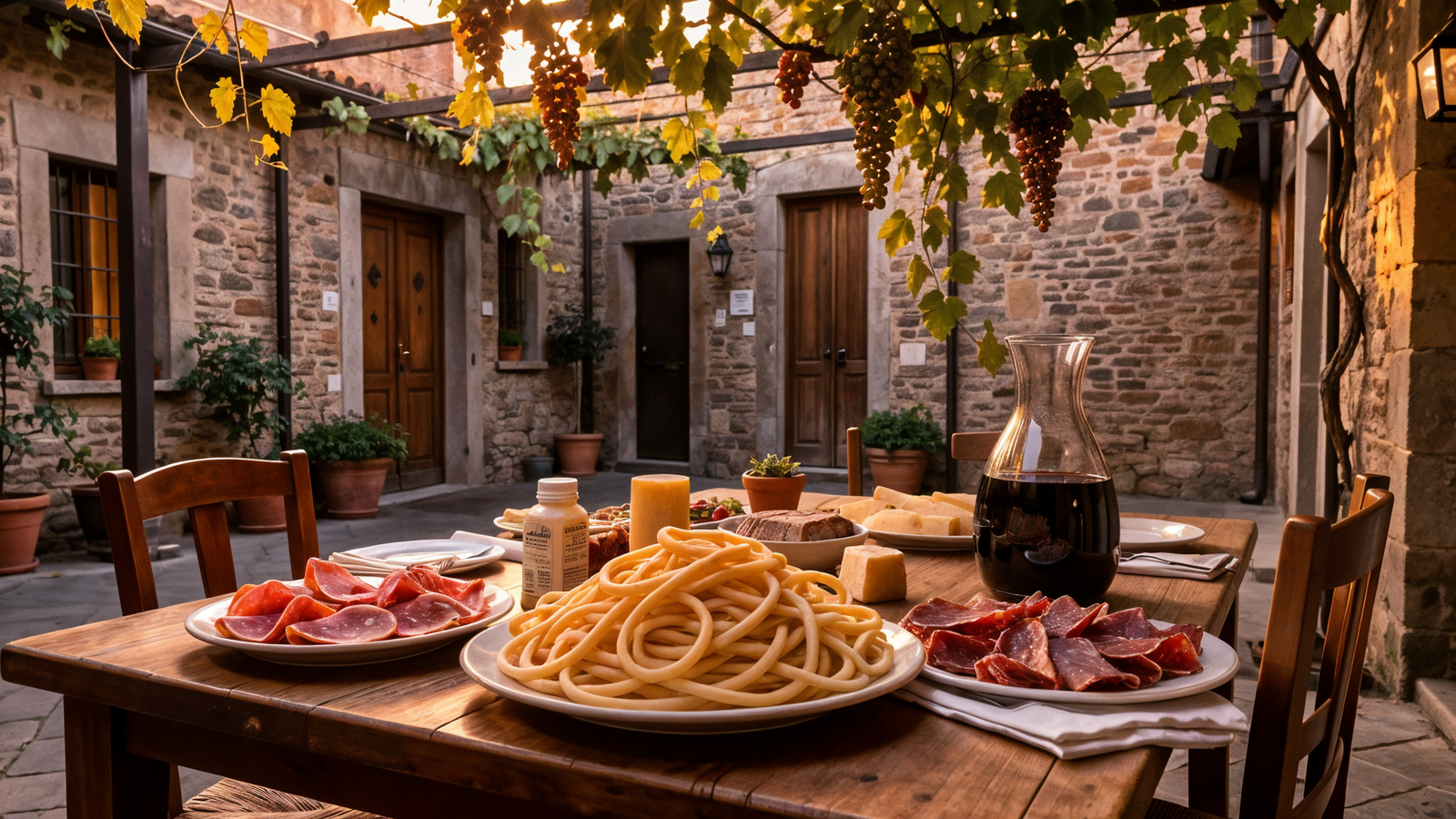
Tuscia cooking is inland Lazio: legumes, wild greens, porchetta when the occasion fits, pasta that does not apologize for portion size, wine from nearby volcanic slopes. After a thermal soak you get hungry in a useful way. Eat in town. The baths are for water, not for your best meal.
Trattoria MagnaMagna Via San Lorenzo 89, 01100 Viterbo VT, Italy
Close to the Duomo hill and Piazza della Morte. Straight trattoria pace, the kind of room where lunch can run long without much performance. Useful when you have just come down from the papal loggia and want something local before the afternoon alleys. Book on weekends; the address is too convenient to stay empty.
Osteria S. Pellegrino Via San Pellegrino 30, 01100 Viterbo VT, Italy
Inside the medieval quarter itself, small enough that the street noise is part of the table. Choose it when you want dinner without leaving the stone maze, and when a simple osteria menu beats a longer taxi to somewhere “nicer.” Confirm hours; quarter places sometimes keep their own logic.
Ristorante Tre Re Via Macel Gattesco 3, 01100 Viterbo VT, Italy
A centro address locals still name when someone asks where to eat properly. Classic cooking, a fuller restaurant evening after the baths, time for a second course and a bottle from the hills. Call ahead if your soak ran late.
Between meals: espresso near Piazza del Plebiscito, a slow walk along a fountain, gelato only if the day earned it. Dinner works better when it is not just a recovery stop on the way back to Rome.
Places to stay
Sleeping in Viterbo turns the thermals from a single outing into a rhythm: morning steam or evening soak, then alleys after the day-trippers have pointed south.
Hotel Mini Palace — value, near Porta Romana Via Santa Maria della Grotticella 2/B, 01100 Viterbo VT, Italy
A practical centro hotel on the university side of town. Walkable toward the historic core, easier on the budget, fine when you want a clean base more than a design story. Useful for train arrivals with real luggage and for guests spending money on baths and meals instead of the room.
Tuscia Hotel — midrange, central and straightforward Via Cairoli 41, 01100 Viterbo VT, Italy
A full small hotel in the working city. Front desk hours, breakfast without a scavenger hunt, walking range to Plebiscito and the lanes toward San Pellegrino. Choose it for reliability without the boutique premium, and when a taxi out to Terme dei Papi should still feel simple.
B&B dei Papi Boutique Hotel — upper, on the papal hill Via del Ginnasio 8, 01100 Viterbo VT, Italy
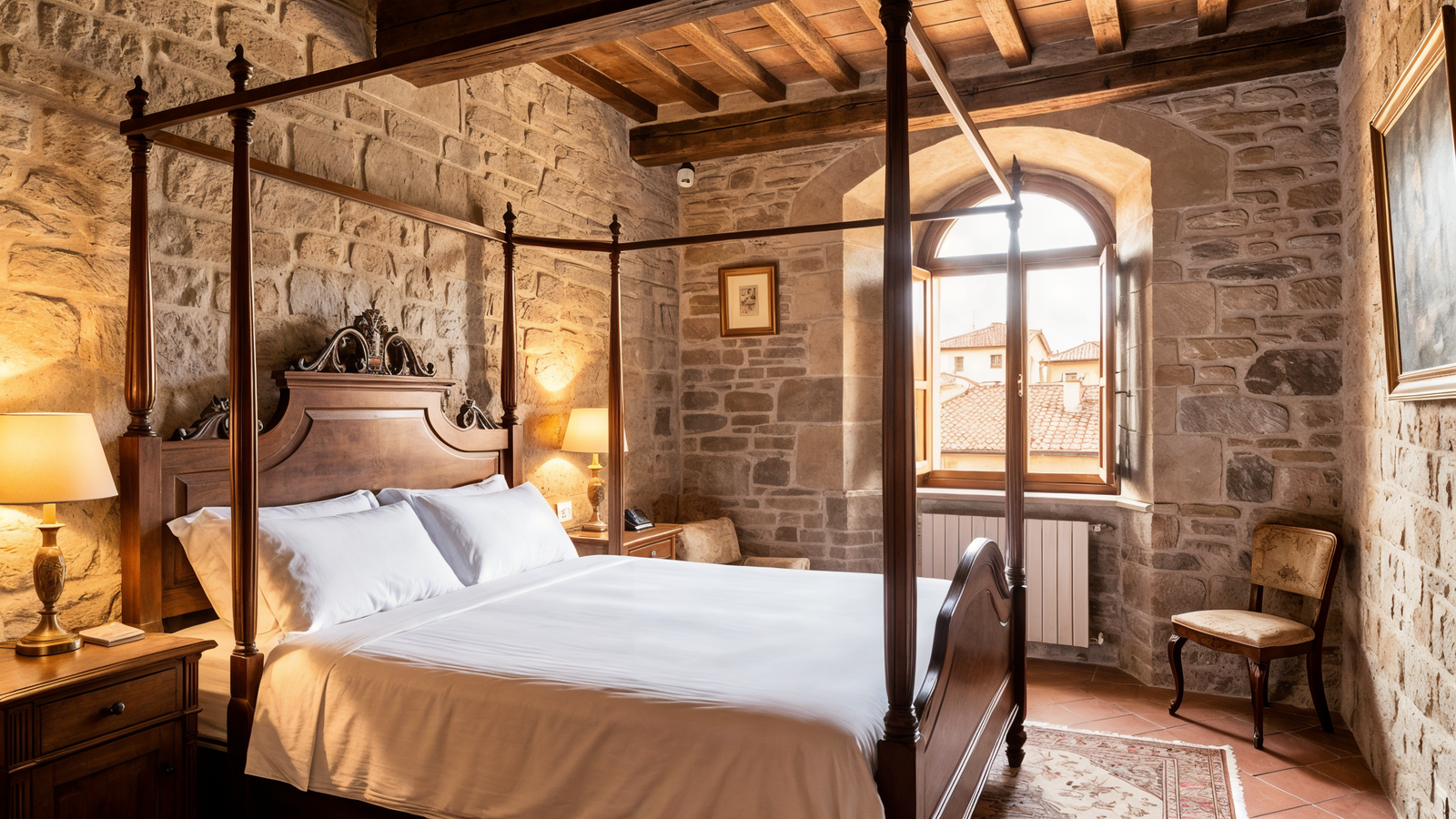
A historic house near the cathedral and Palazzo dei Papi. Fewer rooms, more atmosphere, sleeping close enough that the loggia is a morning walk rather than a commute. Pick it for a slow weekend, for early light on the Duomo streets, and for evenings when you want that hill under your window. Confirm check-in; small places run on messages as much as bells.
Two nights beat a raid. One night already beats treating Viterbo as a thermal footnote on a Rome hotel bill. Dawn in San Pellegrino and a second soak are hard to fake on a day ticket.
Getting there and moving once you arrive
Viterbo sits in northern Lazio, inland in the Tuscia, northwest of Rome. Trains and buses link the city to the capital; the station is not inside the tightest medieval knot, so budget a local bus, taxi, or walk depending on bags and heat. Driving helps for free springs and countryside Etruscan sites; it is less charming against San Pellegrino’s parking logic.
Inside the walls, walk. Wear shoes that forgive uneven basalt and sudden steps. For Terme dei Papi, plan a short taxi rather than a heroic march. Strada Bagni 12 is the commercial thermal address most visitors mean. Summer middays cook the stone; spring and autumn give cooler alleys and steam that shows better in the air.
If I had to keep three moves only: a full unhurried session in the papal thermal water, a slow hour under San Pellegrino’s arches without photographing every tower, and one meal that lasts longer than your transfer back toward Rome. Take the sulfur first. The loggia can wait until your shoulders drop.
