
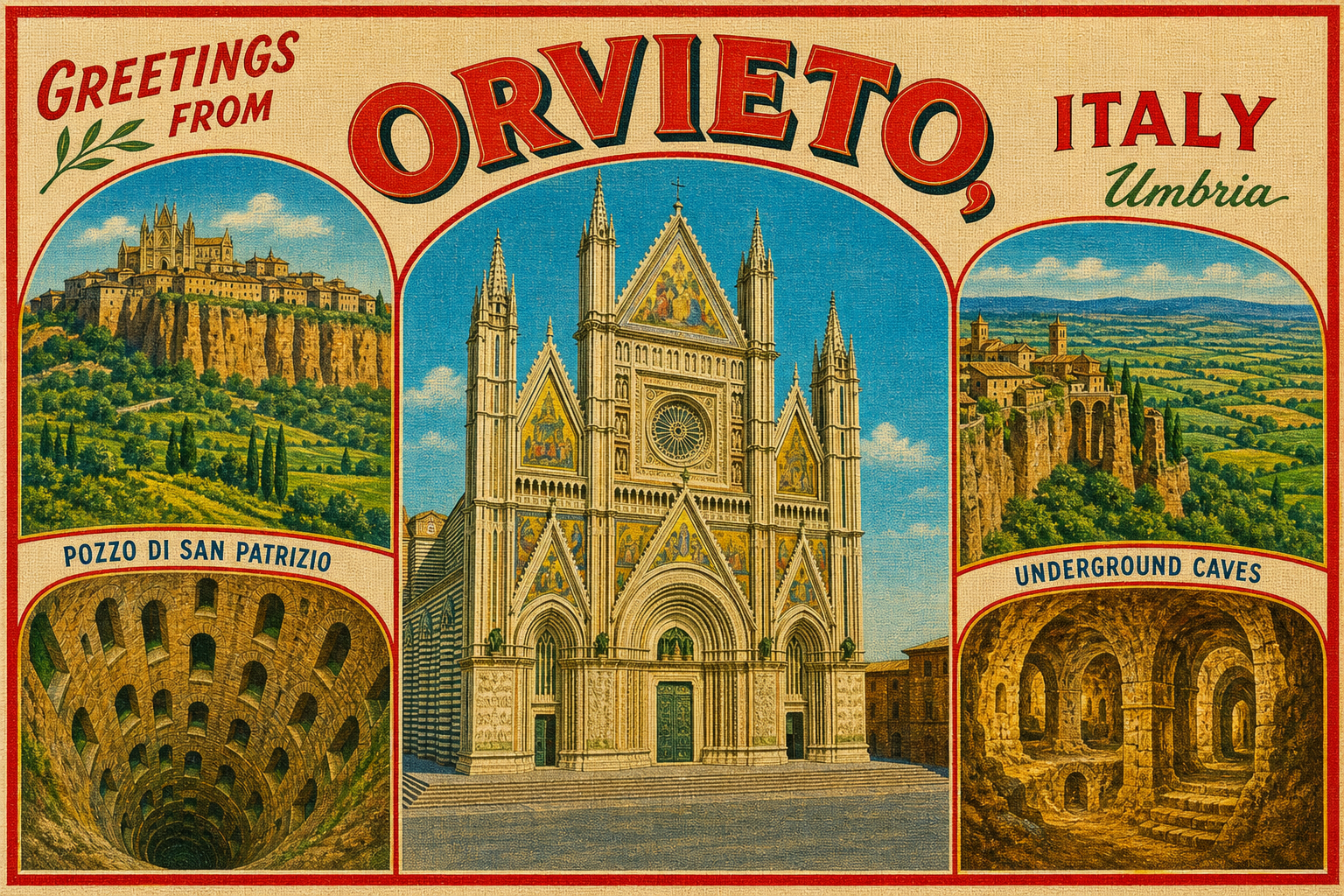
Orvieto sits on a flat table of volcanic tufa like someone set a whole town on a cake stand and forgot to lower it. From the valley you see cliffs, a green edge of trees, and that striped cathedral façade catching sun. Most people ride the funicular up, walk straight to the Duomo, photograph the façade, and leave before the stone cools. Fair enough. The façade is absurdly good. But the Orvieto I keep is lower — under the street, in rooms cut for wine and clay, where the town still stores its older habits.
On Via della Cava, in the medieval quarter that slides toward the western edge, you can drop into Pozzo della Cava. Nine linked caves. A deep well. And two pottery kilns that rewrote who gets credit for certain majolica. Not another postcard of the cathedral alone — soft rock underfoot, and what people dug into it for twenty-five centuries.
Ride up, then turn away from the main current
The funicular from Orvieto Scalo dumps you at Piazza Cahen. Day-trippers form a polite river toward the Duomo. Walk with them once if you must. Then peel off.
Corso Cavour is the spine. Use it for orientation and espresso — east to the well and fortress edge, west into older lanes, center toward the cathedral square. Stone underfoot goes warm and dusty by afternoon. Scooters thread past. Shutters open onto courtyards you only glimpse.
When groups thicken near the Duomo, reverse. Head toward Via della Cava and the neighborhoods that still hang laundry and argue about parking. Orvieto is small enough that “lost” lasts ten minutes. Let the map sit in your pocket.
Under the street: wells, wine, and fired clay
Orvietans carved more than a thousand caves, cisterns, and cellars into the tufa. Etruscans started it. Medieval families kept going. Renaissance engineers added wells when popes needed water during sieges. The underground was never one attraction with a gift-shop exit. People lived on a rock they could hollow out, so they did.
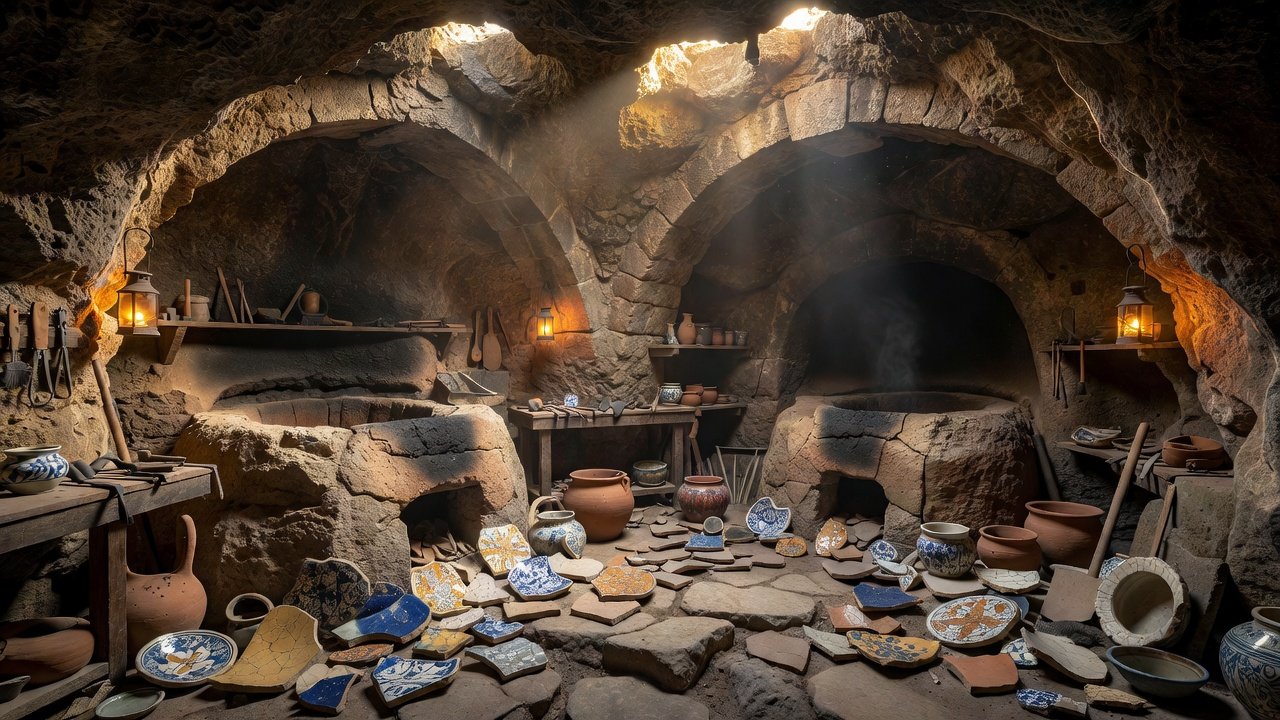
Pozzo della Cava (Via della Cava 28) is the visit I would not skip if you only have energy for one subterranean hour. Room to room: quarry scars, a well shaft, wine cellars where stairs reuse an Etruscan cistern that once caught roof runoff. Then the kilns. One large medieval chamber for everyday ceramics and majolica, tools and shards still telling the workshop story. A smaller kiln for the third firing of precious lusterware. Standing there, the cathedral above feels less like the whole of Orvieto and more like the roof over a working town.
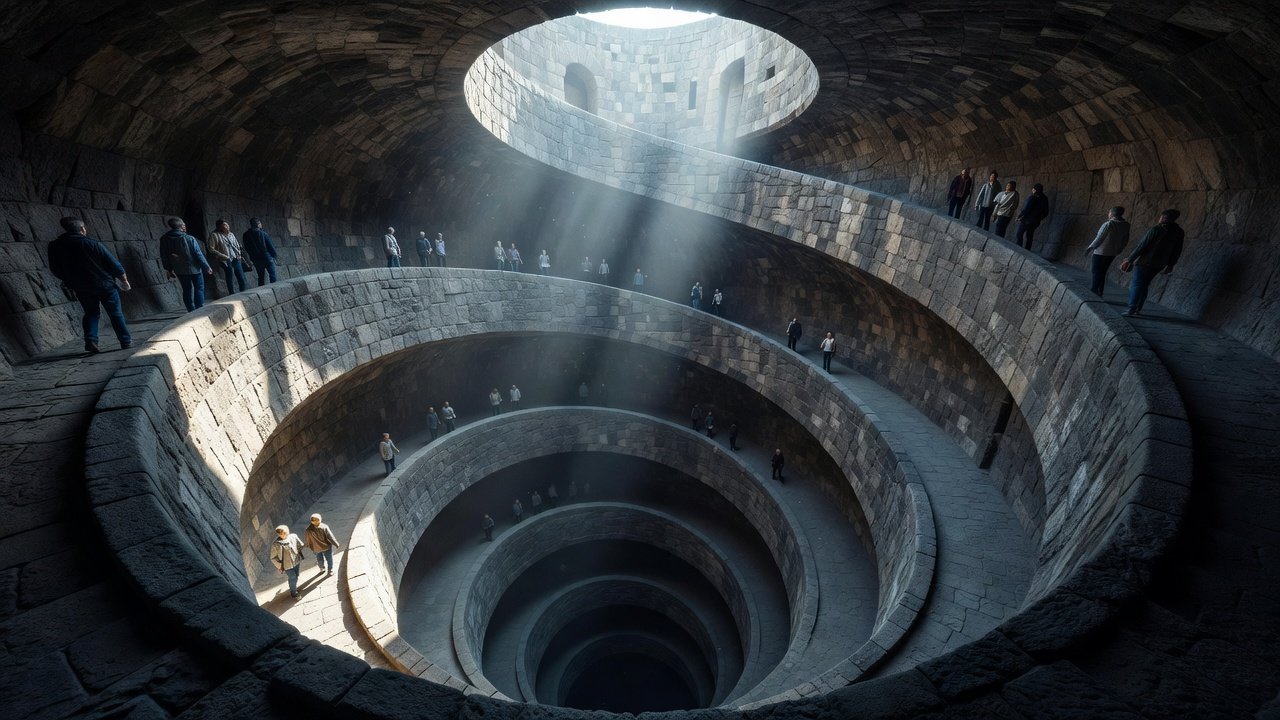
Orvieto Underground tours open another set of caves — cool even in August, used for storage, animals, shelter, olive presses. Book a slot. Pozzo di San Patrizio, near Piazza Cahen, is the showpiece: a deep cylindrical well with a double-helix ramp so mules could descend and climb without meeting. Go for the geometry and the damp air. Then leave. The quieter caves hold more of the daily past.
Bring a light layer. Tufa cools. Floors can be uneven. Skip the urge to buy every ticket. Spend the hour below the shop fronts where the street map goes blank.
Above ground without the brochure loop
Do see the Duomo. The façade is a vertical argument in mosaic and marble. Inside, the San Brizio Chapel frescoes will slow you down. Then step back into the square and give the rest of the day to somewhere else.
Walk the edges. Toward Porta Maggiore and the western descents, streets tighten and the cliff asserts itself. Look for cuts in the rock, cellar doors, workshops selling ceramics in the old green-and-brown palette without pretending every plate is museum stock. Piazza del Popolo opens under the striped Palazzo del Capitano — more local errands, more sitting without performing awe.
For a view that is not the standard façade shot, walk the perimeter paths where the cliff drops to the vineyards and the Paglia valley. Late afternoon is kinder. The tufa goes honey-colored. Swifts cut the air. You hear a radio from a kitchen two floors down.
Orvieto Classico country starts almost at the foot of the rock. White wine, grechetto and friends, bottles that taste like pale stone and citrus more than heavy oak. A short tasting in town or a taxi out to a small producer beats another souvenir loop. Ask for Classico, not just “white wine,” and drink it with bread, pecorino, a little oil.
Where to eat
Umbrian cooking here is land-first: wild greens, cured pork, bean soups, pigeon when it appears, truffle when the season is real. Pasta tends toward strangozzi and umbricelli. Walk one street off the laminated English menus.
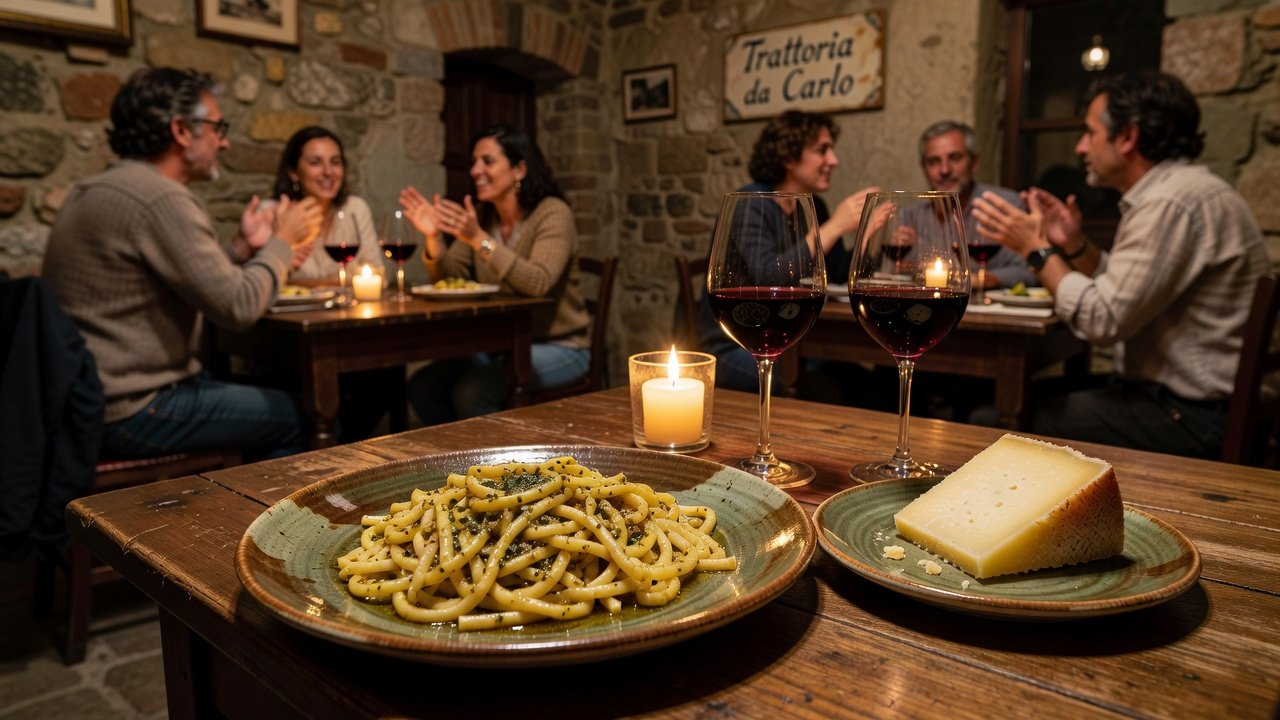
Trattoria da Carlo Vicolo del Popolo 9, 05018 Orvieto TR, Italy
Small, booked on weekends, the kind of room where you want the special and a house red without a speech. Umbrian plates, no stiff ceremony. Good first night when the funicular has already spent your patience for fuss.
Antico Bucchero Via dei Cartari 4, 05018 Orvieto TR, Italy
A short fold off the main flow. Meat and truffle when they are honest, pasta that tastes like someone still cares about the sauce more than the garnish. You hear Italian at neighboring tables more often than not — a useful signal, nothing more.
I Sette Consoli Piazza Sant’Angelo 1/A, 05018 Orvieto TR, Italy
For a dinner you want to remember. Seasonal Umbrian cooking with more ambition and a wine list that stretches into serious Classico. Book ahead. Use it mid-stay, after one simple trattoria night.
Between reservations: gelato on Via del Duomo if the line moves, espresso standing up, pizza rossa walked toward a wall with a view. Market mornings are for fruit and pecorino on a bench, not a staged food tour.
Places to stay
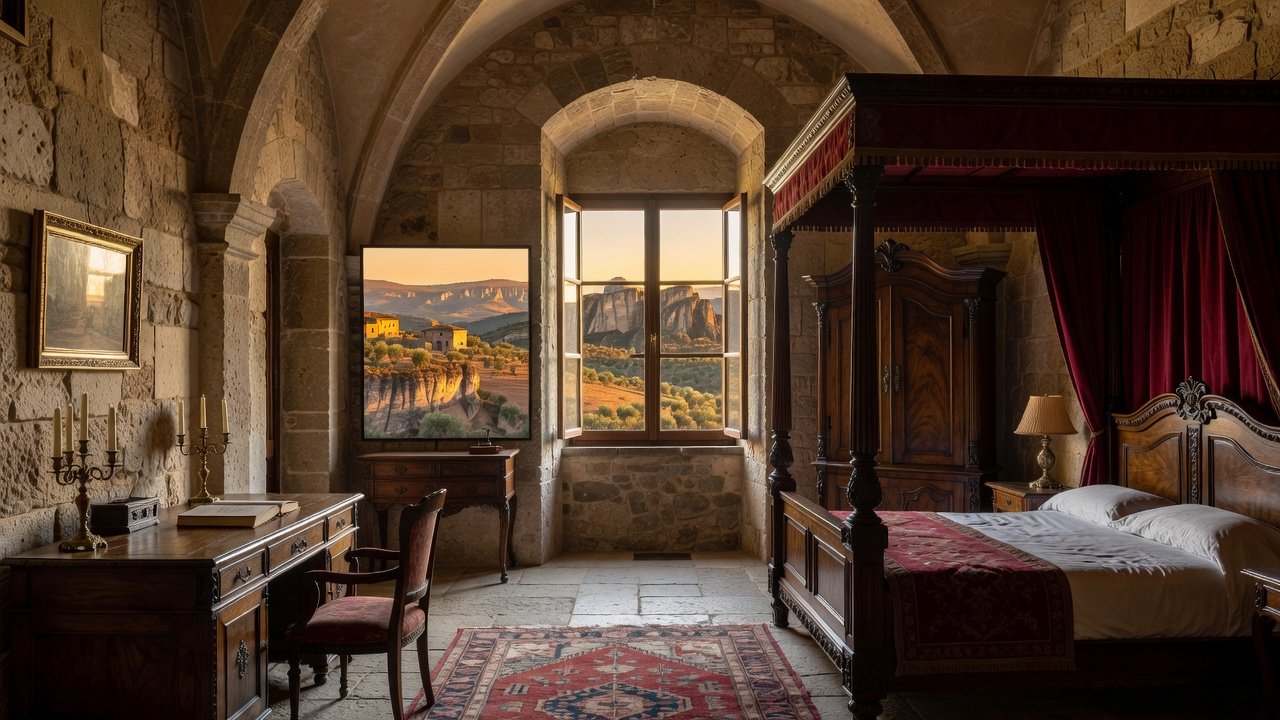
Sleep on the plateau if you can. Orvieto after the day coaches leave changes temperature — bells, empty lanes, cellar doors shut, cliff wind coming up. Bags on wheels hate the stone; pack light or accept the carry from the funicular.
Hotel Corso — value, on the main spine Corso Cavour 339, 05018 Orvieto TR, Italy
Straightforward rooms on the corso, walkable to the Duomo and the San Patrizio side. Not a design statement. Good when you want a clean bed, breakfast, and a second coffee without a taxi. Ask about noise if you are light sleepers; the street has a life.
Hotel Duomo — mid-range, cathedral-side lanes Vicolo di Maurizio 7, 05018 Orvieto TR, Italy
Tucked near the Duomo on a small lane — the kind of location that turns a two-night stay into pure walking. Some rooms catch cathedral stone in the morning light. Solid base when Orvieto is the point, not a lunch stop between Rome and Florence.
Palazzo Piccolomini — splurge, historic pile near the western caves Piazza Ranieri 36, 05018 Orvieto TR, Italy
A real palazzo feel a short walk from Pozzo della Cava and Porta Romana. Higher ceilings, heavier doors, lodging in the same rock neighborhood you came to see. Book when you want the stay without the logistics headache. Confirm parking and bag drop; the centro is not a car’s friend.
Two nights minimum. Three if you want one underground morning, one slow Classico afternoon, and one aimless evening that produces nothing for a feed.
Getting there and moving around
Trains stop at Orvieto station in the lower town (Orvieto Scalo). The funicular climbs to Piazza Cahen in a few minutes; buses and taxis cover the rest. By car, respect the ZTL. Park in the signed lots and walk or shuttle up.
Once up top, walk. The plateau is compact. Shoes with grip beat smooth soles on polished stone, especially after rain. For wineries in the Classico zone, arrange a taxi.
Day-trippers peak late morning through mid-afternoon. Early and evening belong to residents and anyone willing to shift their clock. Summer heat sits on the tufa; the caves become air conditioning with a history lesson. Shoulder seasons open the lanes. Winter can be quiet enough that you hear your own footsteps between the bells.
I keep thinking about those two kilns under Via della Cava when the cathedral façade has already done its work in my head. Clay and fire under the same streets where people still buy bread. Stairs cut through a cistern that once only cared about rain. Stay long enough to go down into the tufa, drink a glass of Classico that tastes like the pale rock, and walk home on the corso after the funicular crowd has dropped back to the valley.
