
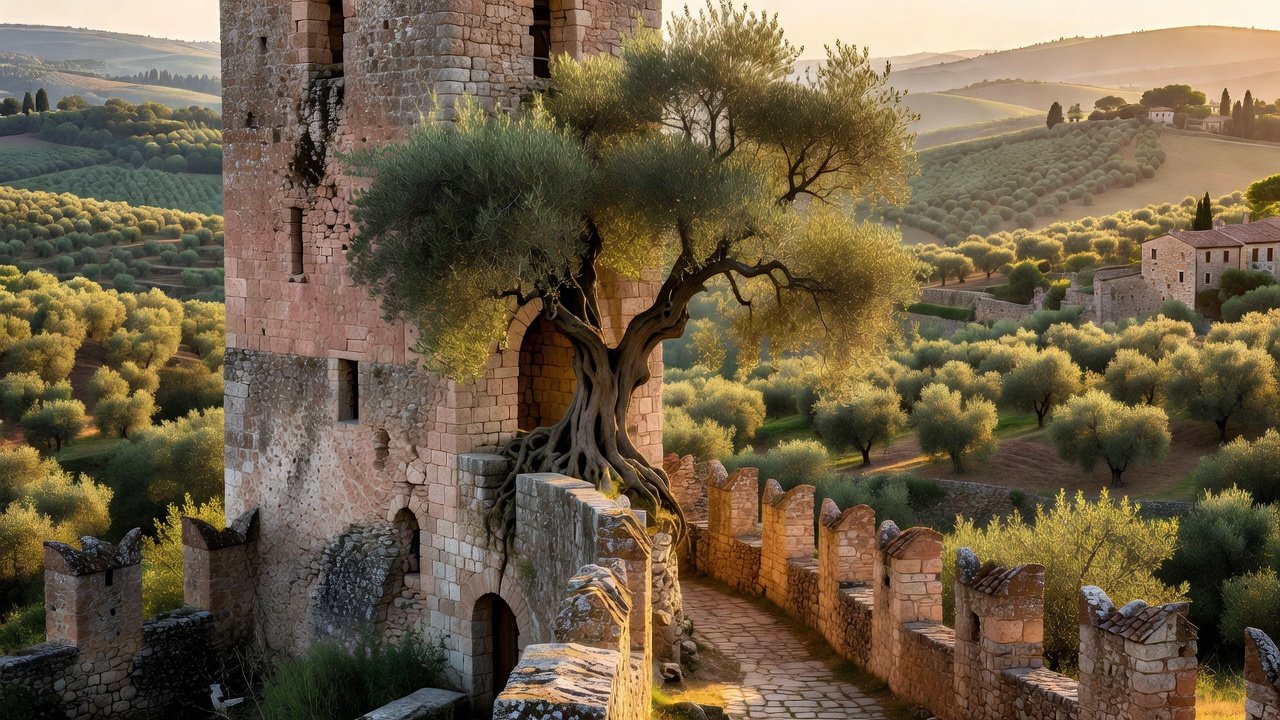
Assisi rises pink from the flank of Monte Subasio, and most people meet it the same way: bus bay, basilica façade, headphones and pilgrimage sticks. Fair enough. The Basilica of San Francesco is not optional if you came for Francis. But the town I keep is smaller and higher — laundry lines, side doors, and a gate with an olive tree growing out of its tower like someone forgot to prune history.
That gate is Porta San Giacomo, twelfth-century stone at the western edge of the walls. Walk through without a ticket. Look up. The olive is still there, roots in mortar, leaves in the valley wind. From here the tourist current thins, and Assisi starts behaving like a place people live in.
Leave the basilica square when the coaches do
Do the basilica. Look at the frescoes. Stand in the lower church until the cool air settles your shoulders. Then step back into daylight and refuse to let the square become your whole day.
Turn uphill instead of looping the same postcard. Via San Francesco climbs toward the centro; duck off it the first time a staircase invites you. Assisi is vertical more than scenic. Calves will negotiate. The pink-and-cream Subasio limestone underfoot changes by the hour — dull rose at noon, warmer after five, almost flesh-colored after rain.
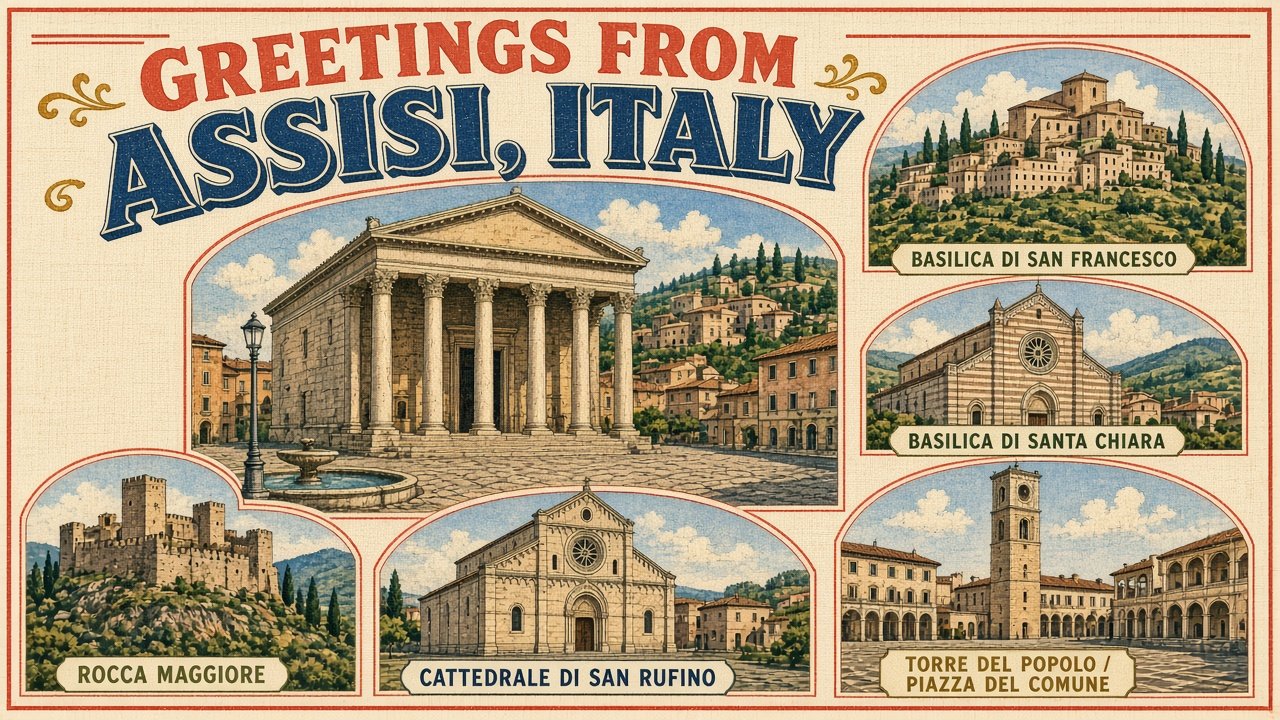
You will hit Piazza del Comune whether you plan to or not. Tables, scooters, and the façade that stops people mid-stride: Santa Maria sopra Minerva, a first-century Roman temple pediment with a church tucked behind. Sit once. Then leave before the square turns into a waiting room.
Toward Porta Perlici and the quieter spine
The side of town that still feels like neighborhood starts beyond the cathedral of San Rufino, up toward Porta Perlici. Streets narrow. Facades carry laundry and satellite dishes. You hear a radio, a dog, a broom on stone. This is the Assisi that runs errands between pilgrims.
Wander without a checklist. Via San Giacomo and the lanes that stitch toward the western gate reward slow feet more than photographs. Notice door lintels, small shrines in niches, stone steps worn into soft scoops by the same climb for centuries. If you need a destination, aim for the walls and walk a stretch where the valley opens — olive groves, the plain toward Perugia, modern roads you can ignore from up here.
Rocca Maggiore sits above everything like a fist of brick. The climb is honest. From the ramparts the town reads as one packed pink roofscape, basilica prow at one end. Go early or near closing if you hate sharing the view. Or skip the interior ticket and take the approach paths; the hill itself does half the work.
Oak shade at Eremo delle Carceri
Four kilometers up from Porta Cappuccini, the Eremo delle Carceri is where Francis and his brothers went when the town got too loud. Carceri here means isolated places, not a modern prison — caves, oak woods, a hermitage that still prefers quiet.
Bus, taxi, or walk if knees and weather agree. The road climbs through ilex and oak. Paths drop into the gorge. Francesco’s grotto is small: stone bed, low ceiling, a space that makes you lower your voice without being told. Outside, roots braid the rock. Hikers peel onto Monte Subasio trails.
I like it best midweek, late morning. Bring water. Wear shoes that grip. You are not collecting another monument stamp. You are borrowing the mountain air that once pulled a merchant’s son out of comfort. If you only have one half-day outside the walls, take this over another loop of basilica shops.
Oil, strangozzi, and ordinary tables
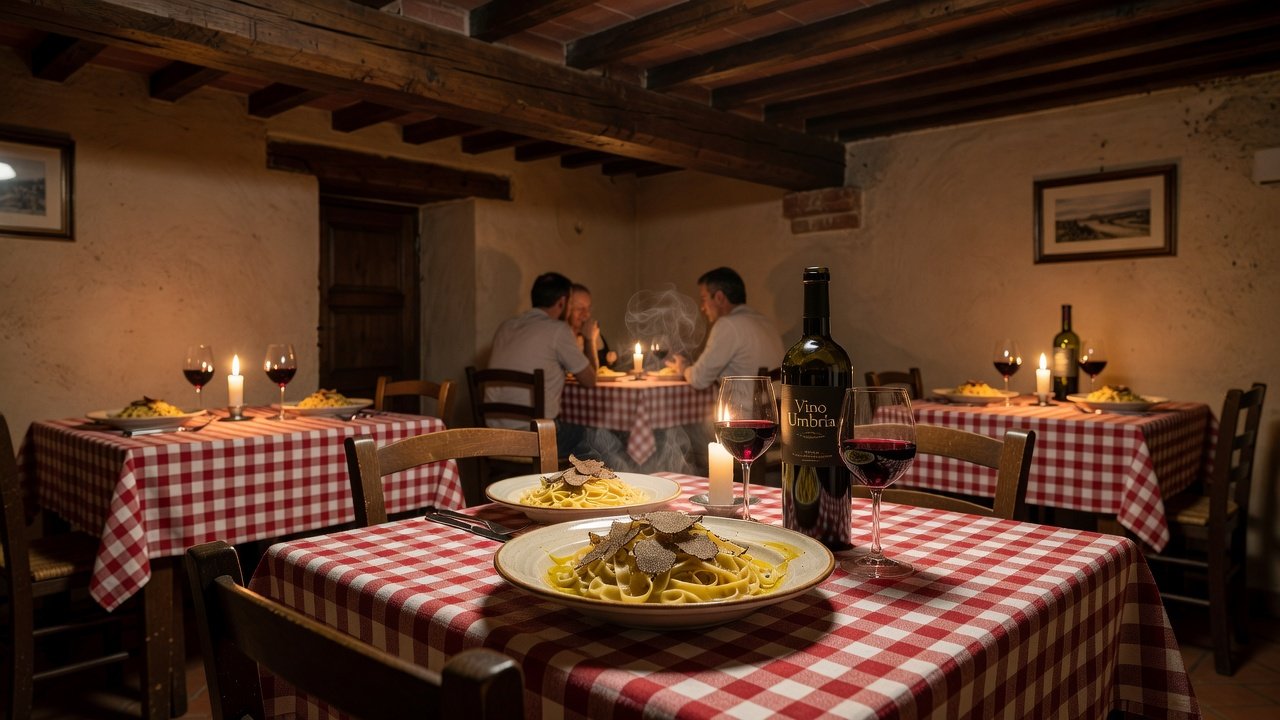
Umbria eats from the land with less performance than the Tuscany brochure version. Here that means green-gold oil from Subasio slopes, strangozzi or umbricelli under sauce, cured pork, wild greens, truffle when the season is real and the price is not theater.
A market morning — when you catch one — is grocery bags and opinionated cheese, not a food-tour script. Buy fruit. Buy pecorino. Eat on a wall with a view you did not plan. Gelato is fine; keep walking while you finish it so you do not become furniture on the piazza.
Evenings, the passeggiata thickens between San Rufino and the Comune, then thins toward the gates. Aperitivo works better one street off the main flow, where the spritz costs less and the Italian does not slow down for you.
Where to eat
Trattoria Pallotta Vicolo della Volta Pinta 3 / Via San Rufino 6, 06081 Assisi PG, Italy
Family-run, a short fold off Piazza del Comune — confirm Tuesday closure before you count on it. Umbrian plates without the white-tablecloth stiff neck: strangozzi, bean soups, pigeon when it is on, truffle when the hills cooperate. Book on weekends. Good first night when you want feeding more than plating.
Osteria Piazzetta dell’Erba Via San Gabriele dell’Addolorata 15/B, 06081 Assisi PG, Italy
Small room just off the tourist mainline, serious about product. Traditional plates sit next to more playful ones. Reserve. Order the thing that sounds most local and least translated, then let the wine list stretch if the night is going well.
La Locanda del Cardinale Piazza del Vescovado 8, 06081 Assisi PG, Italy
A step up in ambition inside a historic shell — Roman remains underfoot in parts of the building, kitchen that can do simple egg-and-asparagus one course and something more composed the next. Use it for the dinner you want to remember as a meal, not a pit stop. Book ahead in high season.
Between sit-downs: espresso standing up, a pastry you point at, bread and oil if a shop will sell you a heel and a splash. October new oil on warm bread is worth rearranging a morning.
Places to stay
Sleep inside the walls if you can. Assisi after the day coaches leave is a different town — bells, empty lanes, the olive on Porta San Giacomo still hanging over the gate in the dark. Bags on wheels hate the stone; pack light or accept the carry.
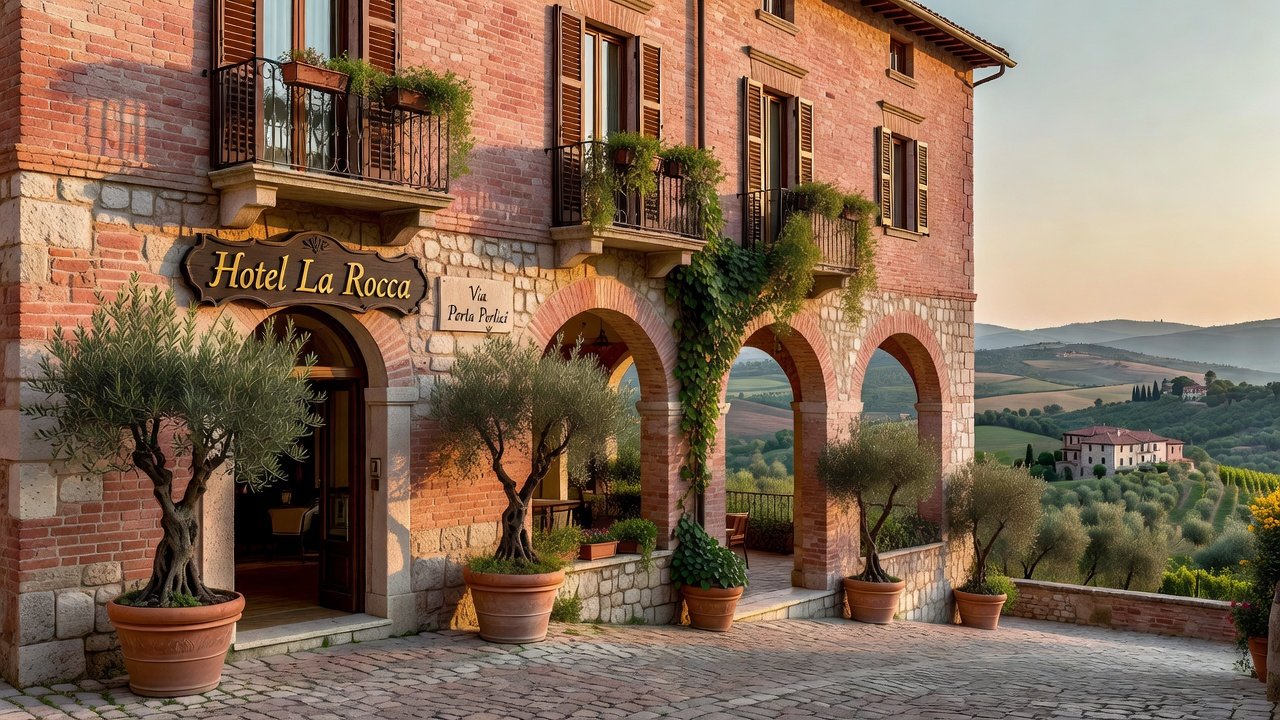
Hotel La Rocca — value, high in the centro Via Porta Perlici 27, 06081 Assisi PG, Italy
Simple two-star bones near the quieter Perlici side, rooftop terrace, restaurant if you do not want to hunt after a long climb. Rooms are honest rather than styled. Good for walkers who care more about gate access and price than design magazines. Ask about noise and parking; the hill has opinions.
Giotto Hotel & Spa — mid-range, views toward the valley Via Fontebella 41, 06081 Assisi PG, Italy
On the Fontebella slope near the San Francesco side, panoramic dining, spa if your calves vote yes after the alleys. Four-star comfort without leaving the historic fabric. Solid two- or three-night base when Assisi is the stay, not a day raid from Perugia.
NUN Assisi Relais & Spa Museum — splurge, old monastery made modern Via Eremo delle Carceri 1A (Piazza Giacomo Matteotti), 06081 Assisi PG, Italy
Former monastic cells, contemporary art, a spa that leans into Roman water memory under the building. Near Matteotti parking, which matters when you have a car and a ZTL headache. Book when you want the hilltop without the logistics headache.
Two nights minimum. Three if you want the Eremo, a slow morning at San Rufino, and one aimless afternoon that produces nothing useful for a feed and everything for the trip.
Getting there and moving around
Trains stop at Assisi station down on the plain near Santa Maria degli Angeli; buses climb to the historic center. By car, respect the ZTL. Park in the signed lots (Matteotti, Mojano, and others depending on which gate you favor) and walk in.
Once inside, walk. Lanes are steep, polished, and occasionally damp; shoes with grip beat sandals you love. Buses link the station, the lower basilica area, and the upper town. Taxis exist for the night you misjudge the climb after rain.
Daylight fills with visitors; early morning and evening belong to residents and anyone willing to shift their clock. August and major feast days compress the streets. Shoulder seasons open the alleys back up. Monte Subasio runs cooler and windier than the valley — bring a layer even in summer.
I keep thinking about that olive on Porta San Giacomo when the coaches have gone and the stone still holds the day’s heat. Roots in a tower no gardener planned. Leaves over a gate people still use to go home. Stay long enough for one ordinary errand between the bells. The basilica will still be there when you get back.
