
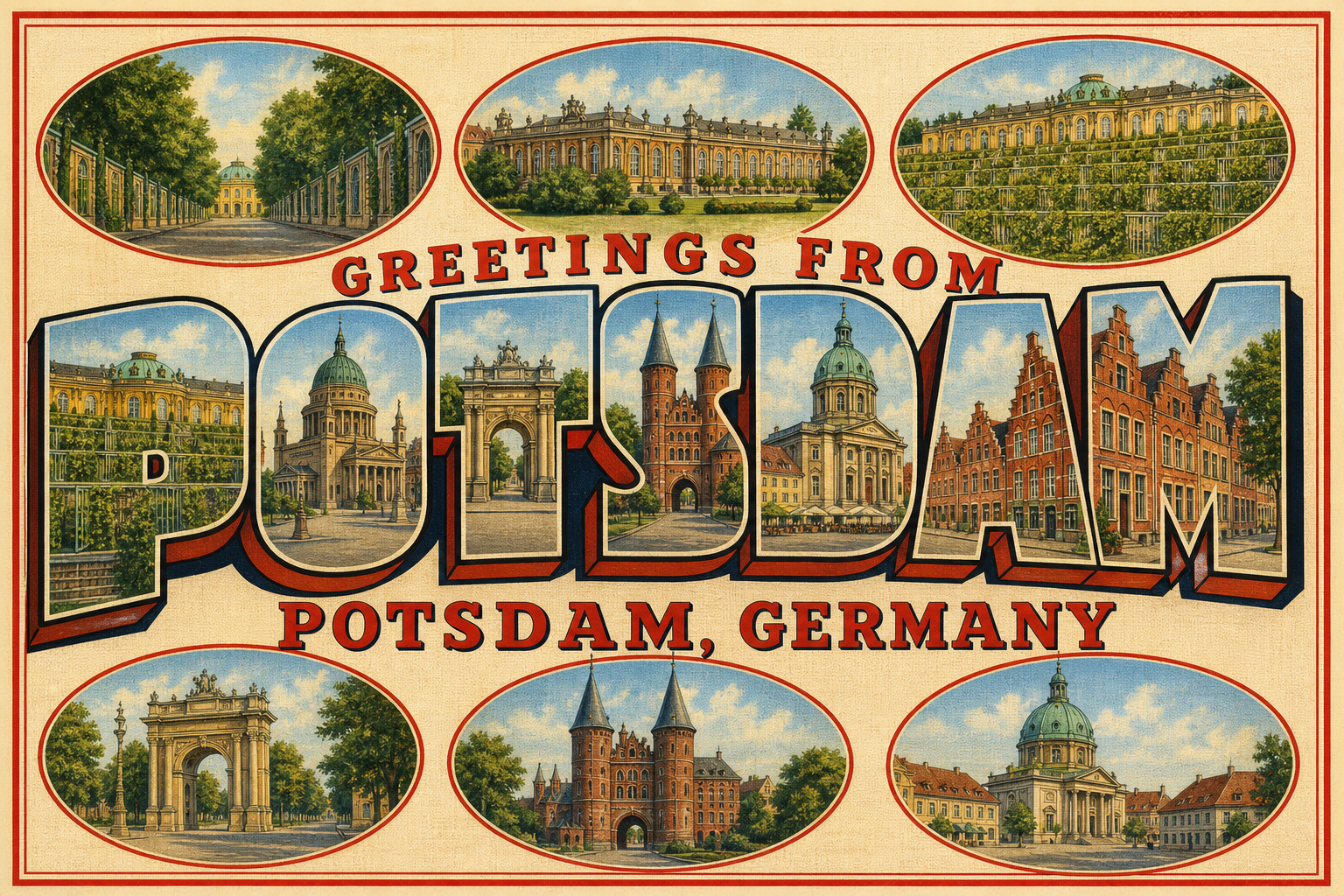
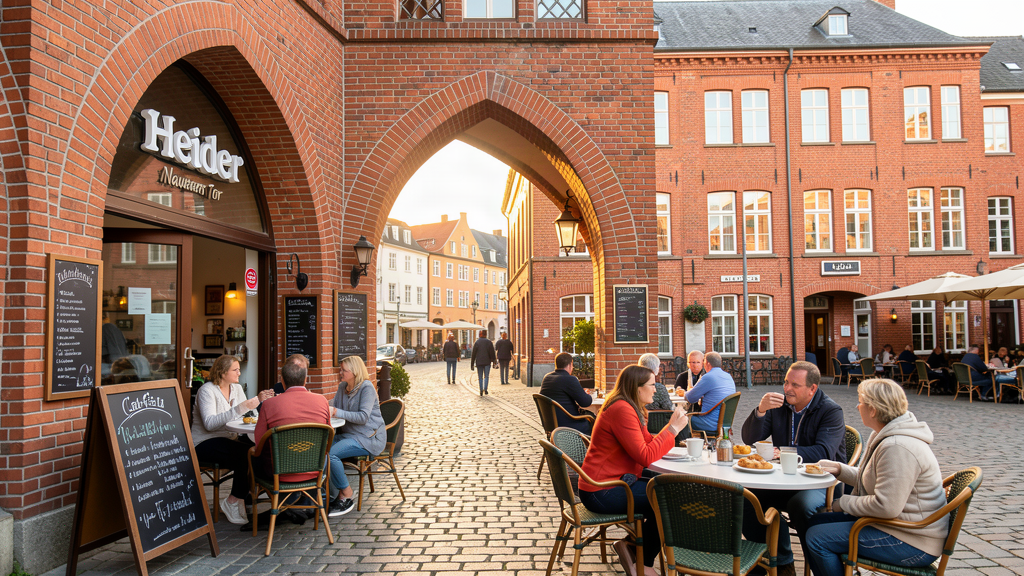
Most people meet Potsdam at Sanssouci’s terraces or the long park axes that photograph like a king’s postcard. I meet it first under the pointed arch of Nauener Tor, where Friedrich-Ebert-Straße hits the Holländisches Viertel and the red brick gables on Mittelstraße start their short run. Coffee from Café Heider’s own roast drifts across the square. Delivery bikes cut the tram lines. The palace can wait.
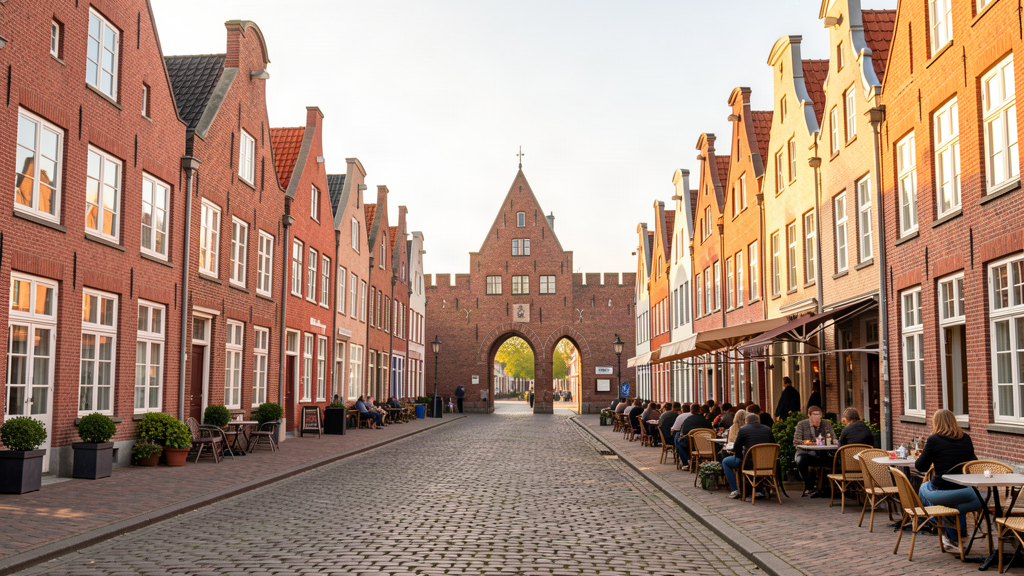
Potsdam sits southwest of Berlin on the Havel lakes, close enough for a day trip and better when you refuse to treat it like one. Guidebooks stack Frederick the Great, UNESCO parks, and the Bridge of Spies into a checklist. What stays with me after that thins is a walkable old town of gates, brick courts, and side streets that still sell bread and hardware between the boutiques. The Dutch Quarter is the clearest of those streets: about 150 red brick houses built in the 1730s and 1740s for craftsmen Frederick William I hoped would settle here. Many never stayed. The architecture did.
Inside the Holländisches Viertel
I arrive when the quarter is open but not yet performing. Mittelstraße and Benkertstraße form the spine — narrow, cobbled, lined with two-story brick houses that look more Low Countries than Brandenburg until you notice how practical the Prussian build is underneath. Ground floors hold ceramics shops, small galleries, bakeries, and cafés that put tables on the stones when the weather holds. Upper windows keep flower boxes and laundry lines the brochures skip.
The quarter is four blocks of court-like squares, not a theme park. You can walk it in twenty minutes if you rush. Better to take an hour: step into a courtyard when a door is open, buy something small you will actually use, sit long enough that a local conversation at the next table stops sounding like background. Nauener Tor anchors the north edge — Prussia’s early neo-Gothic gate, rebuilt and cleaned, still useful as a meeting point rather than a monument you circle once and leave.
From the gate I drift south through the brick lanes, then west toward the Jägertor and the quieter edges of the Altstadt. Antique shops and secondhand book tables show up without much fuss. On market days the streets thicken; on ordinary Tuesdays they feel like a neighborhood that happens to be beautiful. Both versions are real. I prefer the Tuesday version, when you can hear your own footsteps on the cobbles.
Sanssouci is a short walk or tram hop west. Go once, early if you can, and treat the park as a long green room rather than a palace conveyor. The Dutch Quarter is where I return when the park crowds peak — coffee, a slow street, and the sense that people still live here between the UNESCO signs.
Toward Alexandrowka and the water
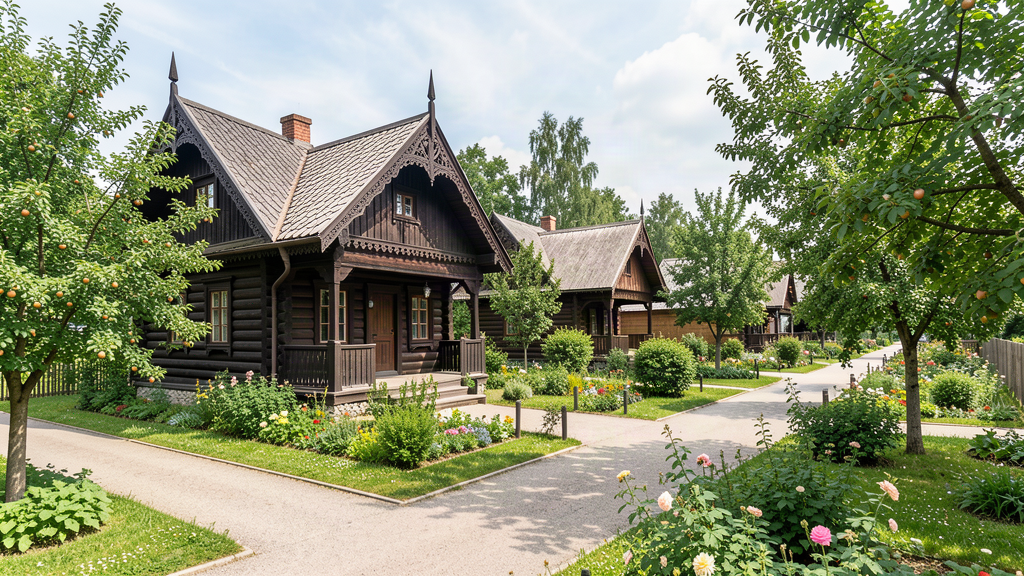
North of the old town, the Russian colony of Alexandrowka runs on a different beat. Frederick William III built the wooden farmsteads in the 1820s for Russian singers attached to the Prussian court, in memory of Tsar Alexander I. The houses look like log cabins from a distance; up close they are Prussian half-timber dressed in dark planks, each set in a garden on a plan that follows a Saint Andrew’s cross. Russische Kolonie 2 holds a small museum in House No. 2 when it is open — kitchen, living room, the plain facts of how the colony was lived in, not only photographed.
I walk Alexandrowka without forcing a full museum hour unless the day is cold or wet. The point is the street: orchard trees, carved gables, a chapel up on Kapellenberg, and a corner of Potsdam that was built as both gift and stage. From here the Neuer Garten and Heiliger See are close. Paths lead toward Cecilienhof and the lakeshore without requiring another ticket if you only want trees and water.
The Havel is the quieter line through town. Ferries and footpaths link park edges; bikes make more sense than cars once you are inside the historic core. I use the water the way I use the Landwehrkanal in Berlin — as a reset between denser streets, not as a separate attraction with a schedule. Sit at the Meierei end of the Neuer Garten when you want a brewery terrace and lake light after too many gilt rooms.
Places to Stay
NH Potsdam — Friedrich-Ebert-Straße 88, 14467 Potsdam
A practical midtown base on the main north–south street, with tram links that put Nauener Tor, the Dutch Quarter, and the station within easy reach. Rooms are straightforward business-hotel stock rather than design statements; the value is location and the money you keep for meals and park days. Choose it when the budget is tight and you want to walk home from Mittelstraße without a taxi.
Hotel Am Jägertor — Hegelallee 11, 14467 Potsdam
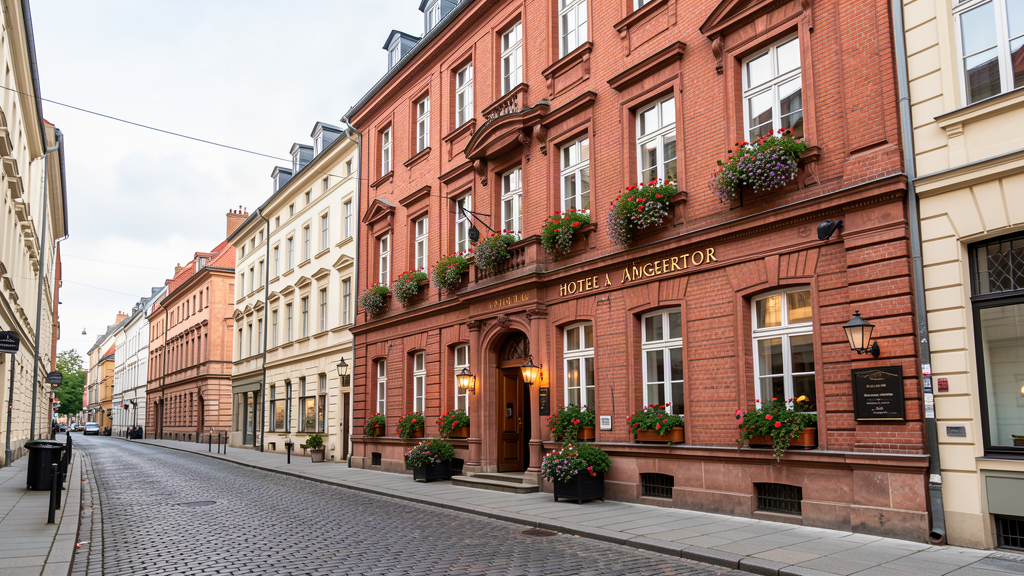
A four-star boutique stay opposite the Jägertor, between the Dutch Quarter and the walk west toward Sanssouci. Historic shell, updated rooms, and a ground floor that feels like a city residence more than a transit hotel. Useful when you want character in the old town without climbing into a villa on the hillside, and when ending the evening near the brick streets matches how you move.
Hotel Villa Monte Vino — Gregor-Mendel-Straße 27, 14469 Potsdam
A higher-end stay in a nineteenth-century villa compound near the Winzerberg, a short walk from Sanssouci’s park edge. Rooms and lounges keep the house’s weight — stairs, gardens, a slower check-in pace. Stay here when you want the overnight itself to feel like part of the trip, then walk or tram into the Dutch Quarter for coffee and leave the palace path for morning light.
Where to Eat
Café Heider — Friedrich-Ebert-Straße 29, 14467 Potsdam
The city’s long-running café-restaurant at Nauener Tor, with its own roast, bakery case, and a dining room locals still use like a living room. Breakfast and cake hold the morning; warm kitchen runs later with regional plates and a schnitzel people argue about in the useful way. I start here when I want the gate and the quarter in one frame — table outside if the square is calm, upstairs balcony if you book ahead for a slower meal.
Restaurant Juliette — Jägerstraße 39, 14467 Potsdam
French cooking in a timber-framed house a few minutes from the Dutch Quarter, candlelit without trying too hard. Classic plates, a serious wine list, and a room that suits one unhurried dinner better than a bar crawl. Reserve. Use it when you want one evening that feels chosen after a day of parks and brick streets.
Gasthausbrauerei Meierei im Neuen Garten — Im Neuen Garten 10, 14469 Potsdam
A brewery inn on the Jungfernsee shore inside the New Garden — beer from the house, hearty plates, and a terrace that faces water and trees rather than a shopping street. Walk here after Cecilienhof or a Neuer Garten loop; stay for a Spezial or Helles and sit still for a while. Closed Mondays. Not a secret. Still where the day loosens for me.
For a simpler lunch between brick blocks, the Dutch Quarter’s small cafés and bakeries are enough — a soup, a sandwich, something from a counter you chose because the window looked honest. I eat better on that rhythm plus one reservation night than on a chase of ranked tables.
Getting there, and how long to stay
Berlin’s airports and Hauptbahnhof feed regional trains and the S-Bahn to Potsdam Hauptbahnhof; from there trams and buses cover the old town, Sanssouci, and the northern parks. The ride from central Berlin is under an hour in normal conditions. Once you are here, walk the Dutch Quarter and gates on foot; use tram lines for the palace axis and the stretch toward Alexandrowka and the Neuer Garten. Drivers will spend the day negotiating one-way streets and paid lots — leave the car at the edge if you can.
One full day covers morning coffee at Nauener Tor, a slow pass through Mittelstraße, an early or late Sanssouci walk, and dinner back in the old town. Two nights are better: one early brick-street morning before the day-trippers thicken, one afternoon for Alexandrowka and the lake edge at the Meierei, and time to let Cecilienhof or the Barberini stay optional rather than mandatory. Three days add a Havel path, a second café morning, or a rest day of park benches without a ticket timed to the minute.
I leave Potsdam the way I try to enter it — not from the palace terrace with the tour headsets, but from Nauener Tor when the roast is already in the air and the red brick rows on Mittelstraße still mostly belong to the people who live behind them. The parks will be there. I’d rather keep the quarter’s clock.
