
# Faience Painters at the Henriot Kilns in Quimper
The rain had just lifted when I stepped off the train in Quimper, leaving the pavements slick and the air smelling faintly of wet stone and river water. I had come for the pottery. Not the polished displays in glass cases, but the living craft that still happens in the old workshops tucked behind the medieval lanes. Quimper’s faience has been painted by hand since the late 1600s, and the town still feels shaped by those kilns and brushes.
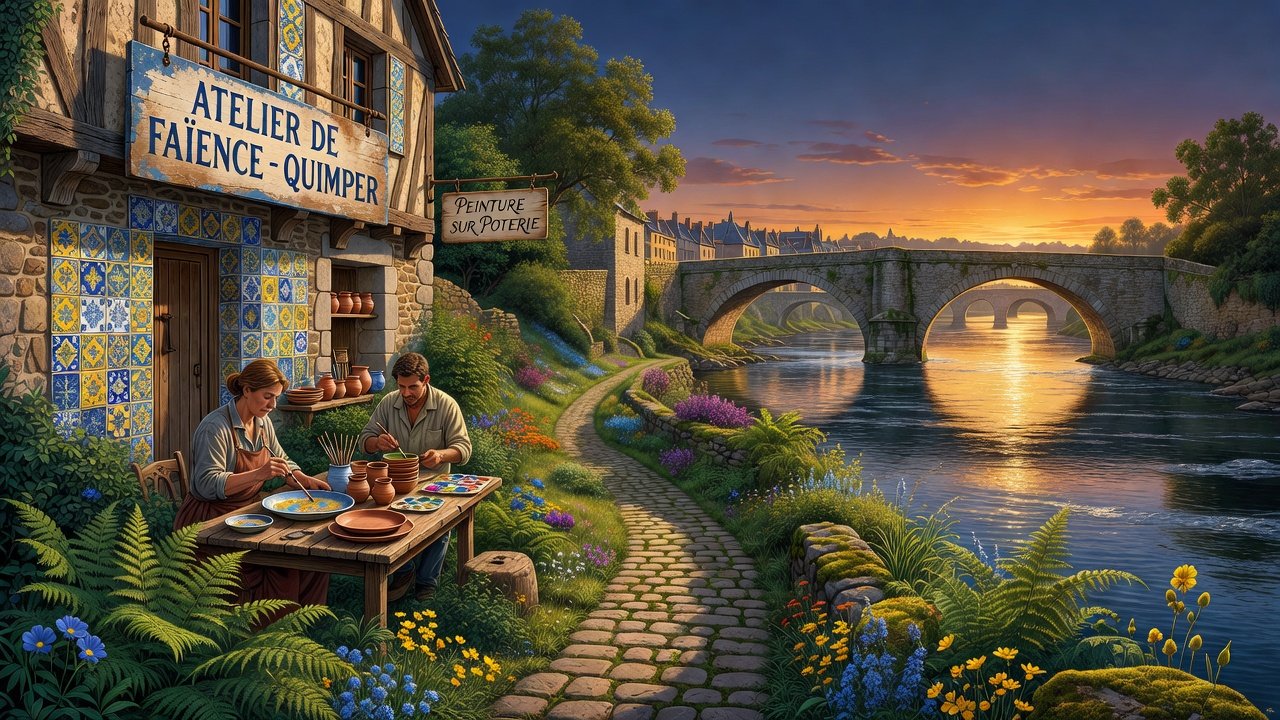
I walked first toward the Henriot-Quimper factory on the edge of the historic center. The building itself is unassuming, a cluster of low workshops and a small museum. A sign in the window advertised the morning tour, and I joined a handful of locals and a couple of curious travelers. Inside, the air was warm and earthy. A potter sat at his wheel, shaping a plate with steady hands while a painter at the next bench traced the classic Breton figures—women in lace coifs, sailors, roosters—in cobalt blue and soft yellow. The guide explained the long process: the clay is pressed, fired once, glazed, painted, then fired again. Watching the brush move across the unfired surface felt like seeing a secret being written in plain sight.
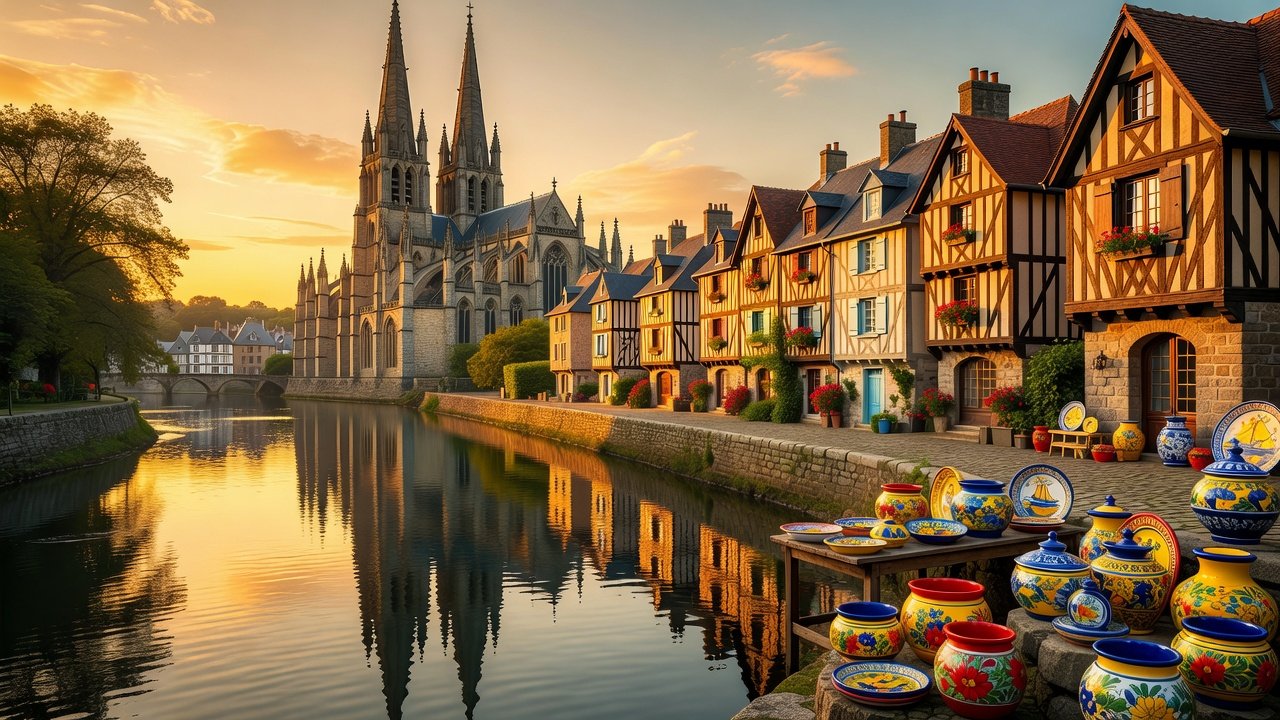
Later I wandered the narrow streets of the old town, where half-timbered houses lean over the cobbles. The Cathédrale Saint-Corentin rises above everything, its twin spires visible from almost every corner. I didn’t go inside right away. Instead I followed the Steir, one of the two rivers that meet here, down quiet quays where houseboats bob and laundry hangs from upper windows. The Odet is broader and busier, but the smaller waterways keep their own rhythm.
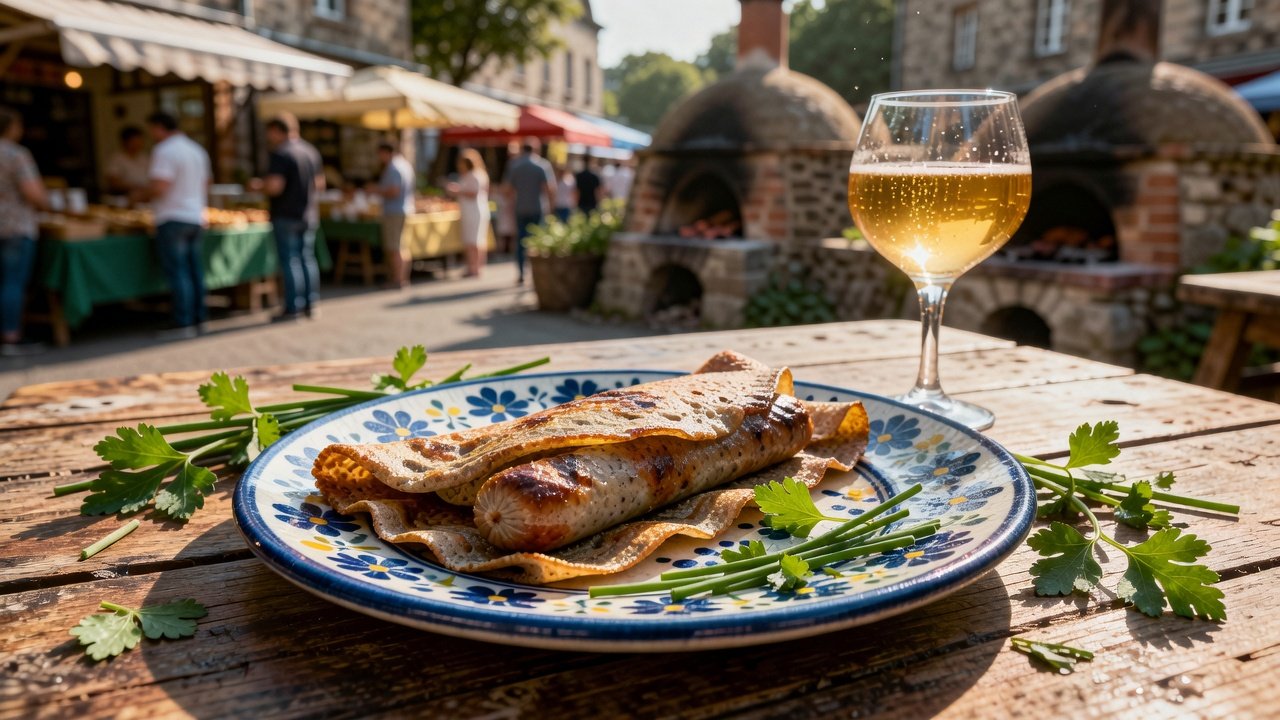
By late morning the covered market at Les Halles Saint-François was in full swing. I bought a paper cone of galette-saucisse—buckwheat crepe wrapped around a grilled sausage—and ate it standing at the counter while watching the vegetable sellers arrange artichokes and new potatoes. The crepe was crisp at the edges, the sausage smoky and simple. It tasted exactly like the kind of meal you eat when you are not trying to impress anyone.
In the afternoon I returned to the pottery district. A small gallery attached to one of the older workshops displayed seconds and one-of-a-kind pieces. The prices were reasonable, and the woman behind the counter told me stories about her grandmother who had painted for Henriot decades earlier. She pointed out a pattern still in production that her grandmother had helped design. I left with a small plate wrapped in brown paper, the kind of souvenir that actually gets used.
Quimper rewards slow movement. The tourist buses head straight for the cathedral and the main square, but the real texture of the place lives in the side streets and the working studios. Even the light feels different near the river—soft, filtered through the trees that line the banks.
## Places to Stay
Three places that suit different budgets and moods, all within easy walking distance of the old center and the pottery workshops.
**Budget: Hôtel de la Gare**
32 Rue de la Gare, 29000 Quimper
Simple, spotless rooms above a café that opens early for coffee and croissants. The location is practical if you arrive by train, and the staff know the local bus routes. No frills, but clean sheets and a quiet night.
**Mid-range: Le Gradlon**
30 Rue de la Gare, 29000 Quimper
A step up in comfort with thoughtfully decorated rooms and a small courtyard garden. The owners are happy to point you toward lesser-known pottery studios and good crêperies. Breakfast includes local cider and fresh bread from the market.
**Higher-end: Hôtel Kregenn**
11 Rue des Réguaires, 29000 Quimper
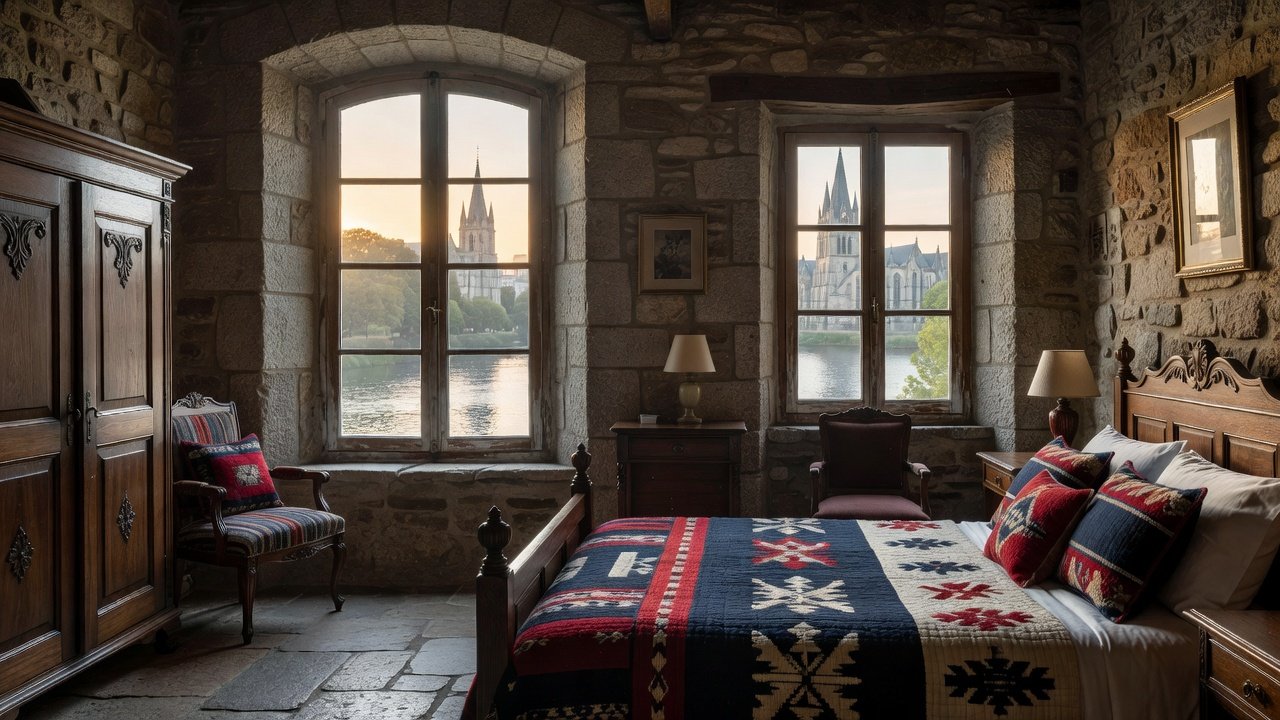
Boutique charm in a restored building near the pedestrian zone. The rooms are calm and modern, and the small spa is a welcome treat after a day of walking. The breakfast room looks out onto a quiet square where you can watch the town wake up.
## Where to Eat
Quimper’s food scene stays rooted in Breton traditions: crepes, seafood, cider, and butter that tastes like it was churned that morning.
**Baravel**
A neighborhood favorite for inventive but unfussy plates. Try the seafood in season or the buckwheat galettes with local ham and cheese. The atmosphere is relaxed, more locals than visitors.
**Le Bistrot de Louis**
Classic bistro cooking with an emphasis on market produce. The menu changes daily. Sit at the counter if you can and watch the kitchen work. Good list of Breton ciders by the glass.
**La Maison Quimper**
1 bis Quai du Port au Vin, 29000 Quimper
Family-style dining right on the river. Generous portions of regional dishes—think fish stew, roasted pork, and excellent desserts. The setting feels convivial rather than formal, perfect for a lingering evening meal.
## Getting Around and Practical Notes
Quimper is compact enough to explore on foot. The train station sits at the edge of the center, and most of the places mentioned are within twenty minutes’ walk. If you want to visit smaller villages or the coast, local buses and the occasional taxi are straightforward. The faience workshops are best seen in the morning when the painters are at their benches; afternoon light in the old town is lovely for photography but the studios are quieter then.
Bring comfortable shoes—the cobbles are uneven after rain. A small umbrella is useful even in summer. If you are buying pottery, ask about shipping; many workshops will pack and post pieces safely.
Quimper does not shout for attention. It lets you find your own pace among the painted plates, the river paths, and the smell of fresh crepes. That is exactly why it stays with you longer than louder destinations.