
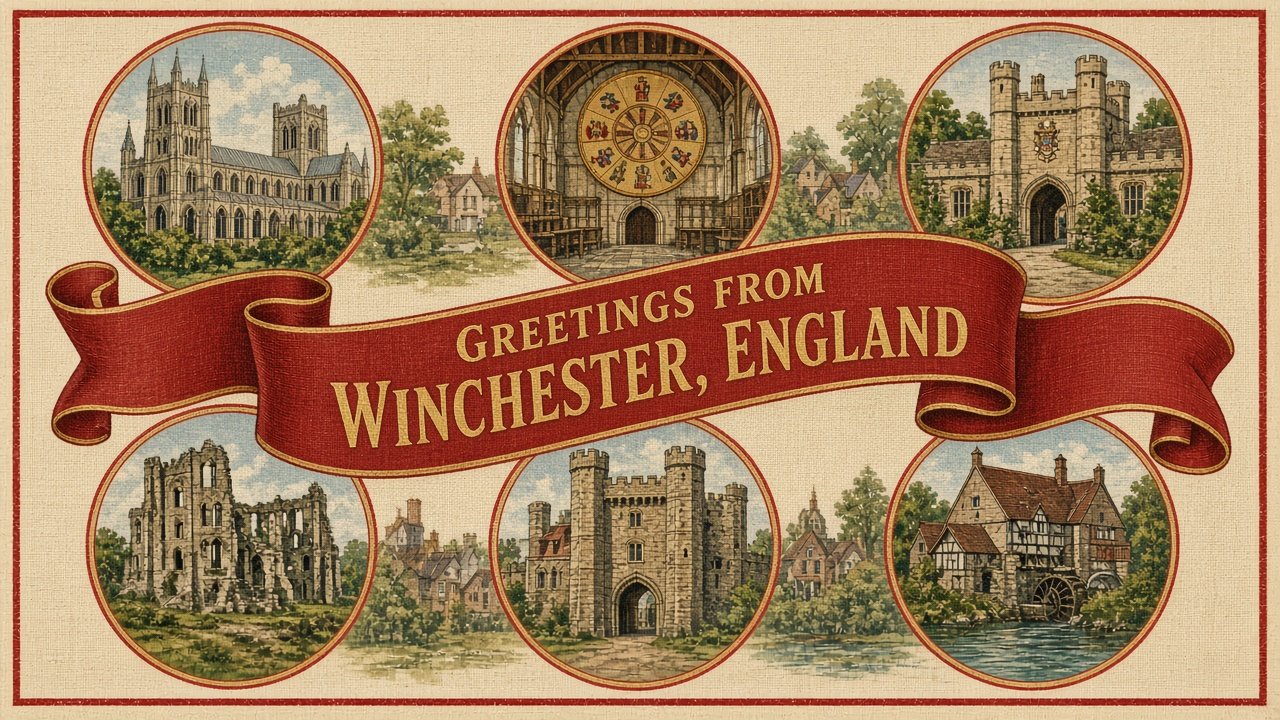
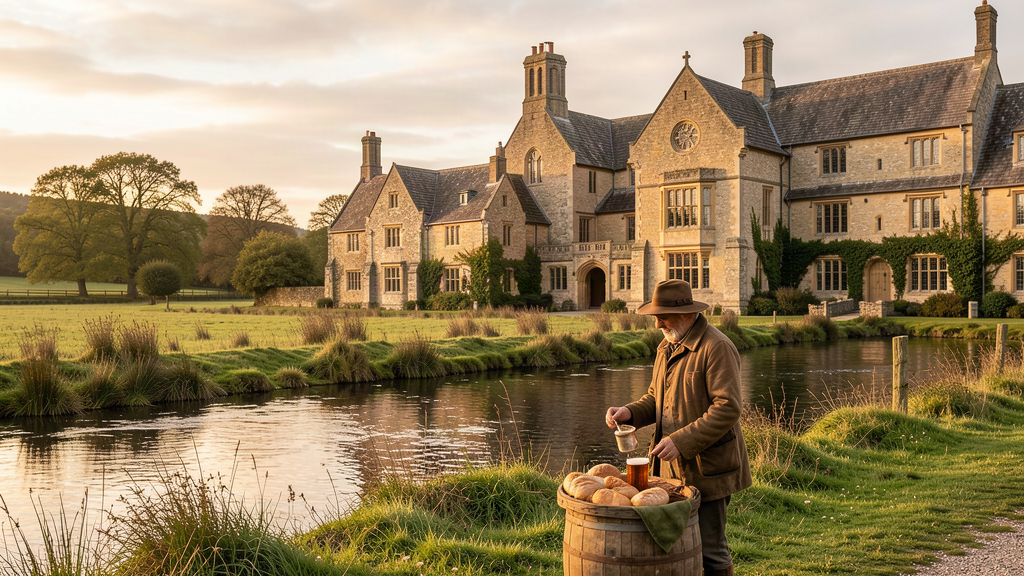
Most visitors stop at King Alfred’s statue, photograph the cathedral front, and call it a day. Fair enough. Those stones matter. The Winchester that sticks with me sits a short walk south, where the River Itchen splits into clear braids and an almshouse older than most European cities still hands a traveller bread and beer if you ask for it.
That place is the Hospital of St Cross. Not a hospital in the modern sense. An almshouse founded in the 12th century for “noble poverty,” still home to Brothers in black or red gowns, still offering the wayfarer’s dole on request. The ritual is small. The grounds are not. Between Wolvesey’s ruined palace walls and the foot of St Catherine’s Hill, the Itchen meadows open the city into wet grass and chalk water.
From the mill to the meadow gates
Start at Winchester City Mill on Bridge Street, where the High Street ends and the river takes over. The National Trust mill still works on a chalk stream: wheels, second-hand books, coffee, and water clear enough that you can watch trout hold in the current. Opposite, The Bishop on the Bridge leans over the same channel. Duck past the pub garden and follow the path along the medieval wall toward Wolvesey.
Wolvesey Castle is really the ruined bishop’s palace: free, open, and oddly quiet this close to the tourist core. Flint and chalk rubble. Empty window arches. Grass where floors used to be. Loop the walls in twenty minutes and you already feel clear of the Broadway. From here the path tips south along College water meadows: Winchester College playing fields on one side, the Itchen forking and rejoining on the other, little footbridges out to cottages that look older than the traffic noise behind you.
At Garnier Road the route hiccups. Cross carefully, then pick up the path to the right of the house, easy to miss if you follow the road instead of the river. Branches of the Itchen show up on both sides. Allotments. Then St Cross across open meadow: church tower, outer walls, the plain sense of a place people still live in.
Bread, beer, and Brothers
The Hospital of St Cross and Almshouse of Noble Poverty sits on St Cross Road, though the meadow approach is the better way in. Founded around 1136 by Bishop Henry of Blois, it claims to be England’s oldest charitable almshouse still running. Brothers live here. When the site is open, visitors pay a modest entry and often get a tour from someone who actually lives on the grounds. Not a costume guide with a script. A resident who knows which door sticks and where late light falls in the church.
Ask for the wayfarer’s dole. You may get a scrap of bread and a cup of beer (sometimes a token pour; customs shift with the day and the Brother on duty). The point is not the calories. It is a medieval obligation that never quite got cancelled. Keats walked these meadows on the autumn visits that fed “To Autumn.” He stopped at St Cross. You can stand in roughly the same water-meadow light without treating the poem like a ticket stub.
Tea and cake appear in season when the tearoom runs. Even without it, the church and quadrangles are worth an unhurried hour. Then push on through the gates beyond: tree-lined path, cricket pitches, cattle in the next meadow if you are lucky, stream on one side. Turn left onto the tarmac spur that ends at a bridge with a long view back over the Itchen valley. Five Bridges Road country, wet meadows flat to the horizon, St Catherine’s Hill rising east.
Hill, navigation, and the long way home
St Catherine’s Hill is the Iron Age rise that sits over the whole circuit. Steep wooden steps in places; wide views of the Itchen Valley when you top out. On a clear day the chalk downs roll away and the motorway hum stays off to the side. Drop back to the Itchen Navigation path, the old barge channel that once tied Winchester toward the sea. Tree canopy, easy footing, hill on one shoulder and moving water on the other.
A carved stone bench shaped like a barge marks the navigation’s working life. Further on you can cut short toward Garnier Road or keep the river on your left until college grounds and tennis courts pull you north again. Narrow riverside strips, pretty houses, a stone bridge, College Walk, and suddenly you are back near Wolvesey, free to peel toward Kingsgate, Jane Austen’s final house on College Street, and the cathedral close.
You do not need a guidebook for this loop. You need shoes that can handle a damp meadow edge, a willingness to read a gate rather than a brown tourist sign, and an hour when the High Street crowds feel optional.
Center as bookends
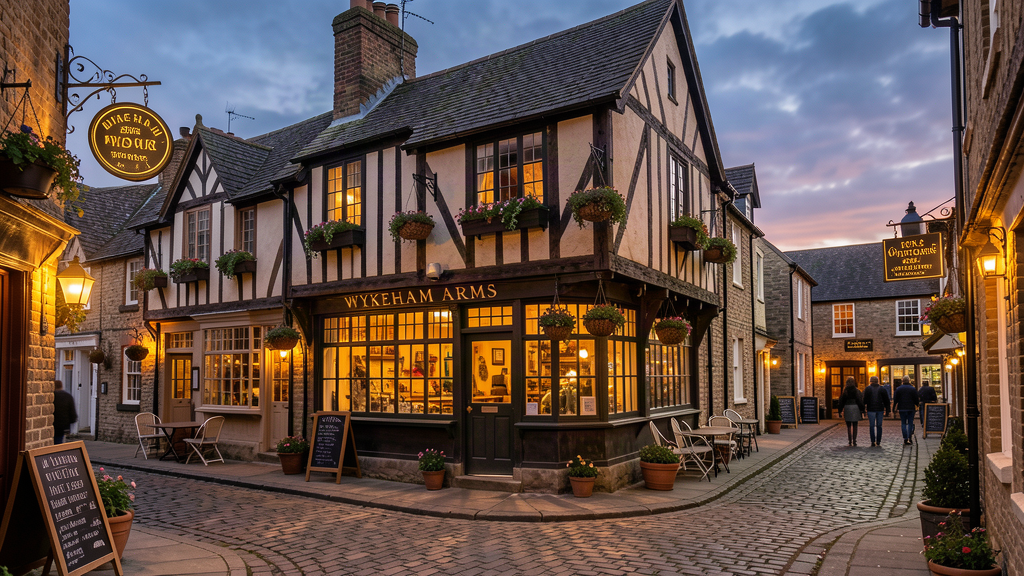
Winchester’s center still earns a look: cathedral nave, Great Hall round table, Buttercross, the lanes around The Square. Use them as bookends. Between the Close and Kingsgate Village the streets tighten: bookshops, small pubs, school traffic in term time. P&G Wells on College Street will make you late for lunch; the Wykeham Arms around the corner is where a lot of those lunches end.
What I like best is how fast the town thins once you commit to the Itchen. Stone gate one minute, moorhen the next. Chalk streams are rare. This one runs through a county town and still looks like itself: cress-green weed, pale gravel, water clear enough to tempt a hot-day paddle. Meadows first. Monuments in between.
Places to Stay
Budget — Travelodge Winchester Market Lane, Winchester, Hampshire SO23 9AL. Simple, central, minutes from the Broadway to the City Mill. No frills, reliable beds if you are on the train and saving money for food. Book early for weekends.
Mid — The Wykeham Arms 75 Kingsgate Street, Winchester, Hampshire SO23 9PE. Eighteenth Century inn between college and cathedral, rooms above a proper pub. Quiet corner of the old city; short stroll to the meadow gates. Fuller’s beer, paneled rooms for wet evenings.
Treat — Hotel du Vin Winchester 14 Southgate Street, Winchester, Hampshire SO23 9EF. Original Hotel du Vin in a Georgian townhouse by the cathedral. French-leaning bistro, serious wine list. Soft landing after the meadow loop without leaving the walkable core.
Where to Eat
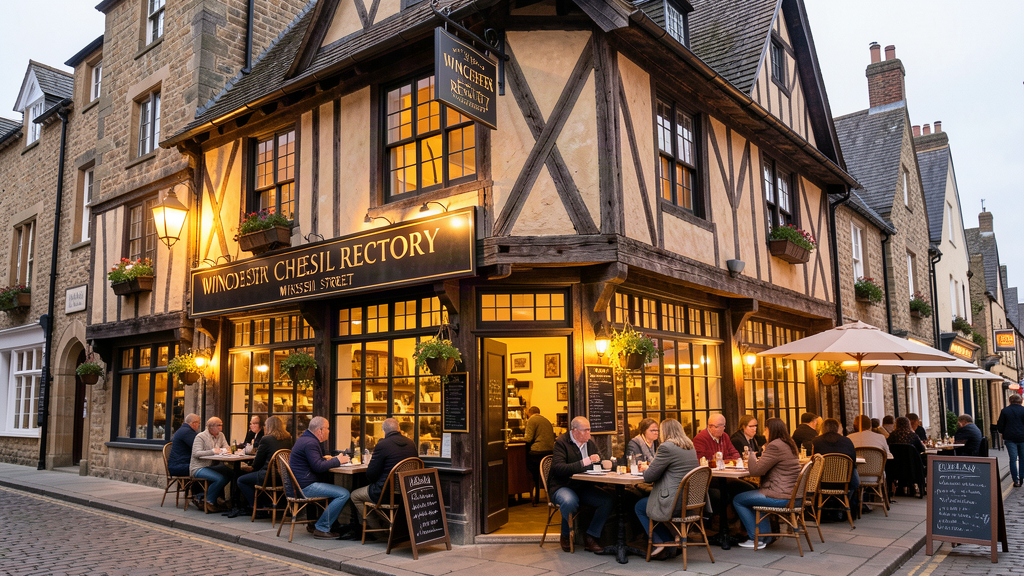
Chesil Rectory 1 Chesil Street, Winchester, Hampshire SO23 0HU Medieval townhouse on the east side of the Itchen bridge, independent since 2008, seasonal British cooking with Hampshire suppliers: chalk-stream trout, Alresford watercress, local cheeses. Low beams, small rooms, booking essential. Lunch if dinner is full; the building alone is worth the walk from the mill.
The Black Boy 1 Wharf Hill, Winchester, Hampshire SO23 9NQ Eccentric, crowded with salvaged oddities, perfectly placed climbing back from the Navigation toward Chesil. Pub food with personality rather than polish, a local’s living room that learned card payments. Right after the St Cross circuit when you want a pint more than a tasting menu.
The Bishop on the Bridge 1 High Street, Winchester, Hampshire SO23 9JX Riverside Fuller’s pub at the start of the meadow walk, garden tables over the Itchen when weather holds. Seasonal plates, craft taps, and a seat right where the path begins. Coffee at the mill, finish here, or reverse it on a late return.
Getting there and around
Winchester station sits northwest of the center, about fifteen minutes on foot to the cathedral, a little more to Bridge Street and the mill. Trains run frequently from London Waterloo (roughly an hour). Once you are in, walk. The meadow loop to St Cross and back is about four to five miles with the hill; the Itchen path is the point. Drivers: park once at the Chesil multi-story on the east bank and forget the car. Start from the City Mill, not a Garnier Road pull-in.
Practical notes
- St Cross opening shifts by season and day; check before hinging a plan on the dole. Meadows do not close.
- Livestock in some fields past the hospital; leads for dogs.
- Footwear: meadow paths soften after rain.
- Timing: early or late light thins cathedral crowds. Autumn still feels like Keats country.
- South Downs Way starts at the City Mill if a city day wants longer chalk miles.
Winchester will sell you kings and bishops without trying. Take them. Then keep walking until the river multiplies, a Brother measures out a dole, and the county town feels like what it always was: a valley settlement with wet feet and clear water. That is the Winchester worth the train fare.
