

Most visitors meet Oxford on the High and the Radcliffe Camera first: honey stone, bicycle bells, a queue for a college tour. Fine. What gets skipped is a short walk northwest of Jericho, where Aristotle Lane and Walton Well Road drop you onto Port Meadow — hundreds of acres of never-ploughed flood common beside the Thames, still grazed under rights the Freemen of Oxford and the Commoners of Wolvercote have held since before Domesday.
Give the meadow a half-day before you buy another ticketed quad. Start when the light is low and the cattle are moving, then drift back through Jericho’s canal terraces. The Camera will wait.
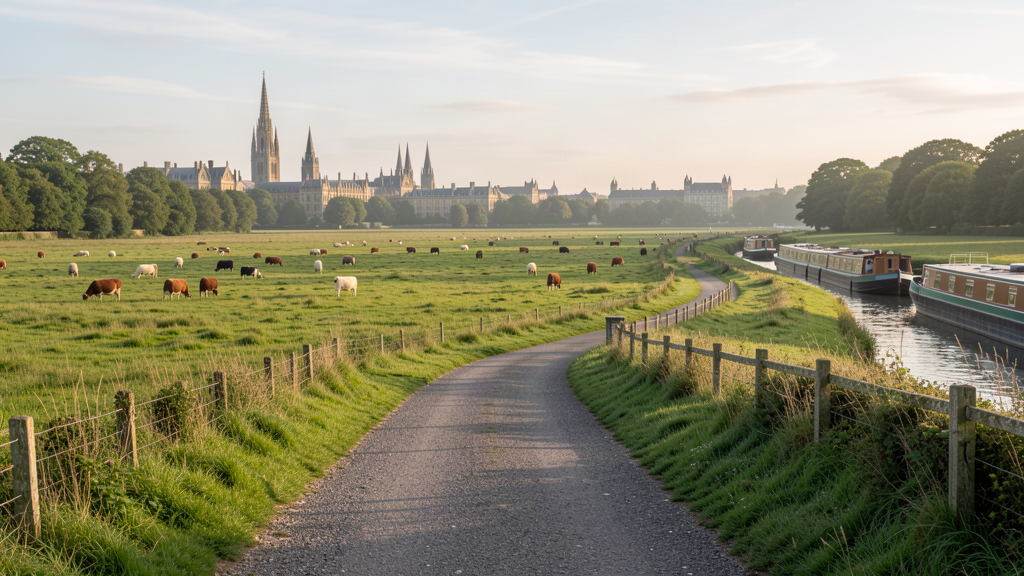
Port Meadow from Aristotle Lane and Walton Well Road
Port Meadow runs north from the edge of Jericho toward Wolvercote along the east bank of the Thames, roughly 440 acres of open common that grades into Wolvercote Common beyond the Shiplake Ditch. Access from the city side is simple: Aristotle Lane and Walton Well Road both open onto the grass; Roger Dudman Way and the Thames Path pick you up farther south. No gates to time, no ticket booth, no lighting across the middle. Stout shoes and daylight are the rules.
The Freemen’s grazing right is why the ground still looks like this. Legend ties the gift of pasture to defense against Danish raids; the right itself shows up in the Domesday survey of 1086 and has been exercised ever since. Horses and cattle roam freely — owned by commoners, not wild, but unfenced the way you’d expect a park to be. Keep dogs under control, give the animals space, and treat the river bank as water, not a swimming hole. The city does not recommend swimming; submerged objects and water quality are real problems.
In late spring the buttercups take over whole stretches. In winter the low ground floods; in hard frosts it has frozen hard enough for skating. Bronze Age and Iron Age remains sit under the turf; the meadow is a Site of Special Scientific Interest and a Scheduled Ancient Monument. You don’t need the archaeology pamphlet to feel how different this is from Christ Church Meadow’s managed lawn. A few hundred yards in from Aristotle Lane, the college skyline shrinks and you’re left with sky, river, and open grass.
A riverside path runs the length toward Godstow. Moored narrowboats line stretches of bank. Burgess Field, the reclaimed landfill turned nature reserve just east of the Aristotle Lane entrance, gives you a quieter loop through copses when the main meadow fills with weekend walkers. Pair them if you have the legs.
Jericho: canal suburb before the meadow
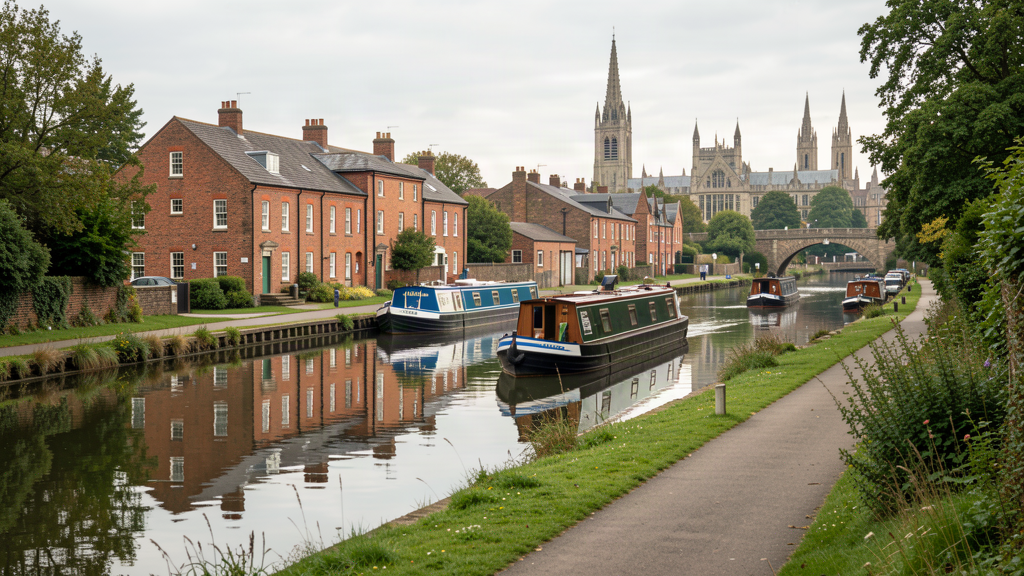
Back toward town, Jericho is the hinge. Bounded roughly by the Oxford Canal, Worcester College, Walton Street, and Walton Well Road, it grew as Oxford’s first industrial suburb once the canal arrived in 1790. Two-up, two-down Victorian terraces filled the ground for press workers, foundry hands, and wharf labour. St Barnabas Church — the “Oxford Basilica” with its Italianate campanile — sits on Cardigan Street / St Barnabas Street, Oxford OX2 6BG, hard by the water, founded for the parish that the University Press and the canal created.
The Eagle Ironworks (W. Lucy & Co.) dominated the canal end for generations: lamp-posts, manhole covers, later electrical ironwork, a major local employer wrapped around St Sepulchre’s Cemetery. Manufacturing stopped on site in 2005; the works came down soon after and apartments filled the footprint. William Lucy Way and the canal-side blocks are what’s left. Walk the towpath from the station end up toward Walton Well Road and you can still read the old industrial line even when the brick sheds are gone.
Walton Street is the living stem now — bookshops, cafés, evening tables, people who live here rather than tour groups in matching rain jackets. Cranham Street, Juxon Street, and the side lanes stay residential. Treat them as streets, not a film set. The canal towpath is the quiet alternative to Cornmarket: slow water, bikes, the occasional boat engine. You can reach St Barnabas and the meadow edge without ever joining the High Street crush.
North along the Thames to Godstow
If the meadow is dry enough underfoot, keep going. The path north threads past Fiddler’s Island and the long open common toward Wolvercote. Godstow Abbey’s ruins sit near the bend — a nunnery site with a thin shell of walls rather than a full visitor complex. Cross or skirt toward the village and you hit two classic Thames pubs that locals still use as walk ends, not only tourist photocalls.
The Trout Inn at 195 Godstow Road, Wolvercote, Oxford OX2 8PN, sits by the water at the north end — a solid pint-and-plate stop after the open grass, busy in fair weather, calmer on an off-peak weekday. The Perch at Binsey Lane, Binsey, Oxford OX2 0NG, peels west off the river toward the thatched village of Binsey — a slightly longer detour, garden tables when the season holds. Neither needs a college ticket. Both reward the walk more than a taxi drop.
You don’t have to complete the full Wolvercote circuit. Aristotle Lane out, an hour on the grass, back through Jericho for lunch already beats a day spent only inside chapel queues.
Places to Stay
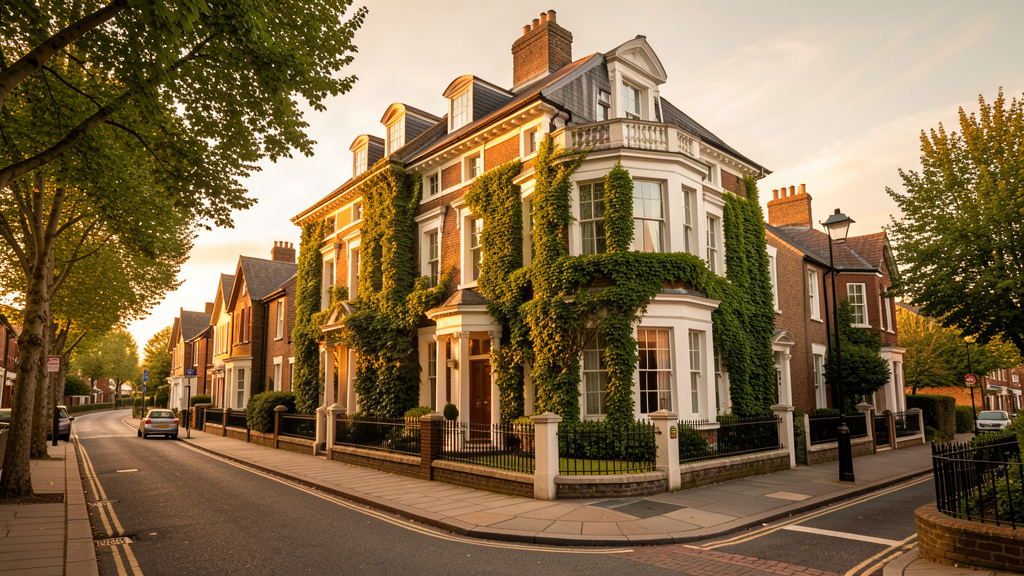
The Jericho Hotel — 25 Walton Crescent, Oxford OX1 2JQ Simple, lower-bracket rooms on a quiet crescent a short walk from Walton Street and the canal. No spa theatre — a bed, a base, and the meadow edge on foot in the morning. Choose it when the budget matters and you still want Jericho rather than a ring-road chain.
The Osney Arms Guest House — 45 Botley Road, Oxford OX2 0BP Mid-range guesthouse west of the centre toward Osney and the station side of town. Straightforward rooms, breakfast that earns its keep, a walk or short bus hop to Jericho and Port Meadow without paying High Street rates. Useful when trains dictate the itinerary and you still want the west-side riverscape.
Old Parsonage Hotel — 1–3 Banbury Road, Oxford OX2 6NN Higher-bracket stay in a seventeenth-century parsonage at the foot of Banbury Road, with a walled garden and individual rooms a walkable slant from Jericho and the southern meadow entrances. More polish, more quiet money. Best when the room itself is part of the trip and you still keep a morning free for Aristotle Lane.
Where to Eat
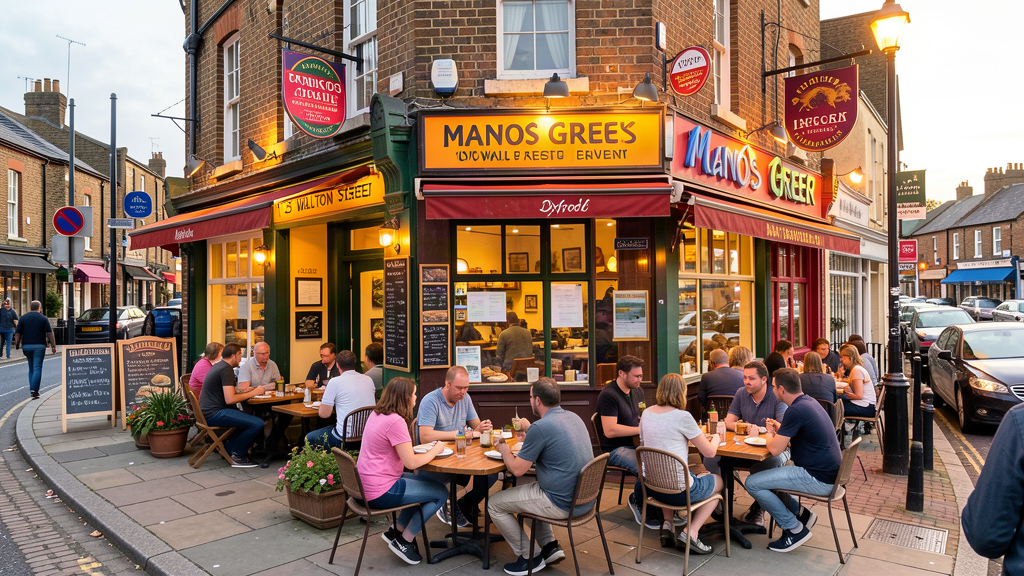
Manos — 105 Walton Street, Oxford OX2 6EB Greek deli and food bar on the Jericho stem — coffee, plates, takeaway energy, outdoor seats when the weather holds. Good after a meadow morning when you want something honest and fast without drifting back to the covered-market tourist strip.
The Rickety Press — 67 Cranham Street, Oxford OX2 6DE Pub tables tucked off Walton Street in the Jericho grid. Pizza, burgers, and a room that still feels neighbourhood rather than gown-show. Book or arrive early on busy nights. Handy when you are already between the canal and Port Meadow and do not want a taxi to Cowley Road.
Branca — 111 Walton Street, Oxford OX2 6AJ Long-running Italian brasserie and bar with a deli next door and a garden terrace in season. Pasta, pizza, all-day rhythm, usually packed. Mid-to-higher for Jericho. Use it when you want a proper sit-down after the common, without defaulting to a High Street chain.
For cheaper fuel, graze Walton Street cafés or pick up supplies and eat on the meadow edge if the ground is dry and the cattle are elsewhere. The Trout or The Perch cover the long-walk reward at the north and west margins.
Getting around and leaving room
Oxford station sits southwest of Jericho. The walk to Walton Street and Aristotle Lane is manageable with a map once; buses cover Banbury Road and the north if legs are done. London trains are frequent. The city centre is dense and one-way hostile — skip driving into the core if you can. Cycle hire and your own feet handle Port Meadow, Jericho, and Godstow better than a car park hunt.
College interiors, the Bodleian tours, and the Ashmolean will pull every first visit — give them a slot if you must. Don’t let them replace the freemen’s grass. Early on the meadow beats midday coach crowds on Broad Street. Winter floods change the path; summer buttercups change the colour. Carry a layer either way.
Oxford is more than a selfie on the Bridge of Sighs and a cream tea on the High. Stand on Port Meadow until the cattle noise replaces the tour-guide headset. Walk Jericho until the canal terraces feel like a working suburb that outlasted its foundry. Eat on Walton Street. Aristotle Lane still opens for people who live here — leave half a day for it.
