
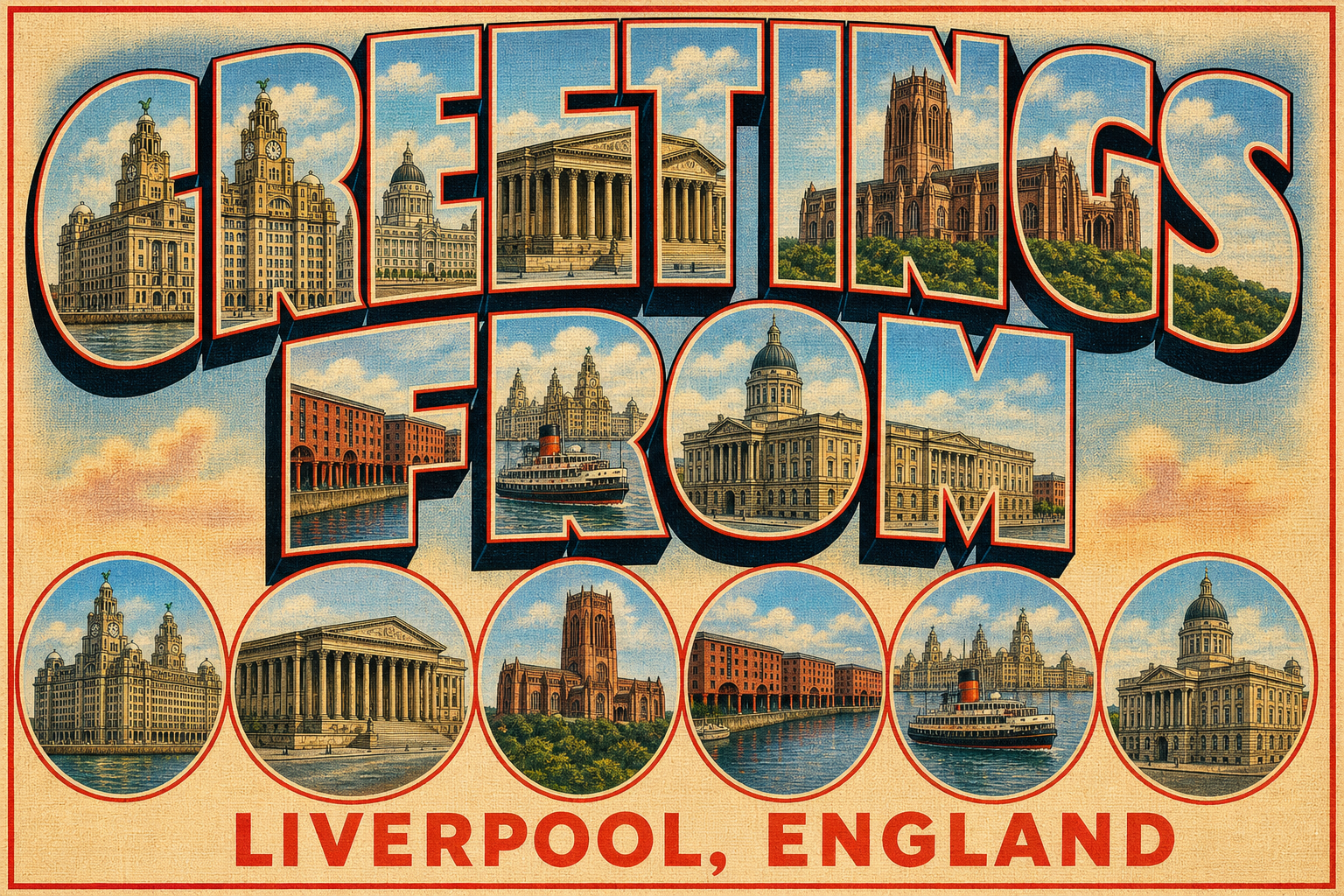
Most visitors meet Liverpool at the waterfront: Albert Dock glass, ferry horns, Beatles plaques. Fair enough. What gets less attention is a short walk inland and slightly south, where Jamaica Street and the old bonded warehouses still make a working triangle of brick, loading bays, and side-street kitchens.
Give the Baltic Triangle a half-day, or an overnight. Start where cruise coaches thin out near the Arena and Wapping, then climb the streets that once moved timber, grain, and Baltic trade into the city. The Mersey story is still here — just not framed for a selfie stick.
Jamaica Street and the warehouse grain
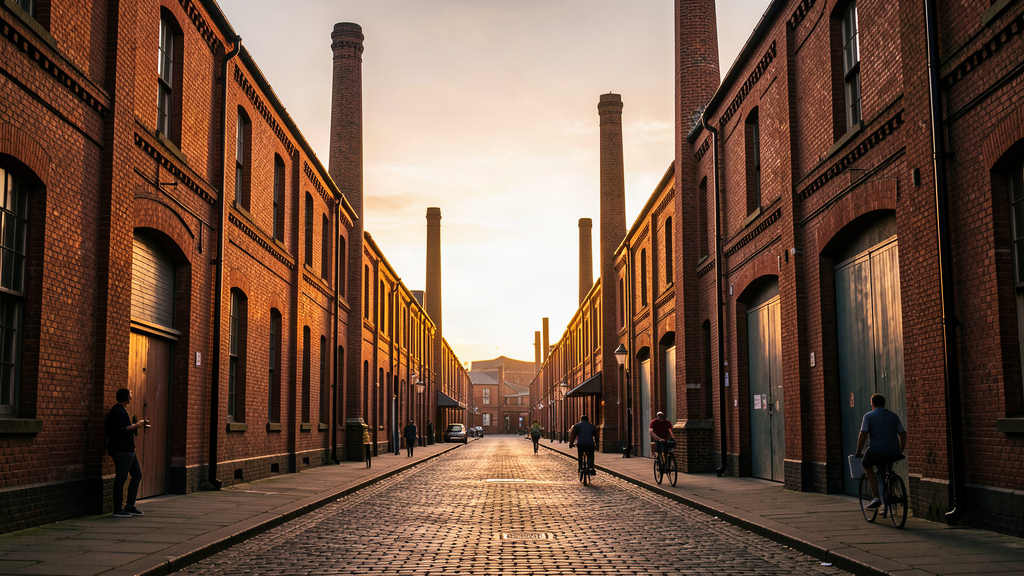
The Baltic Triangle takes its name from timber and goods that came in from the Baltic Sea when Liverpool was an empire port. The streets still feel like that economy: low warehouses, high brick, doors big enough for carts, yards that open onto alleys rather than plazas. Jamaica Street is the spine. Pink paint on a corner hotel, murals on blank ends, studios behind roller shutters. Regeneration here kept the industrial scale instead of sanding it smooth.
You do not need a guided creative-quarter tour. Walk Jamaica Street, cut onto Watkinson Street, Kitchen Street, Bridgewater Street. Look up at the floor counts. Notice how many loading doors still sit at truck height even when the ground floor is a coffee counter. The district sits between the main shopping core and the southern docks, close enough to walk, far enough that coach parties rarely linger.
Gustaf Adolf Kyrka, the Scandinavian Seamen’s Church, sits in the mix — one of only a handful of octagonal churches in England, built for Nordic sailors who worked these berths. Not a ticketed stop. More a reminder that dock life here was international long before the visitor economy. Notice it, then keep walking.
Wapping edge and the flat-iron pub
On the river side of the triangle, Wapping runs along the dock road. The Baltic Fleet occupies a Grade II-listed flat-iron building at 33a Wapping: Victorian dock pub, cask ale, nautical clutter, beer garden when the weather allows. Albert Dock sits almost opposite. That is the joke and the point. Photograph the polished warehouse arcade, then cross to a room that still smells like a working waterfront bar.
Use the Fleet as a hinge, not a checklist stop. Pint after a warehouse walk. Chat if the room is quiet. Leave before the evening rush if you want a seat by the window. Scouse appears on menus around here when the kitchen is on; treat it as lunch, not theatre.
From Wapping you can peel north toward the classic waterfront museums if someone in your group needs them, or stay in the triangle and let the evening fill with gigs, small clubs, and warehouse restaurants. Daytime is calmer: coffee, bakeries, people carrying portfolio bags.
Hope Street ridge and Georgian brick
When the Baltic starts to feel like one mood only, walk up toward the Georgian Quarter. Hope Street runs the ridge between Liverpool’s two cathedrals: the Anglican bulk of Giles Gilbert Scott to the south, the modern Catholic Metropolitan Cathedral to the north. The street is not a theme park. Philharmonic Hall, university buildings, townhouses, hotels, and ordinary front doors share the same pavement.
Rodney Street and the surrounding grid hold some of the best Georgian and early Victorian streetscape outside Bath or Edinburgh — blackened brick, iron railings, medical plaques, quiet side streets where students cut through to lectures. Canning Street and Falkner Square open into trees and residential calm. This is where Liverpool feels like a city people live in, not only a waterfront they visit.
The Philharmonic Dining Rooms on Hope Street still draw a crowd for the tiled interior and the famous gents’. Go if you like ornate Victorian pubs; skip if queues annoy you. Either way, the ridge walk itself is the story: two different cathedral silhouettes, one continuous street of brick and conversation.
Stanley Dock’s tobacco mountain
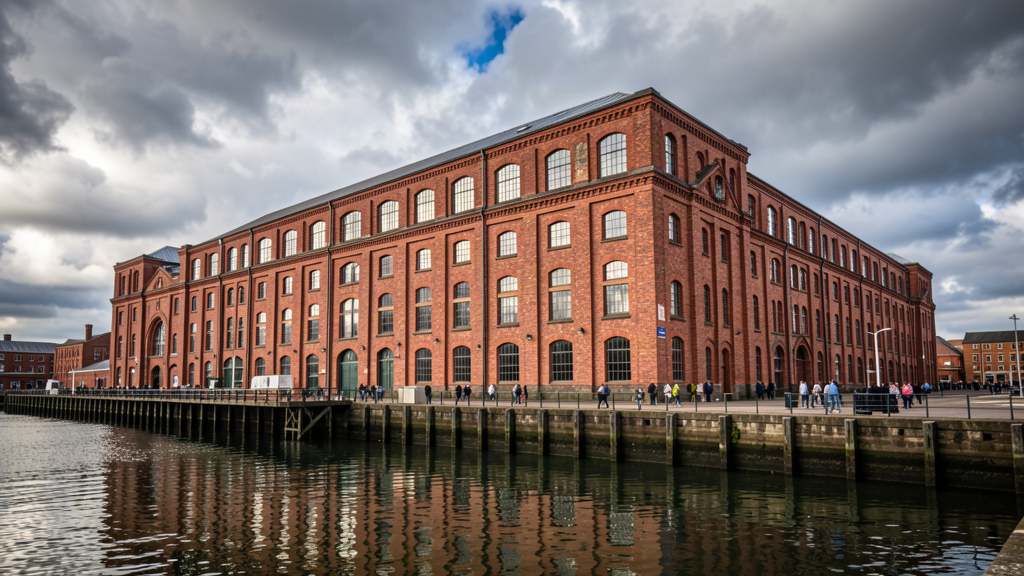
If you want the industrial scale that Albert Dock compresses into heritage polish, go north to Stanley Dock. Jesse Hartley’s dock complex and the Tobacco Warehouse still dominate the skyline inland from the northern docks. Built around 1900–1901, the warehouse was reported as the world’s largest brick building in its day: roughly fourteen stories, tens of millions of bricks, acres of floor once stacked with hogsheads of tobacco that could sit for years under bond.
It is being reworked into apartments and mixed use now, and the Titanic Hotel occupies part of the restored dock warehouses. You do not need a room key to feel the bulk. Stand on the dock edge and let the brick wall show what the port once meant. Canal links once tied this system into the Leeds and Liverpool inland network; the geometry of water and warehouse still reads even when cranes and cargo are gone.
Pair Stanley Dock with the Baltic Triangle only if you have legs and a full day. Different chapters of the same dock city: one still scrappy and creative, one monumental and half-residential.
Places to Stay
Maldron Hotel Liverpool — 2 Park Lane, Liverpool L1 8AW Solid mid-budget base on the edge of the Baltic Triangle, a short walk from Jamaica Street, the Arena, and the Albert Dock waterfront. Practical rooms, on-site dining if you arrive late, easy on foot to warehouse streets in the morning. Choose it when location and walkability matter more than boutique design.
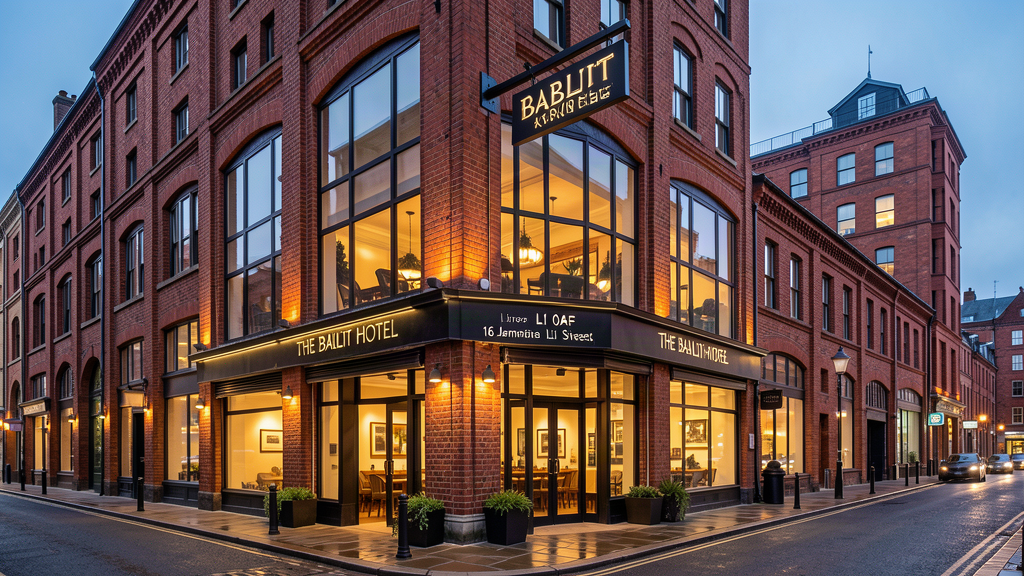
The Baltic Hotel — 16 Jamaica Street, Liverpool L1 0AF Right on the triangle’s main street in a corner warehouse building (hard to miss the colour). Attached pub, walk-out access to bakeries, studios, and evening venues. Mid-range independent feel. Best when the Baltic is your day-and-night centre and you want the neighbourhood as your lobby.
Hope Street Hotel — 40 Hope Street, Liverpool L1 9DA Higher bracket independent on the Georgian ridge between the cathedrals. Rooms in converted buildings, spa, and serious restaurants downstairs (London Carriage Works and the more casual 1931). Use it when you want evening calm among townhouses after a warehouse day, or when cathedral walks and Philharmonic nights are the plan.
Where to Eat
The Quarter — 7–15 Falkner Street, Liverpool L8 7PU Family-run Italian-leaning spot on the Georgian / Chinatown seam: pizza, pasta, sharing boards, strong all-day rhythm from breakfast through late. Wooden benches, neighborhood noise, no theatre. Mid-range comfort after Hope Street or cathedral walking. Book if you are heading to a Philharmonic show; otherwise try off-peak.
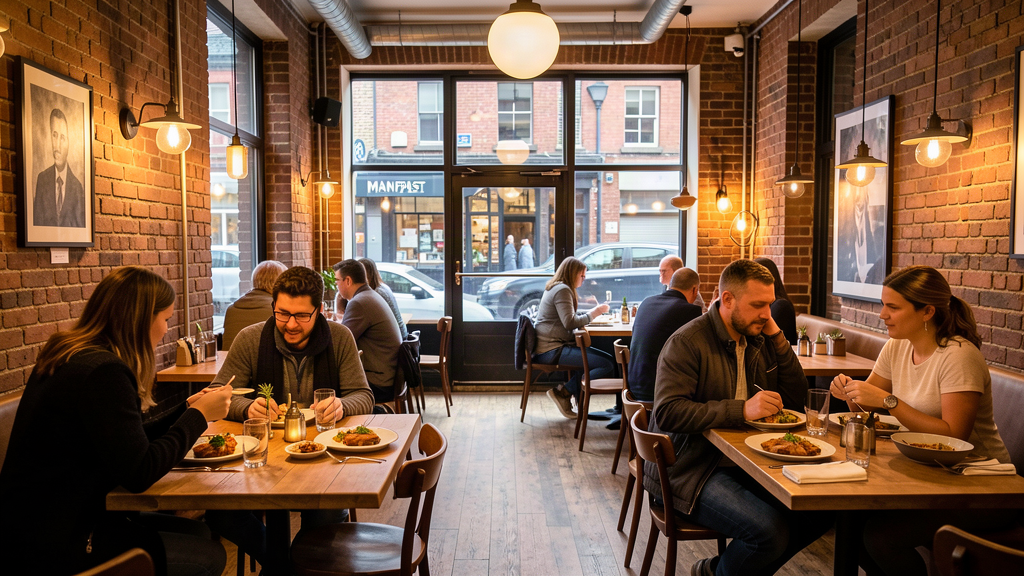
Manifest — 4a Watkinson Street, Baltic Triangle, Liverpool L1 0AG Seasonal modern British in a converted warehouse room, open kitchen, counter seats if you want the pass. À la carte or tasting routes, wine list with pours by the glass. Spendier night when the Baltic day deserves a long table. Book ahead; it is small and popular for a reason.
Baltic Fleet — 33a Wapping, Liverpool L1 8DQ Not a white-tablecloth stop — a dock road pub with ale, simple food when the kitchen’s running, and the flat-iron room looking toward the waterfront. Cheap-to-mid, high character. Lunch or early evening after Jamaica Street. Pair with a walk, not a tasting menu mood.
Getting around and leaving room
Lime Street station dumps you north of the core; from there it is a walk or short hop to the waterfront, then another push into the Baltic. Buses and Merseyrail cover farther reaches. The ferry is optional scenery, not logistics. Walking is the right speed for Jamaica Street, Hope Street, and the dock edges. Stanley Dock sits farther north — budget time or a bus rather than assuming it is just past Albert Dock.
Parking in the center is a hassle, and Clean Air rules apply in places; skip the car unless you are sleeping outside the core. Museums at the Albert Dock and the Beatles sites will pull any first-timer. Leave them room if you must, but protect half a day for warehouse streets and the Georgian ridge so Liverpool is not only a waterfront loop.
Weather off the Mersey turns fast. Brick holds damp; alleys channel wind. Carry a layer. Check hours for Manifest and smaller coffee rooms rather than assuming Sunday matches Friday.
Do not reduce Liverpool to a ferry chorus and a statue queue. Stand on Jamaica Street when a roller shutter goes up on a studio bay. Walk Hope Street until both cathedral silhouettes sit in the same turn of the head. If you have the legs, let the Tobacco Warehouse at Stanley Dock show what the port once stored by the acre. The Baltic Triangle still stacks brick. That is the Liverpool worth the extra half-day.
