
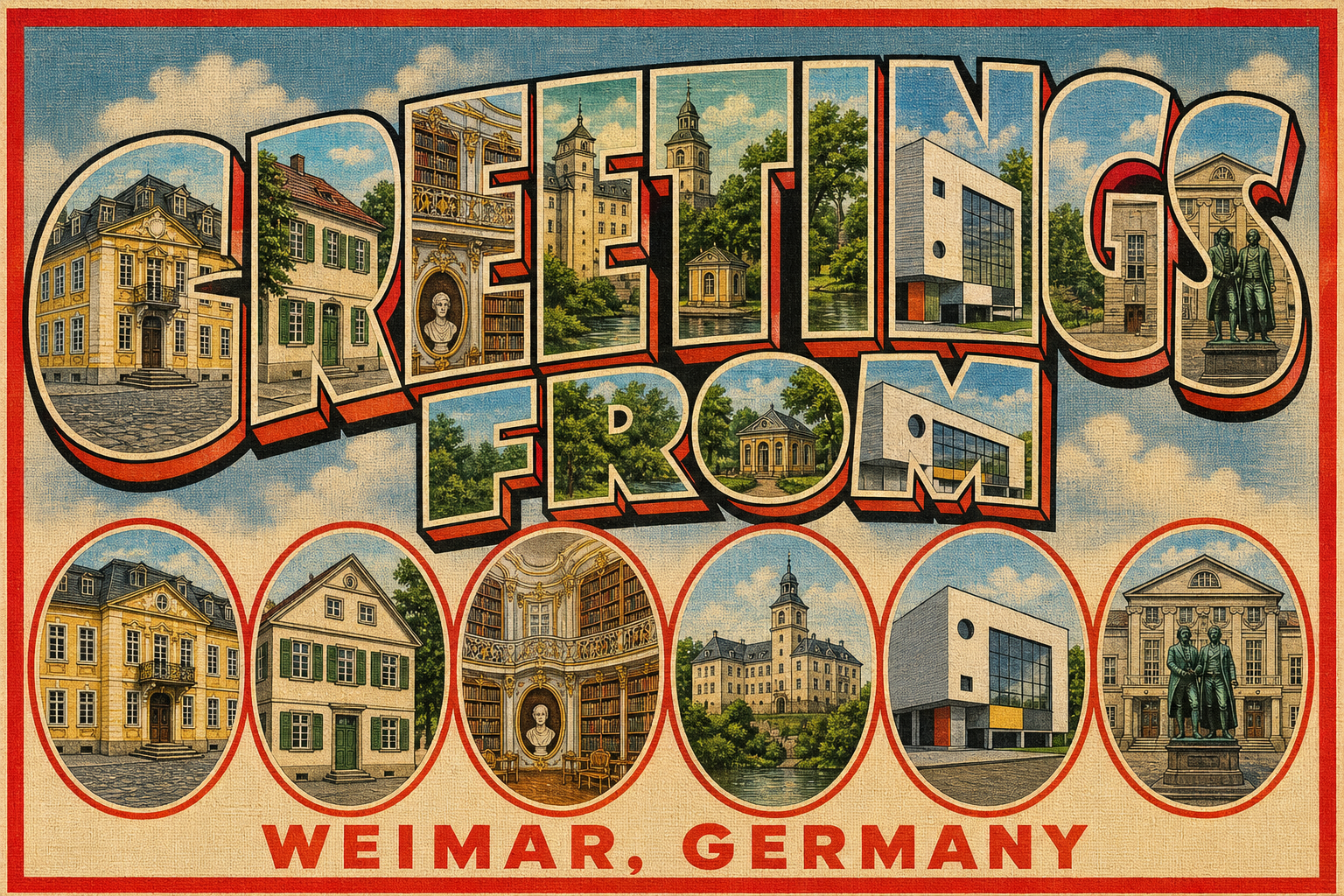
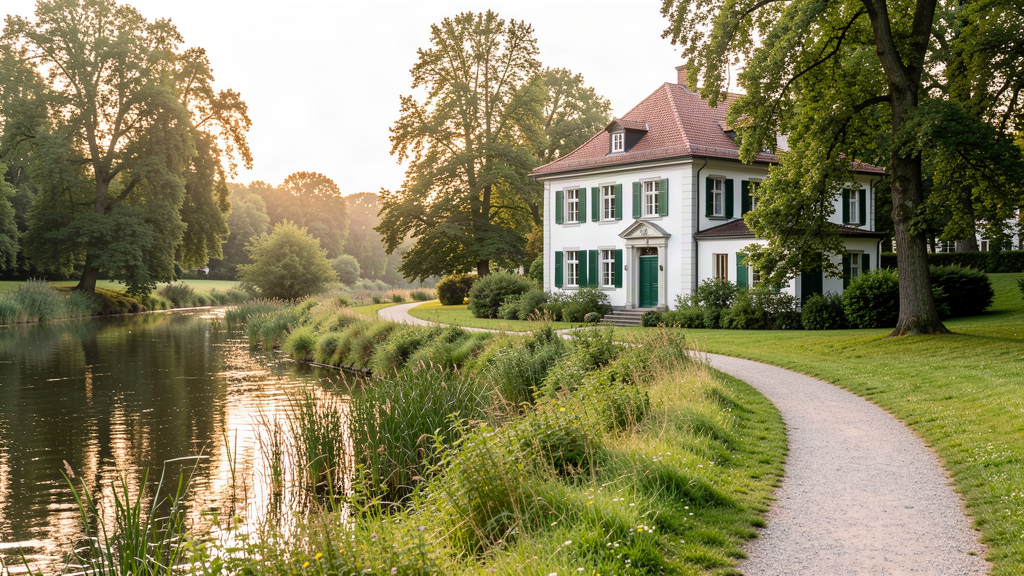
Weimar sits on the Ilm in Thüringen. Small enough that you walk from the Markt to the park in under fifteen minutes. Large enough that Goethe, Schiller, Liszt, and the Bauhaus left actual working addresses, not just plaques. The town is famous for classical Weimar and the first German republic named here. The better visit is quieter than that résumé. You come for the river lawns, the garden house on the meadow edge, and a Markt that still sells produce under the Rathaus tower.
Most day-trippers race the museum tickets and leave by late afternoon. Stay two nights if you can. Early on the Ilm path, coffee on Frauenplan, an unhurried hour in a house museum, dinner after the coach groups have gone back to Erfurt or Leipzig — that version of Weimar still feels lived in.
Park an der Ilm, the river, and Goethe’s garden house
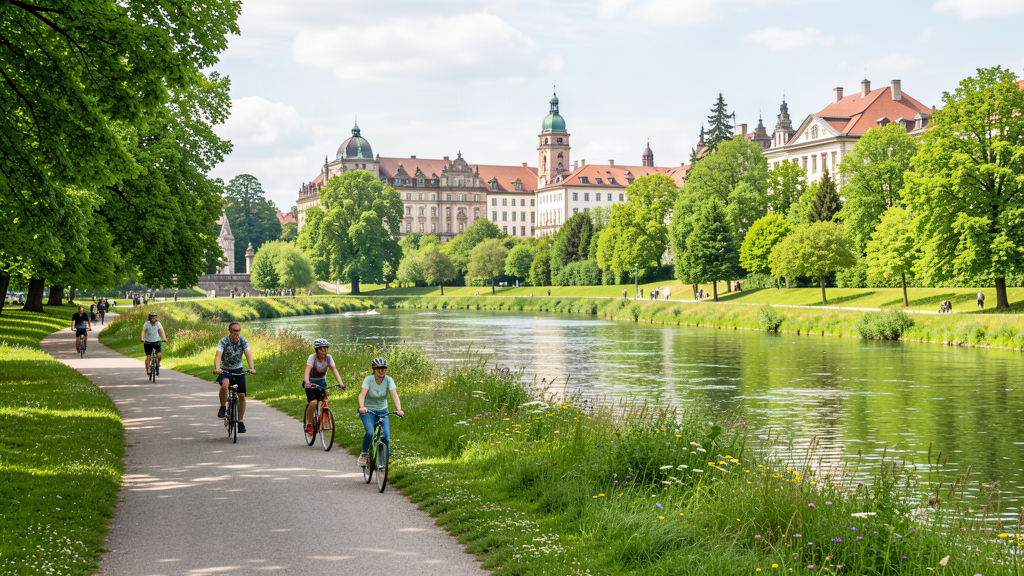
The Park an der Ilm is about forty-eight hectares of English-style landscape garden along the river, shaped from the late 1770s into the 1820s with Goethe and Duke Carl August both involved. Free, open year-round, and often more useful than any single museum ticket if you only have a short morning.
Start from the Stadtschloss side or drop down from Belvederer Allee near the Liszt-Haus. Paths split: gravel and meadow along the water, steeper walks on the western hang with rock steps and denser trees. Goethe’s Gartenhaus sits on the meadow side — the small house the duke gave him in 1776 so the young writer would stay. See the interior when it is open. Even from outside, the scale is the point: cottage against open lawn, not a palace view.
Keep walking south. The Römisches Haus holds the high classical note on the slope — temple-front villa, Italian memory after Goethe’s trip south. Tempelherrenhaus ruins and scattered benches break the line without turning the park into a sculpture trail. On a clear day the Ilm is a mild Thüringen river. Fog or low light makes the meadows feel bigger than the map. Adolf Stahr wrote that Weimar is really a park with a town inside it. Walk long enough and that line stops sounding like a quote.
If you have a bike or a full afternoon, the green corridor continues toward Schloss Tiefurt a few kilometres downstream. For a first stay, one slow loop from the Schloss to the Gartenhaus and back through the hang is enough. Students, dog walkers, and the odd guided group pass through. The park absorbs them.
Frauenplan, Markt, and the town between museum doors
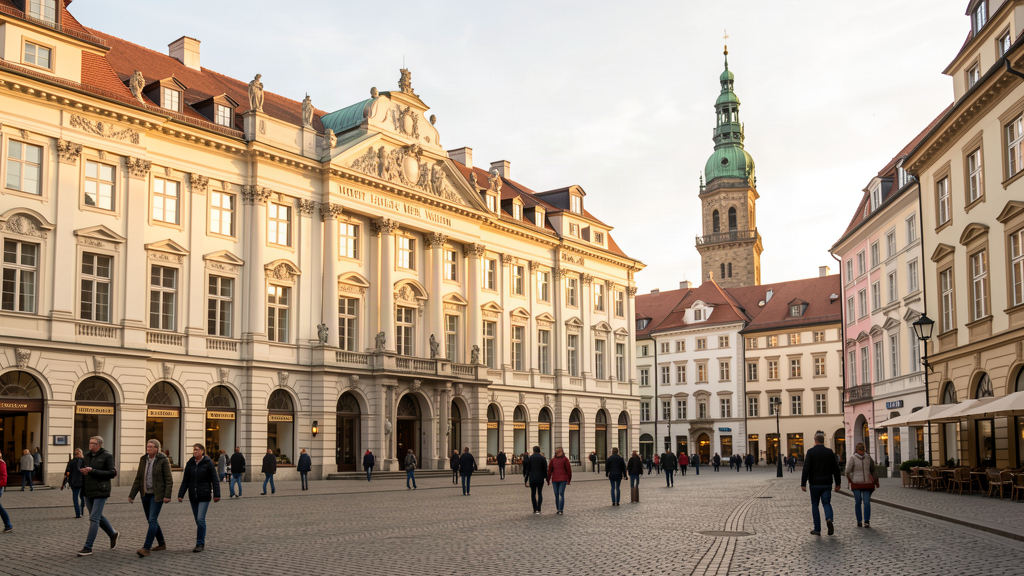
Frauenplan is the small square in front of Goethe’s town house — the Goethe-Nationalmuseum complex — where the pedestrian streets tighten and the souvenir shops can get thick. Come early or late. The house rewards a booked slot more than a rushed hallway walk. Goethe lived and worked here for decades, and the rooms still read as a residence with collections rather than a shrine.
Schiller’s Wohnhaus sits a short walk away on Schillerstraße. The two addresses make an easy half-day if you refuse to stack every Klassik Stiftung site on top of them. Bauhaus Museum Weimar pulls a different century a few blocks toward Theaterplatz — useful if design history is why you came, skippable if the Ilm and the classical houses already filled the day. Student life still clusters around Bauhaus-Universität edges near Marienstraße if you wander that way after one museum hour.
The Markt is the civic middle: Rathaus, Lucas Cranach house façade, Hotel Elephant along one side, stalls most mornings with fruit, flowers, and Thüringer Wurst smoke when the grills run. It is not a giant square. That helps. Buy something small, stand under the tower, and watch the town move at ordinary speed. Theaterplatz and the Deutsches Nationaltheater sit close enough that an evening performance is a walk, not a logistics problem.
Ackerwand and the lanes toward the park edge stay quieter once you leave the funnel between Goethehaus and Markt. Weimar works best in a small radius. The mistake is treating it as a checklist capital instead of a walkable court town with a river park attached.
Buchenwald lies a short bus ride north on Ettersberg — necessary history, not a casual stop between cake and another museum. If you go, give it a proper half-day and leave space afterward.
Places to Stay
Sleep by how close you want the Markt and Frauenplan noise, and whether the park edge or the square matters more at night.
Hotel Erbenhof, Brauhausgasse 10, 99423 Weimar, is the practical mid-budget stay in the Bernstorff palace complex on Frauenplan: simple modern rooms in a listed shell, pedestrian-zone quiet after dark, Goethehaus and Schillerhaus a few minutes on foot. Breakfast is solid; garage spots need reserving if you drive. Use it when the money should go to museum tickets and dinners rather than a design lobby.
Boutique-Hotel Amalienhof, Amalienstraße 2, 99423 Weimar, sits in the old-town grain a short walk from Goethe’s house — classic rooms, house scale, breakfast that leans local, and the feeling of a small hotel rather than a chain box. Book here when you want the center without the Elephant price.
Hotel Elephant Weimar, Autograph Collection, Markt 19, 99423 Weimar, faces the market square directly — the historic house with art-led rooms, bar on the Markt, and restaurant AnnA for a dressed-up night. It is the high rung when the budget allows, and you want the square under your window. Bauhaus and Deco details show up in the interiors; the location does the rest.
Restaurants / Food
Weimar eats Thüringer plain sense — dumplings, roast meats, Bratwurst — then café plates in the lanes. Reserve weekend dinners. Lunch can be walk-in if you arrive before the museum-break rush.
Gasthaus Scharfe Ecke, Eisfeld 2, 99423 Weimar, is the no-nonsense Thüringer stuben meal: Klöße, Schnitzel, sauces that do not apologize. Small rooms, local lunch traffic, closed some evenings and Sundays, so check before you count on it. Useful when you want regional cooking without a hotel dining room.
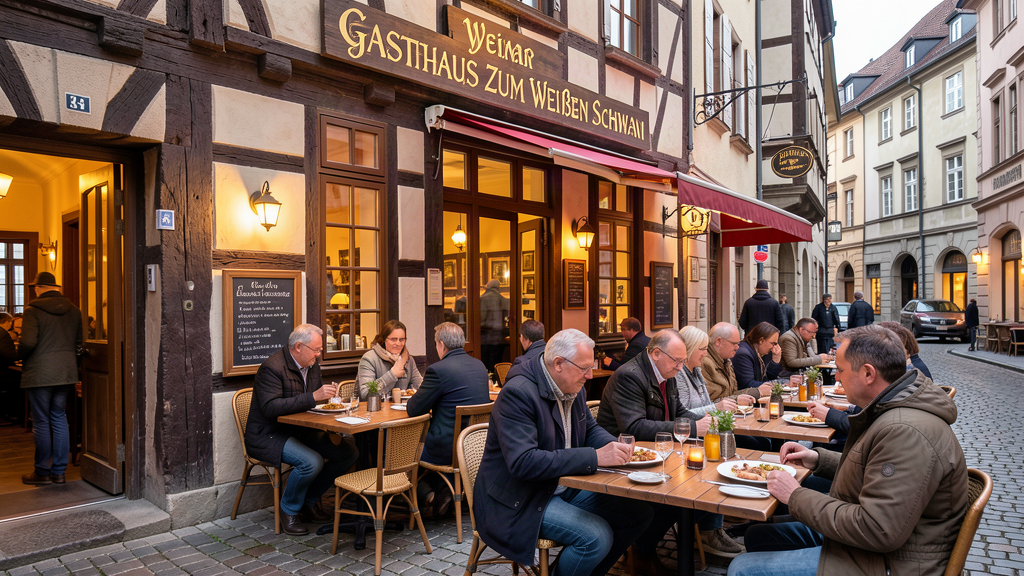
Gasthaus Zum Weißen Schwan, Frauentorstraße 23, 99423 Weimar, sits opposite Goethe’s townhouse — an old inn with Thüringer and German plates, terrace when the weather holds, and the odd feeling of eating across the street from the poet’s door. Mid-range, reliable for a sit-down dinner after the park.
Gretchen’s Restaurant & Café, Seifengasse 8, 99423 Weimar, fills the lane gap with lighter international and café cooking, garden and roof terrace when open, good for breakfast or a quieter evening when dumpling houses feel heavy. AnnA at the Elephant covers the special-occasion table on the Markt if you are already dressed for the square.
A simple arc: coffee near Frauenplan after the Gartenhaus walk, Scharfe Ecke or Weißen Schwan for a proper Thüringer plate, Gretchen’s when you want the lane and a terrace.
Getting around without fuss
Weimar Hbf sits north of the center — about twenty minutes on foot to the Markt, or a short bus ride toward Wielandplatz and the old town. ICE and regional trains link Erfurt, Leipzig, and Frankfurt. Erfurt is close enough for a museum day the other direction if you want the Gera and Krämerbrücke without moving hotels.
The historic core is compact and walkable. Cobbles and park gravel reward decent shoes. Cars are a nuisance inside the pedestrian zones; use a hotel garage and walk. Local buses cover Buchenwald. Bikes work well on the Ilm corridor toward Tiefurt.
Erfurt-Weimar Airport is small and nearby. Most long-haul travelers still arrive via Frankfurt or Leipzig/Halle and the train. Shoulder seasons give you the same park with more bench space. Winter is damp and short on daylight; the museums and cafés carry those days.
Why linger
Weimar is easy to flatten into Goethe-Schiller statues and a republic footnote between bigger Thüringen stops. That misses the Ilm meadows running past a garden house that still looks like a place to work, the Markt under ordinary stall awnings, and Frauenplan when the tour groups thin and the square becomes a neighborhood again.
Walk the park first, not last. Let the Römisches Haus and the Gartenhaus set the pace before you buy another ticket. Eat on Eisfeld or Frauentorstraße between shifts. Stay near Frauenplan or the Markt so night walks cost nothing but time.
Two or three nights beat a single overloaded afternoon. A day-trip gets the statues and a coffee. The longer stay gets morning fog on the Ilm, an empty path toward Tiefurt light, Schillerstraße without a checklist, and the Nationaltheater doors opening while the square is already dark. Stay long enough and Weimar stops reading like a classical brand. It goes back to what it is on the map: a small Thüringen seat where the park and the houses still share the same streets.
