
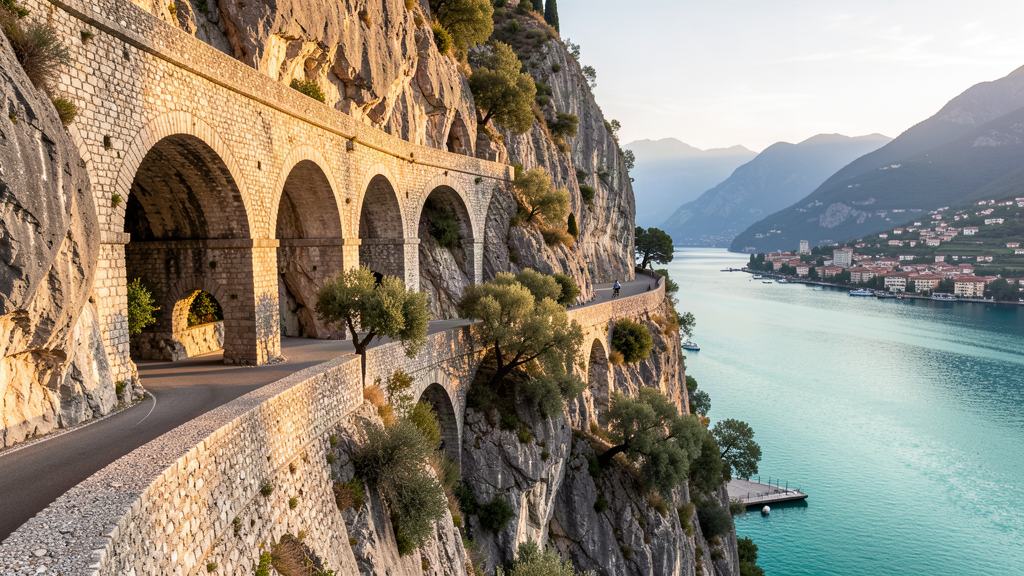
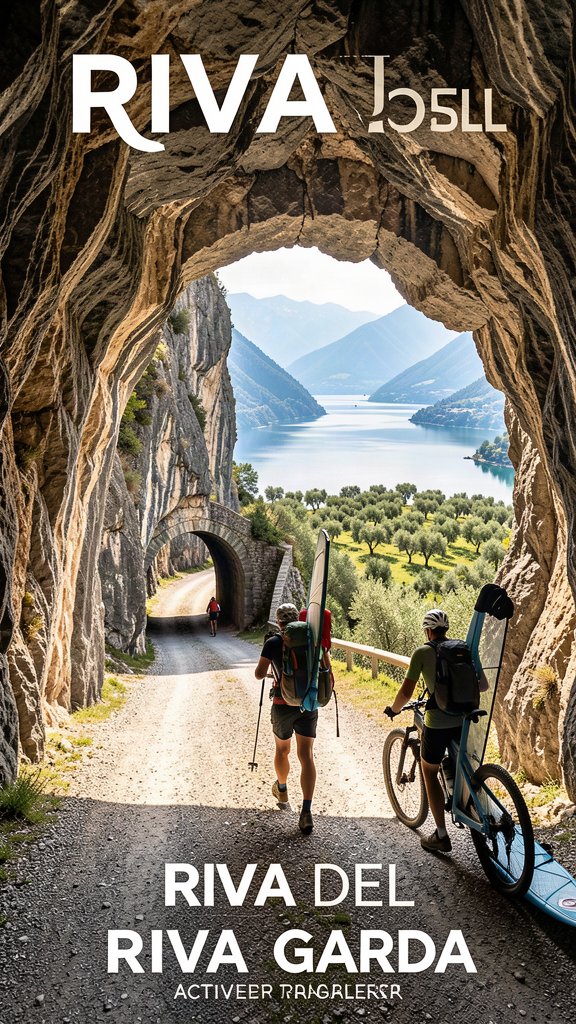
The first time I walked the old Ponale road, I almost turned back at the first gallery. Not from fear — from how strange and good it felt. You leave the lakefront cafés of Riva del Garda, follow the water south toward Porto San Nicolò, and then the cliff takes over. The path used to be a real road between Garda and the Ledro Valley. It is cut into rock steep enough that the engineers punched tunnels and open galleries through the mountain. Light arrives in slices. Lake Garda sits far below, flat and blue, while the wall at your shoulder stays cool even in July.
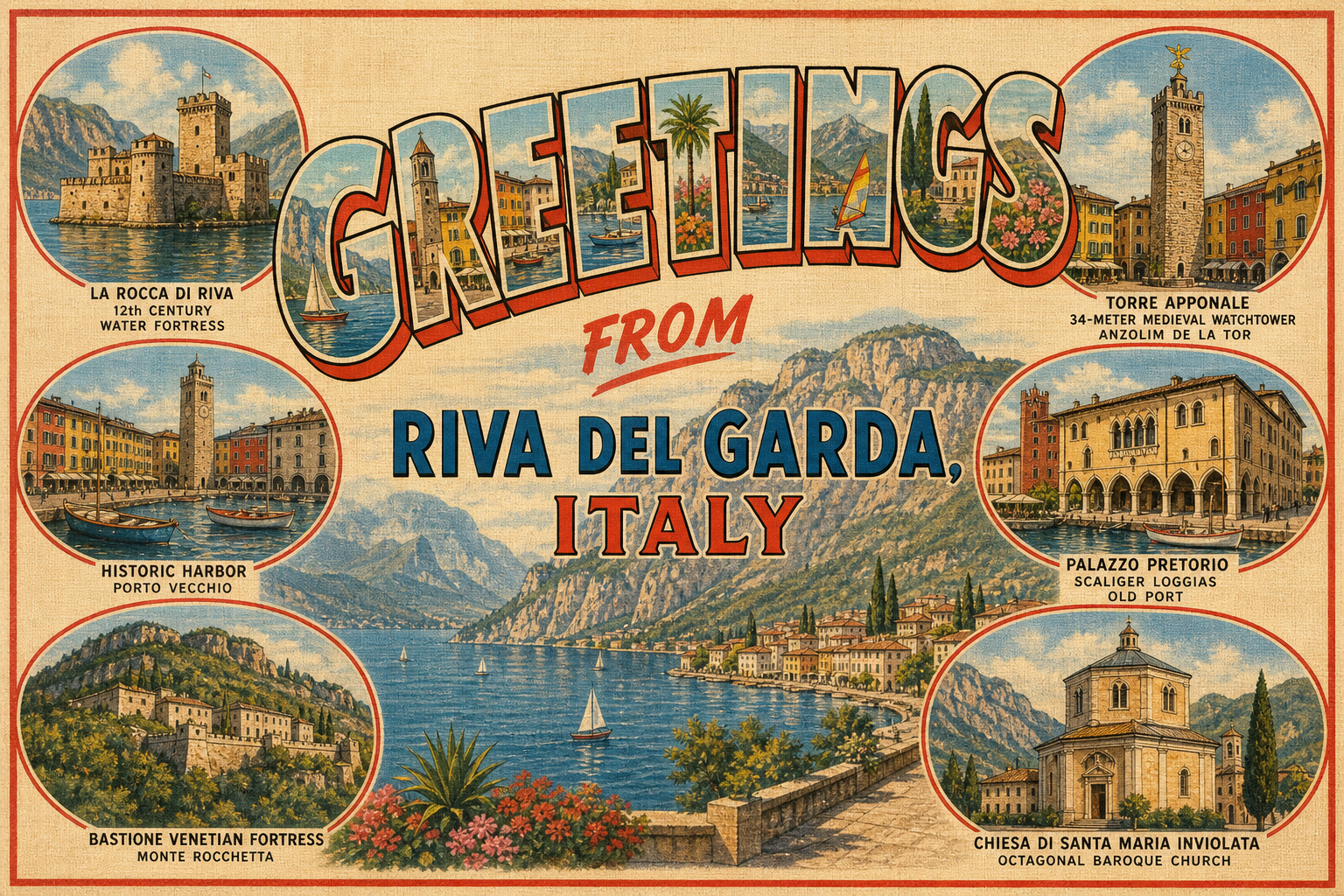
Riva sits at the northern tip of the lake, where Trentino’s mountains pinch the water into a hard green bay. People come for windsurfing, gelato, and the Apponale tower on the main square. Fair enough. I get more out of the place once I stop treating the promenade as the main event. The interesting route climbs.
Leaving the square without leaving the day
Piazza 3 Novembre is where Riva performs for visitors: the tall Torre Apponale, the arcades, café tables angled toward the water. I like it best before nine, when delivery vans still own the side streets, and the tower’s shadow is long enough to sit in. Climb the tower if the line is short — the view is plain and useful, not a postcard setup — then step off the square into the lanes behind it.
Contrada Marocco is the older medieval pocket, and the brochure tone thins out there. Streets narrow. Stone holds the night’s cool a little longer. Laundry still hangs on upper floors. You are not far from the lake, but the sound of it drops away, replaced by scooter engines and kitchen radios. Buy fruit, water, and a warm pastry here, then walk south along the shore toward the Ponale trailhead.
Do not rush the waterfront. Riva’s edge is a working edge as much as a scenic one: boat slips, rental boards stacked for the afternoon wind, locals cutting through on bikes. Porto San Nicolò marks the shift. After that, the mountain starts leaning over the path.
The Ponale: road, gallery, belvedere
The Strada del Ponale was carved in the second half of the nineteenth century as the link to Valle di Ledro. Cars left it when a modern tunnel took the traffic. Walkers and cyclists got what remained. From Riva the climb is steady rather than brutal — roughly three kilometers of rough road at a gentle grade up to the old Ponale gate and the belvedere near the waterfall. The elevation is mild. What sticks is the engineering: galleries open on the lake side, tunnels that swallow sound, stretches where the mountain wall feels close enough to touch with both palms.
I go early, before the rental e-bikes thicken. You hear your own steps. Occasionally a local runner passes with a nod that suggests this is Tuesday for them, not a once-in-a-lifetime errand. At the openings, look back toward Riva and Torbole. The bay looks like a map drawn with a wet brush — harbor, headland, the pale strip of beach — and you get why people once risked this road in bad weather.
The waterfall side of the Ponale is a short detour for wet stone and cooler air. Even without it, the belvedere is enough: a pause, then the choice to continue toward Pregasina and Ledro or turn around. Turning around is fine. The galleries feel different on the way down. Wider somehow. The light comes at you instead of waiting ahead.
A town that faces two climates
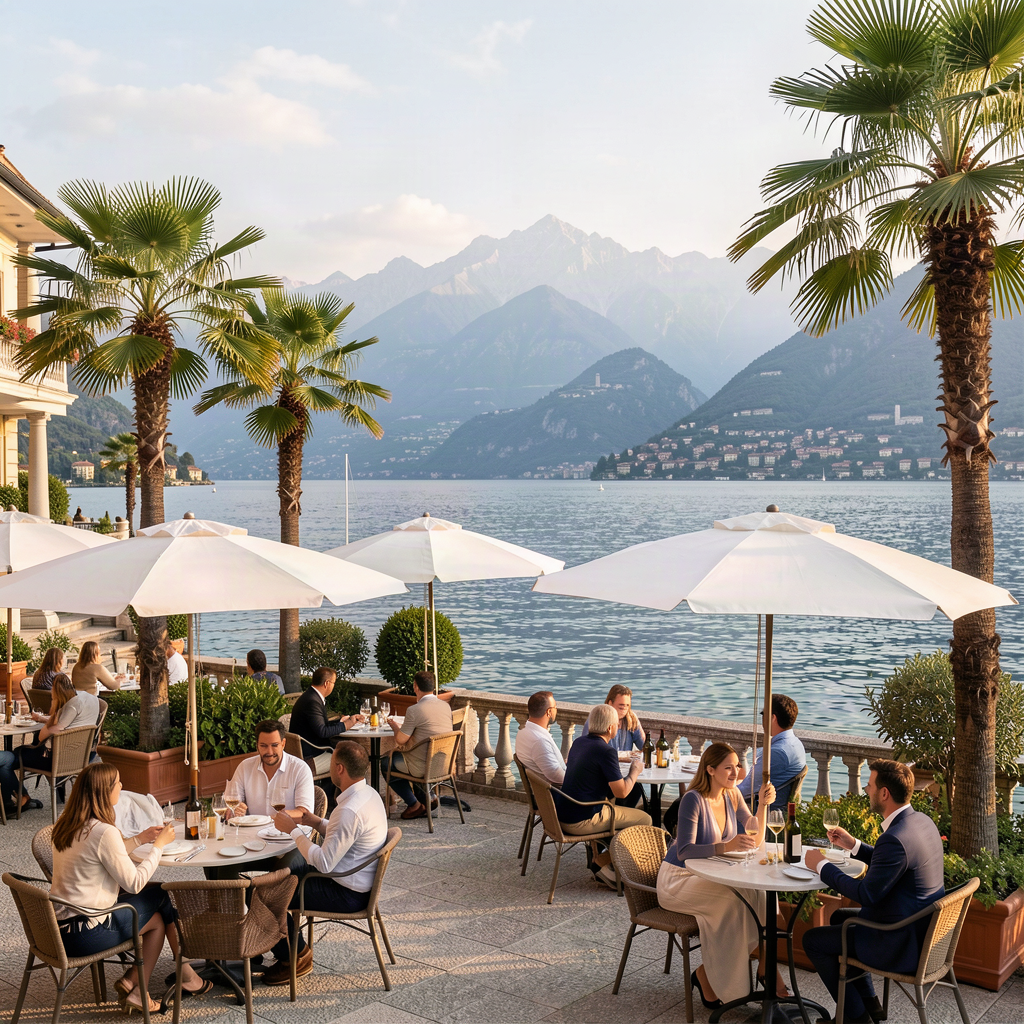
What keeps me in Riva longer than a day hike is the climate mash-up. Palms along the shore, alpine weather an hour uphill. In the same afternoon you can watch windsurfers carve the bay and then ride a bus inland toward olive terraces above the waterline. Monte Brione, the low ridge between Riva and Torbole, is the easy counterpoint to the Ponale: military paths, scrub, views both ways along the lake. The Bastione on the Rocchetta side is the harder climb — a restored fortification and a view that makes the square look small. Neither needs a guide.
If you want water without the full cliff, shore paths toward Sabbioni stay gentler. Cascata del Varone, a few kilometers toward Tenno, is a different kind of cool: a long-cut gorge with walkways into spray and rock. Go when you are tired of sunshine and gelato lines.
Places to Stay
Riva’s lodging runs from square-front practical to lakeside polish. Three that cover the spread:
Hotel Sole — Piazza 3 Novembre, 35, 38066 Riva del Garda TN. Right on the main square, lake in your face at breakfast if you time the terrace. Rooms are straightforward rather than precious; free bikes help for the Ponale without a separate rental stop. Mid-range, central, no car required.
Feeling Hotel Luise — Viale Rovereto 9, 38066 Riva del Garda TN. A short walk from the historic center toward the eastern edge of town, with modern rooms, a quiet garden, and a useful base if you mix lake days with mountain drives. Breakfast is solid; parking is easier here than on the square. Mid-to-upper mid-range when you want quieter nights without leaving Riva.
Hotel Lido Palace — Viale Giosuè Carducci 10, 38066 Riva del Garda TN. The grand option: a restored lakeside palace with contemporary rooms, serious dining, and a pool that slows late afternoons. You pay for position and finish. Worth it for a short stay when hanging around matters as much as covering ground. Splurge tier.
Book weekends and August early. Late spring and September into early October mean fewer bikes on the Ponale and rates that feel less like peak Garda.
Where to Eat
Riva can feed you tourist menus without trying hard. Walk a street inland and the cooking gets more specific — Trentino mountain habits meeting lake fish.
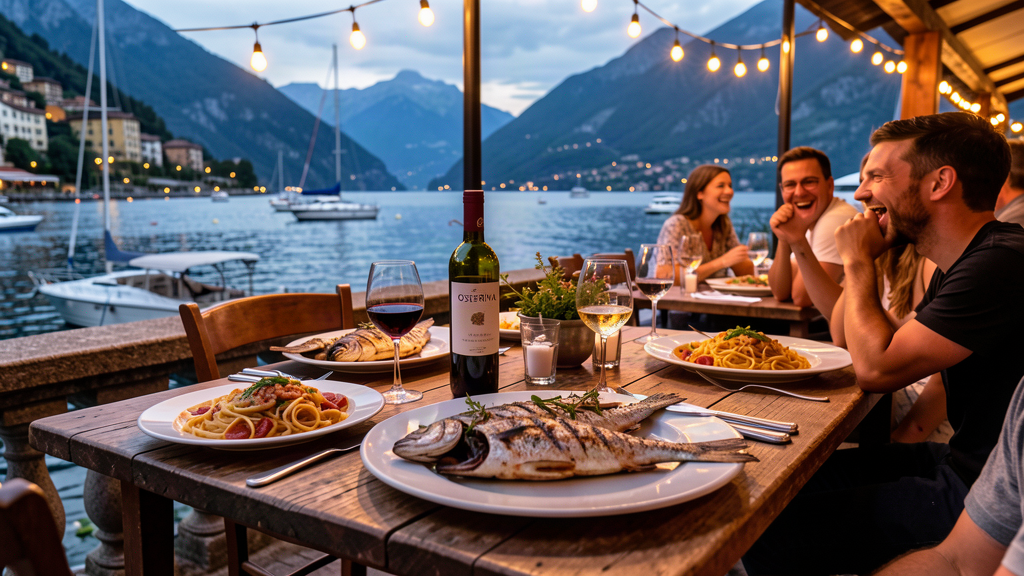
OsteRiva — Via Fiume, 15, 38066 Riva del Garda TN. Central, lively, good for a first night when you want local plates without ceremony. Alpine and lake signals show up on the same table: polenta, cured meats, something from the water if it is running. Book when the town is full; walk-ins work better at midweek lunch.
Ristorante Al Volt — Via Fiume, 73, 38066 Riva del Garda TN. A more composed room in a historic building near the old gates. Traditional Trentino cooking with a contemporary hand — slower dinner after the galleries. Menus lean seasonal; ask what came down from the valleys that morning.
Osteria La Contrada — Via Bastione, 1, 38066 Riva del Garda TN. Evening-only energy, informal tables, the kind of osteria you hope is still open when your legs are done. It pairs well with a late walk toward the Bastione and a hungry return. Reserve in high season.
For daytime, keep it simpler: a panino near the harbor, fruit off the square, coffee standing at the bar. Save the long meals for after the cliff.
Moving around without losing the day
Riva is compact. Most of what matters is walkable if you will climb a little. Buses link the town to Rovereto and the wider Trentino network; lake ferries suit the western shore without the Gardesana drive. Cars help for Ledro, Tenno, and scattered trailheads, but parking near the historic center is a sport. Leave the car at the hotel until you have a reason.
Bikes — regular or electric — suit the Ponale and the shore paths. Give way in the galleries. Shared space only works when everyone assumes they are slightly in the way. Heat builds on the rock face by midday in summer. Start early, carry water, and treat the belvedere as a turnaround if the sun is already hard.
A slower read of the north end
Riva del Garda is not a secret. Wind flags snap over the bay, terraces fill at aperitivo, and the Apponale tower has been photographed from every legal angle. What I keep coming back for is simpler: a town pinned between deep water and steeper stone, and one old road that still explains the geography better than any viewpoint parking lot.
I usually burn a morning between Contrada Marocco and the square, then take the Ponale while there is still shade in the galleries. Lunch can wait, or it can be a long night on Via Fiume — both work. If I have a second day, I climb toward the Bastione, or I duck inland to Varone’s gorge when the lake light gets too bright. The good hours here are the ones spent noticing rock and shade, and watching the bay change color each time a gallery opens.
Two nights is usually enough; three if you want a rest day by the water. On the way out, I walk the shore once more before the rental boards go out. The mountain is still there, cut with the pale line of the Ponale, same as it was at first light.
