
I came to Cholet for a square of red cloth.
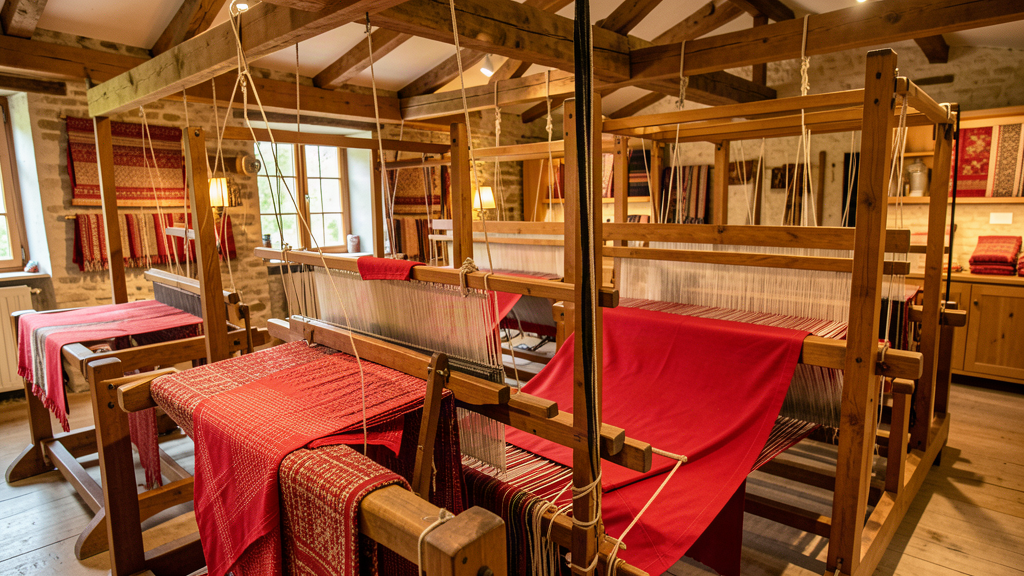
Not a château. Not a Loire viewpoint. A mouchoir rouge, white cross on red field, still woven inside an old bleach works on the edge of town. The Musée du Textile et de la Mode sits in the former Blanchisserie de la Rivière Sauvageau, built in 1881. The chimney is still up, a factory steeple over brick and glass. Inside, looms work. You can leave with a handkerchief that was cloth a few rooms ago. That is what fixed Cholet for me: a Maine-et-Loire industrial town that kept one product going as craft, not only as gift-shop lore.
Cholet sits in the Mauges, south of Angers, close enough to Puy du Fou that plenty of visitors use it as a bed base and never look down. Fair enough if the park is the whole trip. Thin strategy for the town itself. Trains reach the station. The center is walkable. The Moine river path pulls you out of the shopping streets toward water and trees. Give the place a day that is not only “hotel near the park,” and the red cloth starts to make sense.
The bleach works and the red square
Start at the textile museum on Rue du Docteur Roux, 49300 Cholet. Industrial brick and glass, not a polished palace. You walk into linen, then cotton, bleaching yards, and the long reinvention of local cloth work. Guides and labels stay on machines and labor. You can almost invent the smell of wet fabric even when the rooms are dry.
The mouchoir rouge is the souvenir everyone expects, and this time the expectation holds up. The design ties to local memory of the Vendée wars and to a 19th-century song that carried the red handkerchief far beyond the Mauges. On the ground the point is simpler: people still weave it here. Buy one if you want, or watch the loom and leave empty-handed. Either way, give the museum an hour. The garden around the site is a soft landing after the machines.
I like mornings here, when light hits the chimney and the nearby streets still feel like a working neighborhood. Walk back toward the center slowly so the cloth story has time to stick before the next stop.
Place Travot, the Halles, and a town that shops for itself
Cholet’s center gathers around Place Travot: cafés, the civic face of town, a square where you sit with coffee and watch errands happen. Nothing theatrical about it, which is why I like it. From here, drift toward Les Halles on Place du Huit Mai 1945. Covered market energy, produce, lunch counters, people buying food they will eat the same day.
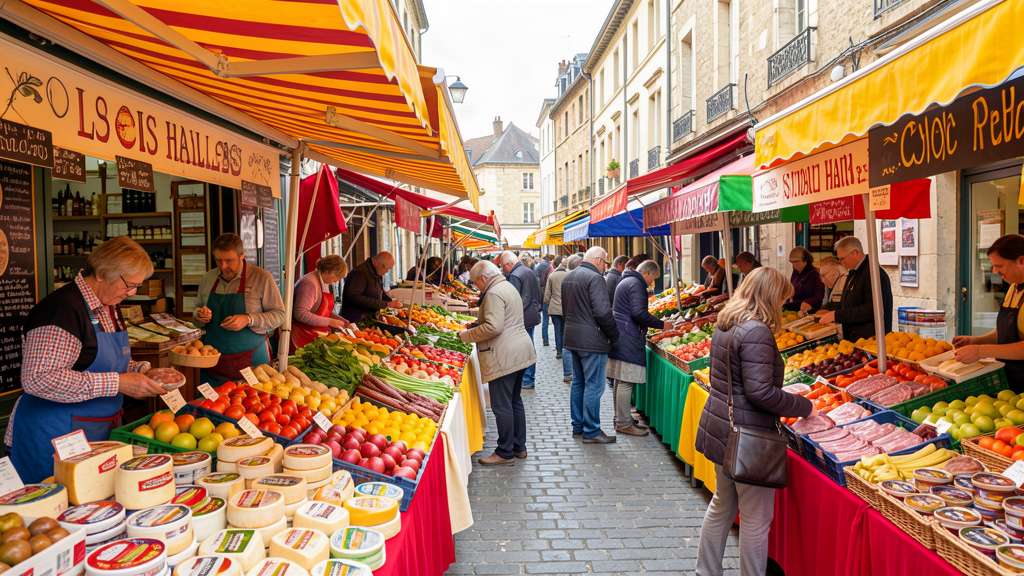
Saturday is the natural day if you can choose. The Halles fill. Streets move with bags and conversations. I walk without a list and end up with fruit anyway. Au Guingois ID’Halles is right there when you want a plate without leaving the market’s orbit. Afterward, the Musée d’Art et d’Histoire is a short walk at 27 avenue de l’Abreuvoir: painting and local history under one roof, parking near the Halles if you drove. Check hours. Art rooms rotate closures for works, and the history side may be the open door that week.
Rue Nationale and the commercial streets are useful rather than romantic. Bakeries, ordinary shops, the texture of a mid-sized French city that did not freeze itself for visitors. I prefer that to a polished old town built mainly for cameras.
Along the Moine to Ribou
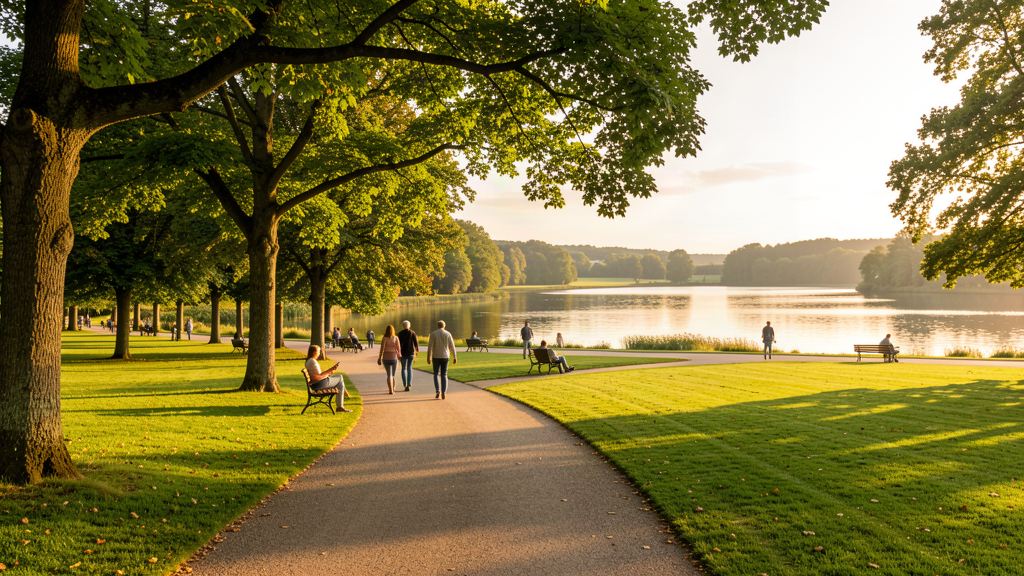
When the center starts to feel like stone and storefronts, find Parc de Moine. It is a long green ribbon along the river: trees, lawns, paths for dogs, strollers, and evening runs. From town you can keep following the water toward Lac de Ribou, the leisure lake southeast of the center with rowing, wind on the water, and picnic tables families claim on Sunday.
Ribou is not a spectacle. It is just proof that Cholet still orients around outdoor space, not only ring-road retail. On a warm evening the lake light is enough. In cooler weather Parc de Moine alone is the better hour: shorter, greener, closer to dinner.
With a car and half a day free, the wider Choletais opens. Maulévrier’s Oriental park is the classic side trip; Puy du Fou sits roughly half an hour away. Inside Cholet proper, stay with the cloth museum, the market square, and the river path first.
A day that fits the town
Morning coffee on or near Place Travot, then straight to Rivière Sauvageau while attention is fresh. Textile museum first. Handkerchief or no handkerchief. Walk back toward the Halles for late-morning wandering and an early lunch before the rush.
Afternoon is for the art and history museum if open, or the Moine path if weather pulls harder than galleries. Save Ribou for when legs still want distance. Early evening returns to Place Travot: aperitif light, French voices, no need to dress the night up as a capital outing.
With two nights, repeat the market morning and take one full afternoon outside town. With one night, do not try to do Puy du Fou and Cholet as equals. Pick the town or pick the park.
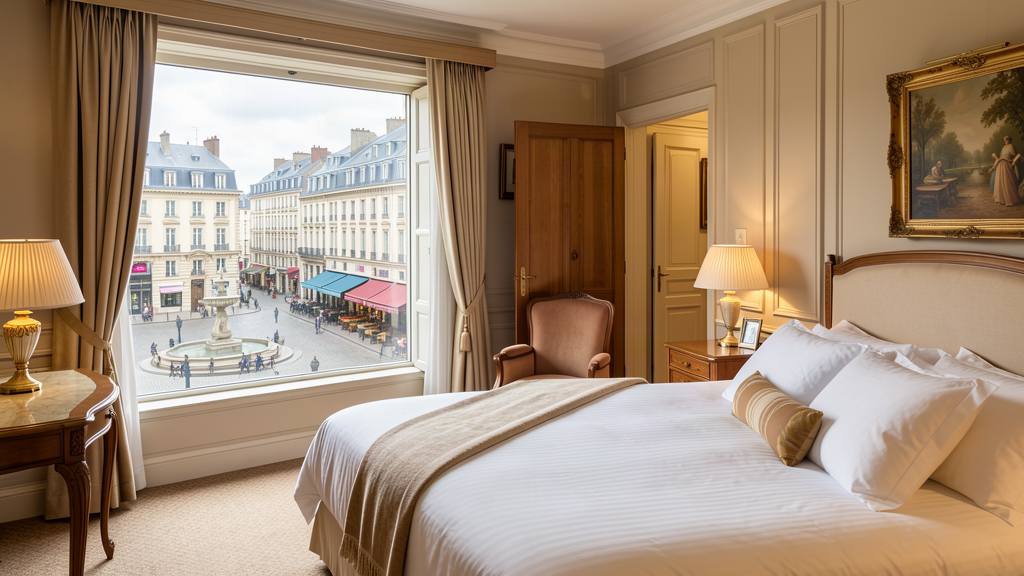
Places to stay
Three bases at different prices. Central when you can; honest chain comfort when the budget says so.
Brit Hotel Essentiel Cholet (value)
Rue Maisonneuve, ZAC du Carteron, 49300 Cholet
A practical two-star stop with parking and simple rooms on the edge of town. You will use a short drive or bus for the center and textile museum. Good when you arrive by car, want a clean bed, and plan to spend on market lunches and tickets rather than the room.
ibis Styles Cholet (mid)
45 avenue d’Angers, 49300 Cholet
A mid-range base with parking and easy road access toward the center, Ribou, or Puy du Fou. Rooms are modern and predictable. Useful for two nights when you want reliability without Place Travot rates every time.
Mercure Cholet Centre (splurge)
81 Place Travot, 49300 Cholet
Four stars on the main square, inside the town’s daily rhythm. Walk to cafés, Halles, and evening loops without hunting for parking for every errand. Book when the trip is about Cholet itself, not only a launch pad for the park half an hour away.
Summer weekends and school holidays fill when Puy du Fou calendars run hot. Reserve early if your dates lock to a Saturday market overnight.
Where to eat
Au Guingois ID’Halles
Place du Huit Mai 1945, 49300 Cholet
Inside the Halles setting, traditional cooking with a local crowd and market energy still in the air. I use it after walking the stalls, when sitting a few meters from the produce feels right. Confirm hours; market rooms keep their own rhythm.
Le Grand Café
1 Place Travot, 49300 Cholet
Brasserie-bistrot on the square, the easy first-night table when you want to watch Place Travot rather than study a tasting menu. Lunch and dinner both work. Classic plates, terrace when weather allows.
Le Conti
19 Place Travot, 49300 Cholet
Also on the square, a step more composed for a quieter dinner after the textile museum and Moine walk. Reserve on weekends. I save it for the night brasserie noise would feel like too much and I still want to stay central on foot.
Between meals, bakers off Rue Nationale and Halles counters will build a Parc de Moine picnic without ceremony.
Getting here and moving around
Cholet’s station handles regional trains; connections often run via Angers or Nantes. From the gare, the center is a manageable walk with a light bag, or a short taxi with luggage. In town, this area is mostly on foot: Travot, Halles, art museum, and the start of Parc de Moine. For Lac de Ribou, Maulévrier, or Puy du Fou, plan a car, bus where it fits, or a transfer.
Parking tightens near the Halles on market mornings. A central hotel saves the mood. Bring a layer even in summer; the Moine path cools when the sun drops.
Cholet will not out-postcard Nantes or Angers. What it offers is clearer and smaller: a Mauges town that still weaves its red handkerchief in a 19th-century bleach works, shops under market light, and walks its river green toward a lake most guidebooks skip. Stay long enough that the chimney at Rivière Sauvageau looks ordinary when you pass it. Then the cloth stops reading like a souvenir and starts reading like local fact.
