
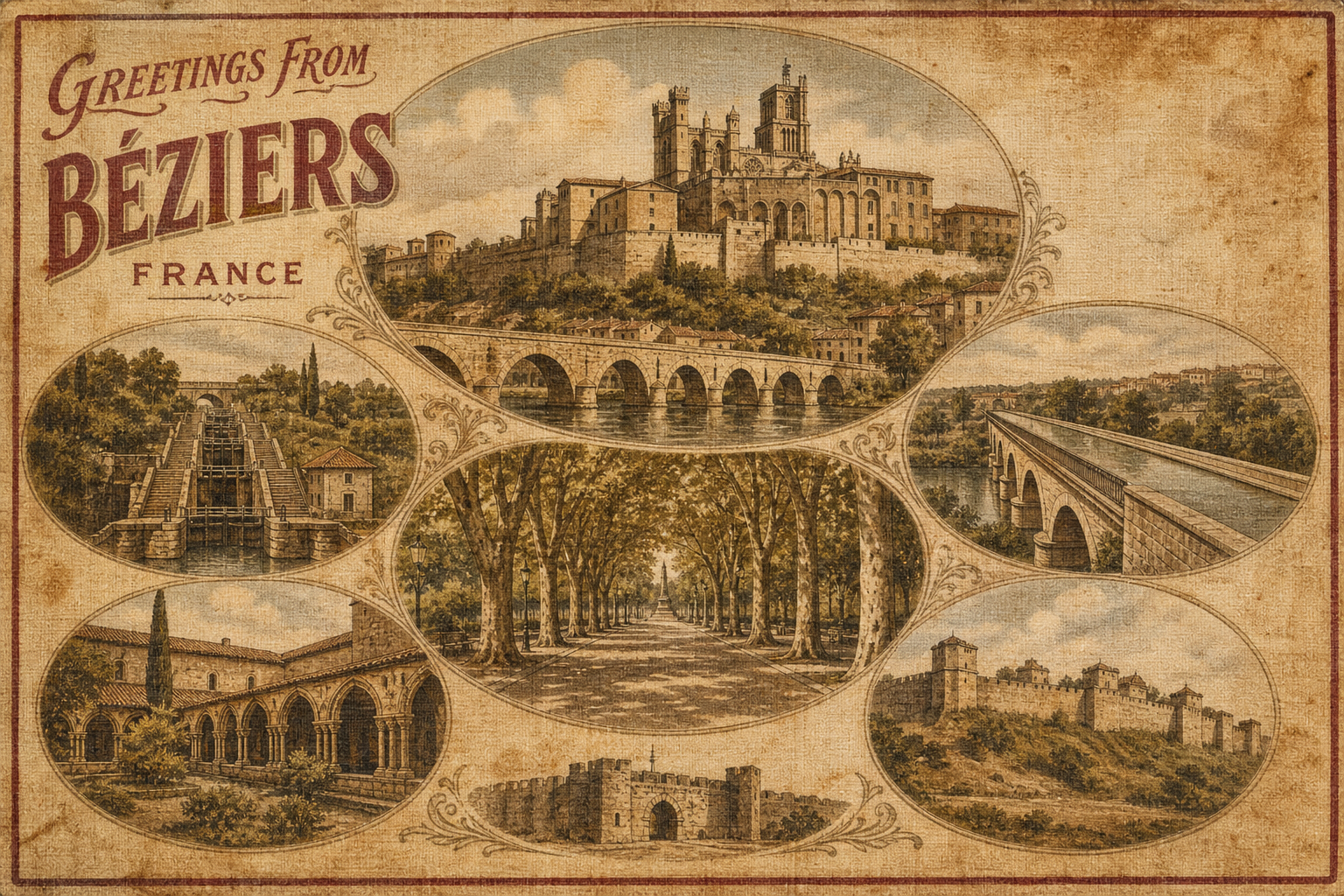
Béziers sits on a hill above the Orb with the Canal du Midi stuck to its side like something still in use, not a postcard. Most people know the name from a train timetable or a wine label and keep rolling toward the beach or Carcassonne. Fair enough. What they miss is a city that still runs on market lists, an esplanade paid for by wine money, and a staircase of locks that moves boats.
I start at the Écluses de Fonséranes and work uphill. The cathedral and the Allées make more sense after your legs have met the slope.
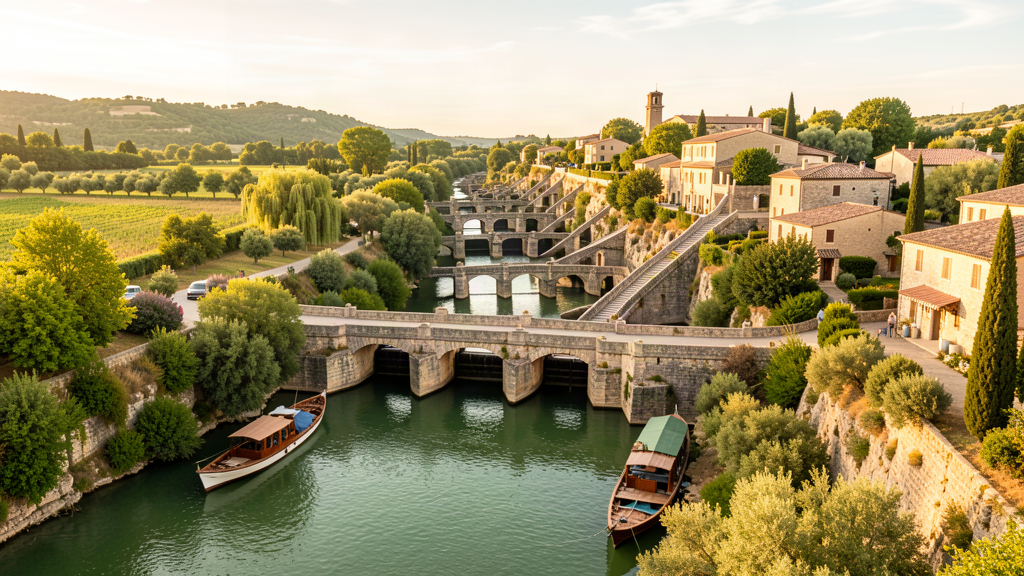
The nine locks and the canal bridge
Fonséranes is the piece engineers still argue about when Béziers comes up. Eight oval chambers and a holding basin step down the hill; you can walk beside them the whole way. Plane trees throw broken shade. Bikes lean on the railings. Someone is always explaining water levels to a child who would rather throw a stick.
Go early. Midday buses find the main overlook; before ten, you share the path with joggers and whoever is working the locks. You do not need a boat ticket. Stand at the top basin, then walk down chamber by chamber — stone curves, towpath level with the next step of water. You feel the engineering under your shoes more than you read it on a plaque.
A short walk away, the canal crosses the Orb on the Pont-canal, a navigable trough over the river so barges never had to fight the current below. From the bank you get canal water above, river under the arches, hill town stacked behind. Step twenty meters off the popular rail and the elbows thin out.
One canal hour is enough for a first pass: Fonséranes down, bridge view, slow climb back. Save longer towpath rides for cooler air.
Saint-Nazaire and the old hill
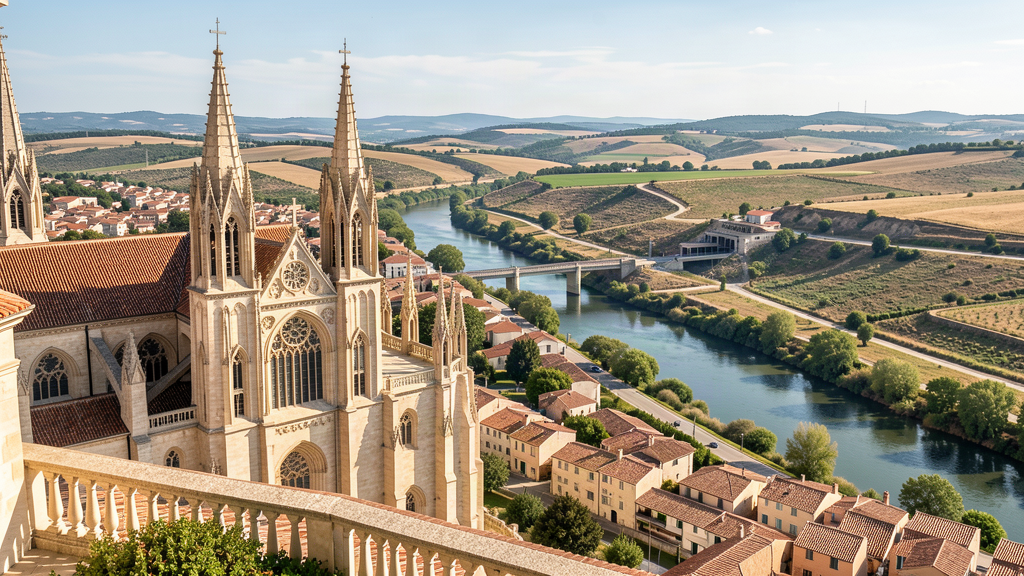
From the canal the city reads as roofs and a fortress-church. Cathédrale Saint-Nazaire et Saint-Celse crowns the old town with southern Gothic bulk and a terrace over the Orb plain. Climb the lanes rather than taxiing to the door. Streets tighten, then spill you onto the platform with wind and sky.
Inside, let your eyes adjust. This is not lacework northern Gothic — thick walls, measured light, a building meant to hold a hill. Outside, walk the rim for the river view, then drop toward the covered market past façades that need paint and courtyards that smell like laundry and coffee. Béziers does not sand every edge for visitors.
Roman scraps and amphitheater remains are fine as detours. They do not need to empty your morning.
Allées Paul Riquet and the wine century
Below the medieval knot, the nineteenth-century city opens on the Allées Paul Riquet — a long, tree-lined esplanade named for the Béziers-born engineer who drove the Canal du Midi. One end holds the municipal theater; the other softens into the Plateau des Poètes, a public garden with enough shade to reset after stone streets.
The Allées show the wine-merchant century: Haussmann-ish façades, cafés under the planes, people not performing local life for anyone. Friday brings a flower and plant market; other mornings lean fruit and vegetables. Markets shift by day more than by brochure, so walk through and see what is actually set up.
Sit once with a coffee you do not rush. Students, retirees with dogs, office workers cutting through. The Allées work as ordinary civic space. Treat them that way and the rest of the layout clicks.
Feria weeks change the volume — brass, crowds, corrida energy some love and others avoid. If bull culture is not your scene, pick other dates.
Les Halles and Languedoc plates
For food orientation, Les Halles on Place Pierre Sémard — Baltard-style iron and glass, still working. Butchers, cheese, produce, prepared food, coffee. Come mid-morning when locals fill bags. Move like a customer. Do not block the fish counter with a phone.
Languedoc cooking here is olive oil, grilled fish when the coast is close, lamb, anchovy notes, vegetables that taste like sun. Order regional wine by the glass when the list allows. Around the hall and toward Place Jean Jaurès, rooms cook seriously without turning dinner into theater.
Graze the hall at midday; book a proper table at night. Two heavy restaurant meals will flatten the walk you came for.
Two days without racing the beach
Béziers works as a stay, not only a canal photo stop.
Day one morning: Fonséranes and the canal bridge while light is kind. Midday: Saint-Nazaire, terrace view, then Les Halles. Afternoon: Allées Paul Riquet and Plateau des Poètes. Evening: dinner in the center; walk home under the planes if your hotel sits nearby.
Day two: slower old-town lanes, any ruin that still interests you, and either a longer towpath stretch or a short hop toward the coast if you have a car or a clean train link. What I skip: treating Béziers as a parking lot for Cap d’Agde, and stacking every viewpoint before lunch in August heat.
Late spring and September into early October keep the light and ease pressure. High summer is hot on the stone — start early, rest midday, walk after six. Winter is quieter; rates soften and the locks still photograph under bare planes.
Getting around
The hill and Allées are walkable if you accept stairs and slopes. Comfortable shoes matter. The train station sits below the center — short uphill walk or a quick bus. Driving into old lanes is for the patient; garage near Les Halles or the Allées, finish on foot.
Fonséranes is walkable for fit travelers, or a short bus, taxi, or bike in heat. For canal bikes, rent maintained equipment and ask about the towpath after rain. Pick up a current map at the tourist office rather than last year’s blog for bus numbers.
Places to stay
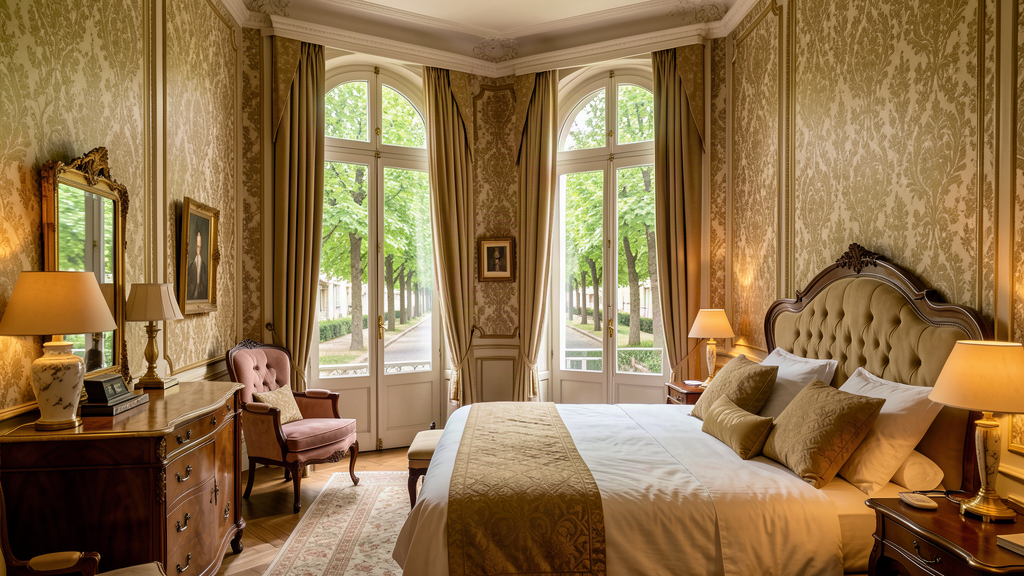
Three bases at different prices — converted landmark, esplanade classic, design-leaning midtown.
Hôtel La Prison (splurge) 1 Rue des Albigeois, 34500 Béziers The old hillside jail, closed as a prison in 2009 and reworked as a small hotel-restaurant with a rooftop and pool that keep some of the building’s severity. Limited, individually done rooms; views can take in canal country and roofs. You pay for architecture and a story as much as thread count. Book ahead in feria and high summer; confirm parking if you arrive by car.
Hôtel Impérator (mid-range) 28 Allées Paul Riquet, 34500 Béziers Haussmann landmark on the main promenade, refreshed inside with a patio lounge and city-hotel bones. Step out into trees, cafés, and the theater end of the Allées. My default when the trip is about walking the center and I want zero commute after dinner. Ask for a quieter room on event nights.
Hôtel le XIX (value-leaning boutique) 19 Boulevard Jean Jaurès, 34500 Béziers Smaller three-star with a café-hotel feel near the cathedral side of town. Terrace when weather allows, rooms contemporary rather than grand. Solid when you want character without the prison-hotel rate, and dinners cluster around Place Jean Jaurès and Les Halles.
Shoulder seasons ease rates and esplanade density. Ask the desk which public garage they trust; hillside streets are not built for improvisational parking.
Where to eat
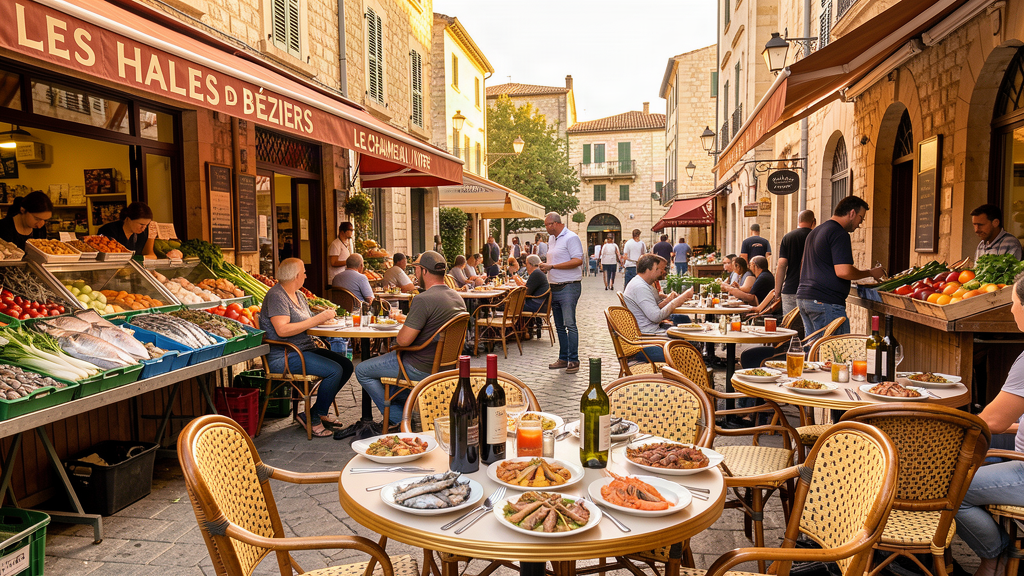
Reserve when the room is small or the night is Friday. Béziers fills its own tables.
Octopus 12 Rue Boïeldieu, 34500 Béziers Modern Mediterranean cooking with a local following — readable menus, seafood when it makes sense, dinner rather than a concept. Book for evening; walk it from the center.
L’Ambassade 22 Boulevard de Verdun, 34500 Béziers Long-running gastronomic address on the edge of the core — proper Languedoc meal with technique. Slower lunch or celebration dinner; check current hours before you plan around it.
Le Chameau Ivre 15 Place Jean Jaurès, 34500 Béziers Central square tables, French cooking at a friendlier price — terrace and a full plate without a tasting structure. Good after a Halles morning when you still want to sit and watch the square turn over.
For daytime grazing, Les Halles at Place Pierre Sémard remains the practical heart — coffee, oysters when the stall is open, cheese for later. Buy what you will finish the same day.
Before you go
Béziers suits people who like working cities with one extraordinary piece of water engineering attached. Give the locks a full morning, the hill a patient climb, and the Allées an unhurried seat. Leave the beach for another trip or a short side run. I keep the stepped water at Fonséranes, the river under the canal bridge, and plane-tree shade where wine-era façades still face a boulevard locals actually use.
