
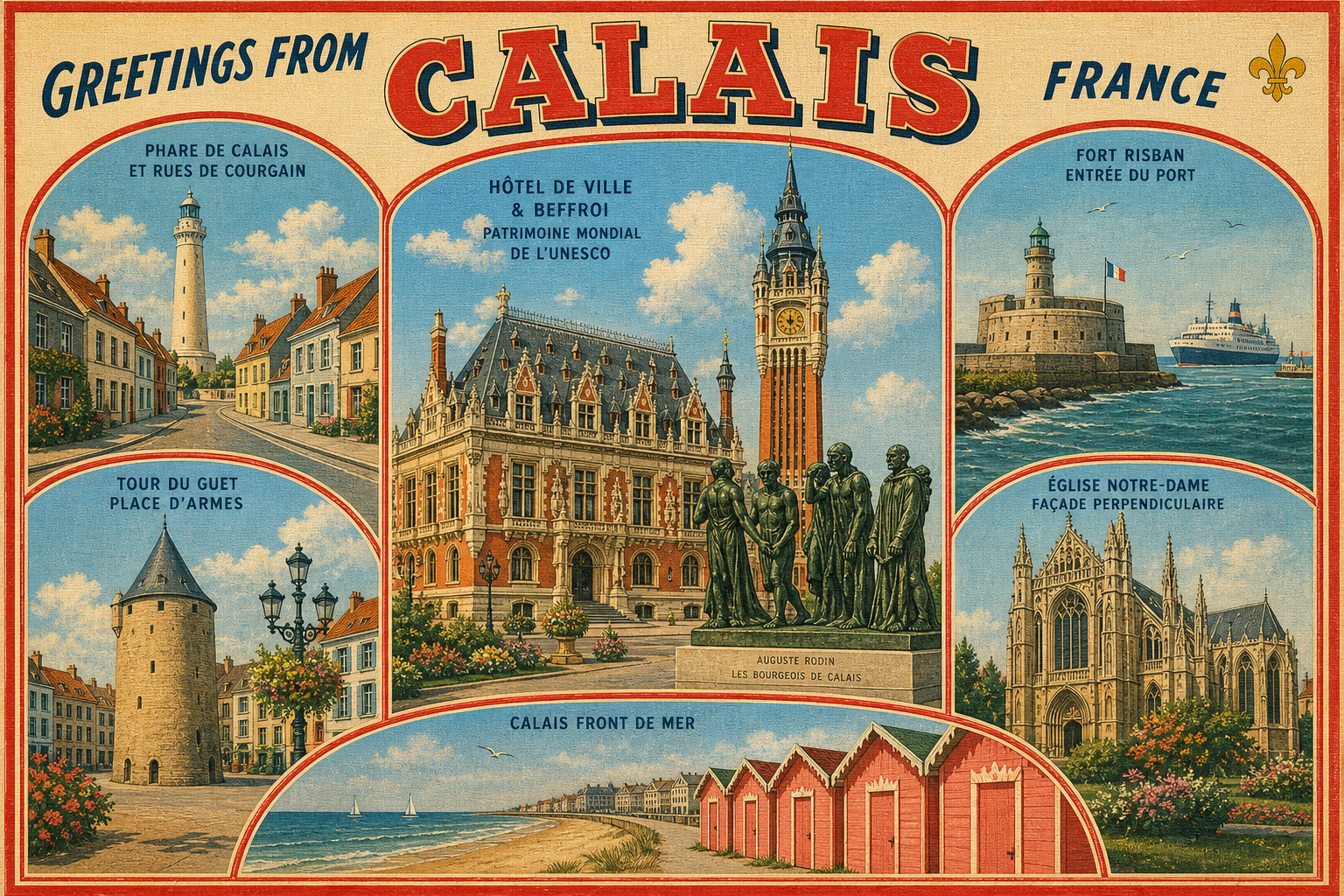
Most people treat Calais as a hinge. Ferry in, tunnel out, fill the tank, keep moving. I used to do the same. Then I stayed long enough to walk the sea wall past the fishing quarter and watch the Channel shift from grey to a hard blue. The town is not trying to be a resort. It is a working port with lace in its history, a rebuilt center, and a beach that does not lie about the weather.
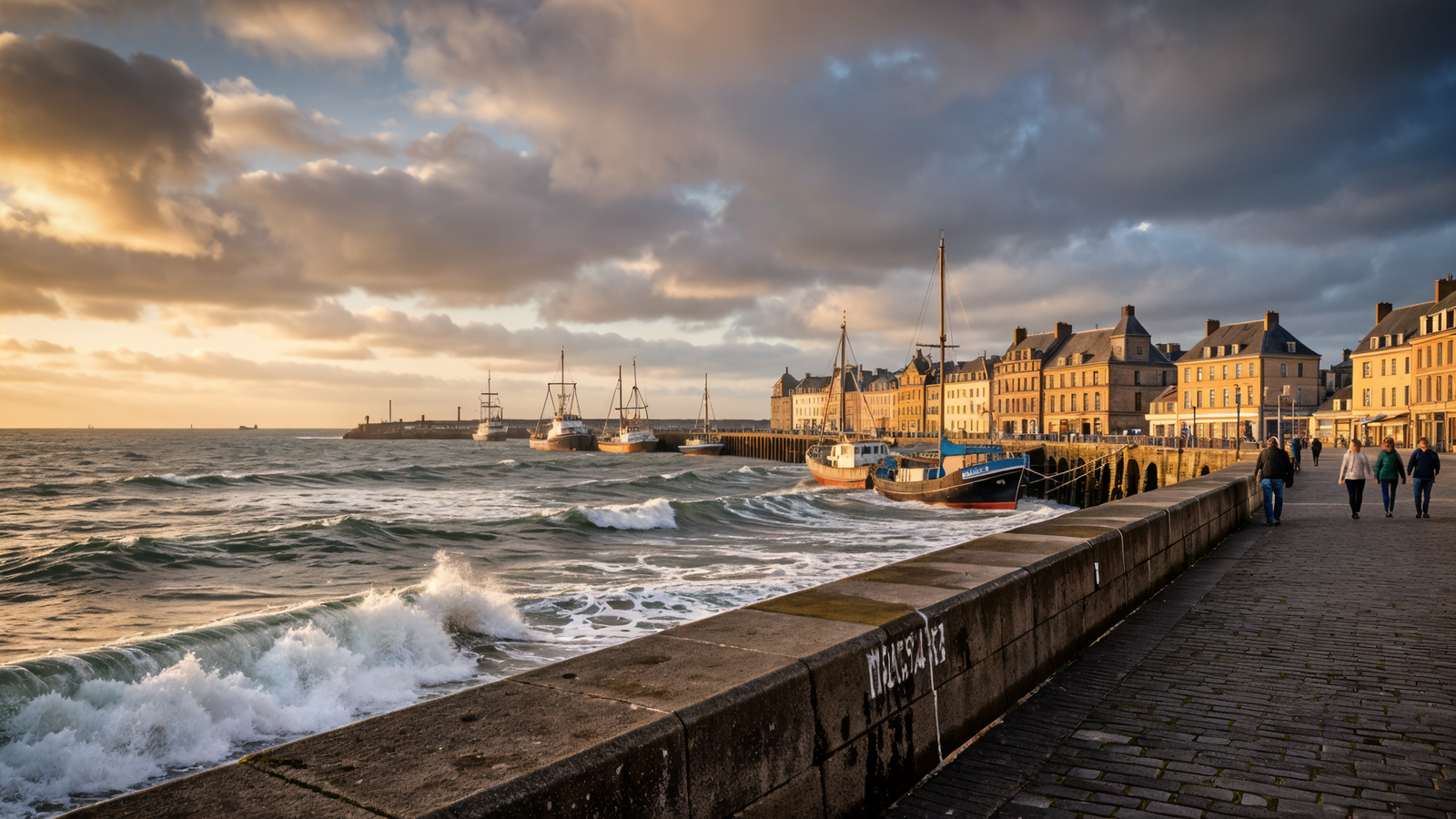
Give it a full day, or better two, and the transit label starts to fade. What you get instead is wind, salt air, brick streets, and a few neighborhoods that still know what they are for.
Courgain before the day gets loud
Start in Courgain Maritime, the old seafaring quarter rebuilt after the war in low, practical streets. It sits hard against the harbor. On the right morning you catch diesel and cold water in the same breath. Fish sellers set up near the quays with crates that still feel tied to boats. The stall names sound like working vessels more than brands.
I walked Grande rue du Petit Courgain without hurrying. Laundry on lines. A dog asleep in a doorway. Someone hosing down a stoop. The architecture is postwar, not postcard medieval, and that is fine. Courgain is built for use. Look toward the water and the port scale becomes obvious: cranes, ramps, the blunt shapes of a place made to move people and cargo across a short stretch of sea.
Fort Risban sits at the harbor mouth like a stone comma. You do not need a long visit. Stand near it and watch ferries and smaller craft. The fortifications are not abstract history here. They are part of the skyline you pass on the way to buy bread.
The digue and the long beach
From the port side, the digue — the seafront promenade — pulls you west and then out along the sand. This is where Calais admits it is a coastal town. The beach is wide, the light is northern, and the wind is usually blunt about it. Locals walk dogs. Kids dig holes that collapse. On clear days the white cliffs of England show up as a pale line, nothing mythical about it.
I like this walk more than any single monument. You pass the lighthouse area, the open sand, and eventually the feel of Blériot-Plage, where the coast keeps going and the town thins. Bring a jacket even in summer. Stop when you want. Sit on the wall. Watch a freighter slide past like a floating building.
If you only have an hour between connections, take this walk instead of another coffee in a station corridor. Calais stops being a name on a ticket and turns into weather and horizon.
Lace that still means work
Calais made its modern name in machine-made lace. Go to the Cité de la Dentelle et de la Mode at 135 quai du Commerce, in the old industrial fabric of what was once the Saint-Pierre side of town. The museum sits in a former lace factory. You can still feel industry in the beams and floors.
I went expecting pretty textiles. What stuck was the labor: huge machines, delicate output, pattern work that looks fragile enough to tear if you breathe wrong. The fashion galleries bring the story forward, but the core is process — how a port city learned to make luxury out of thread and timing.
Afterward, walk the surrounding streets. Brick, workshops, ordinary life. Calais often gets reduced to the Town Hall belfry and Rodin’s Burghers out front — both worth seeing — but the lace district explains why the city mattered when the Channel was as much a factory gate as a border.
A center rebuilt, not staged
Calais-Nord took heavy damage in the war and came back with a mid-century confidence some visitors find plain. I find it clarifying. The Hôtel de Ville still anchors the square with its belfry. Rodin’s bronze group of the Burghers of Calais stands outside, tired and upright at once. Tour buses pause here. Take your look, then keep moving.
Parc Richelieu is a softer pocket near the older hotel streets. Notre-Dame church, English in origin and scarred by history, is another short walk if you want stone and quiet. Use these as bearings while you drift toward lunch.
What I liked most in the center was the ordinary rhythm. People shopping on rue Royale. Teenagers killing time near the station. A café where nobody asked if I was catching the next crossing to Dover. Stay long enough for that anonymity.
Food with a port accent
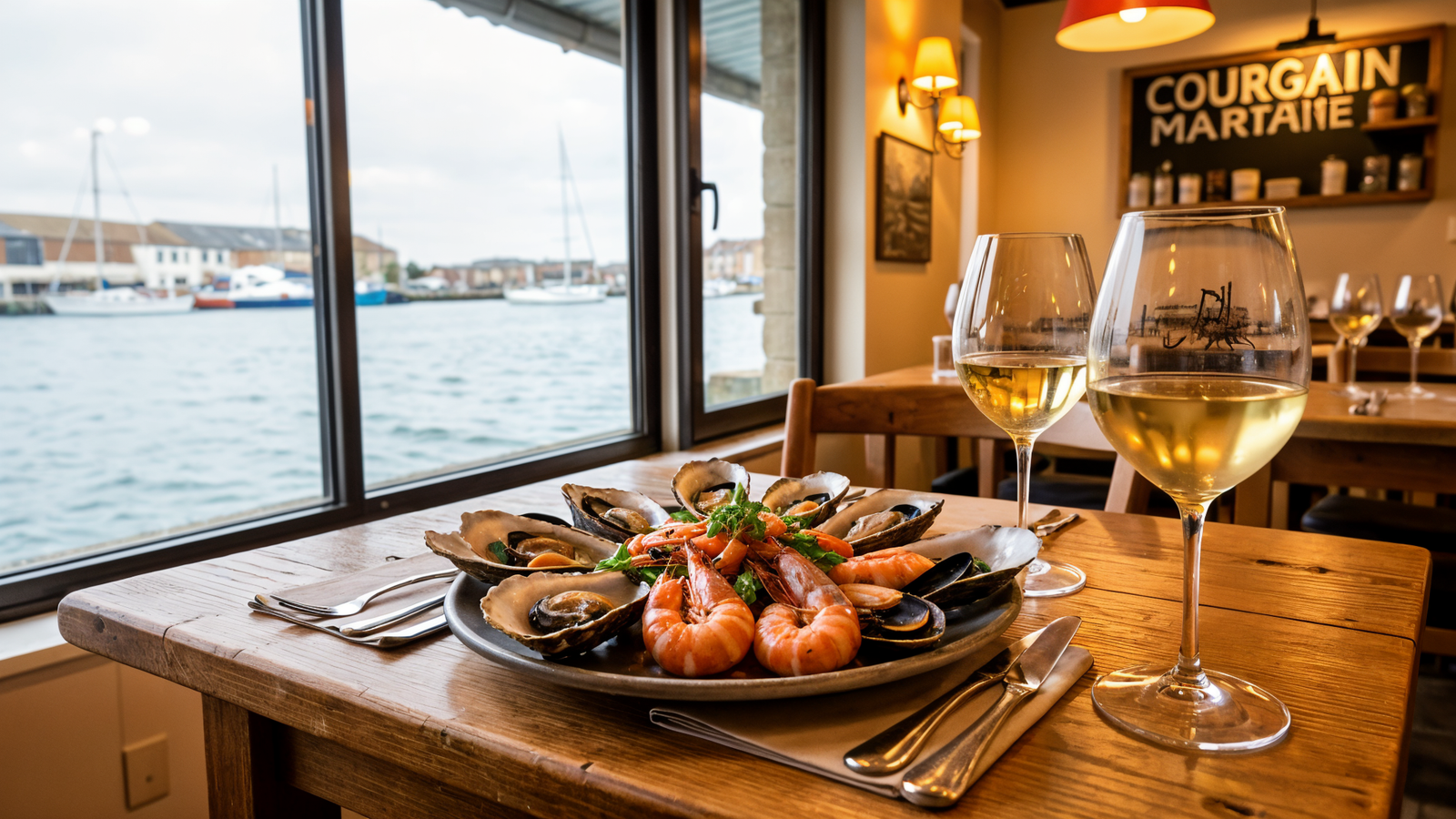
Calais eats like a Channel city: fish when the boats cooperate, Flemish and Picard edges on the plate, and brasserie cooking that does not apologize for butter. Skip the pure transit menus when you can.
Café du Minck
2 rue Jean-Pierre Avron, 62100 Calais
Across from the harbor energy of Courgain, this is the old-school stop for a smoked fish board, a drink, and a room that has clearly seen a lot of departures. Come hungry for something simple. I liked it midmorning, when the light still felt workday.
Histoire Ancienne
20 rue Royale, 62100 Calais
A long-running address in the center with the comfort of a classic French dining room — polished without being stiff. Good for a proper lunch when you want sauce, seasonality, and a pause that feels like a real meal rather than station fuel. Book if your timing is tight.
Les Grandes Tables du Channel
173 boulevard Gambetta, 62100 Calais
Set in the cultural complex of Le Channel, the former abattoirs turned arts venue, this kitchen leans local and careful without making dinner feel like homework. Eat here when you want the evening to feel like part of the city’s present, not only its ferry past.
If you catch the morning fish stalls in Courgain, buy something small to eat later on the digue. Cold air improves almost everything salted.
Getting in, getting around
Eurotunnel and the ferry keep Calais wired to England; trains and the A16 keep it wired to the rest of France. Calais-Ville station drops you within walking distance of the center. The port and Courgain are a manageable stroll or a short bus hop depending on bags and weather.
Once you are in town, walk. Beach, lace museum, town hall square, and the fishing quarter form a triangle you can cover without a car if you do not mind wind on your face. Drivers should expect port traffic near embarkation times. I preferred a central room and shoes with a grip.
Lille is an easy rail hop if you are stitching a Hauts-de-France loop. Boulogne and the wider Opal Coast sit down the shore when you want more cliffs and less freight.
Places to stay
Hôtel Richelieu
17 rue Richelieu, 62100 Calais
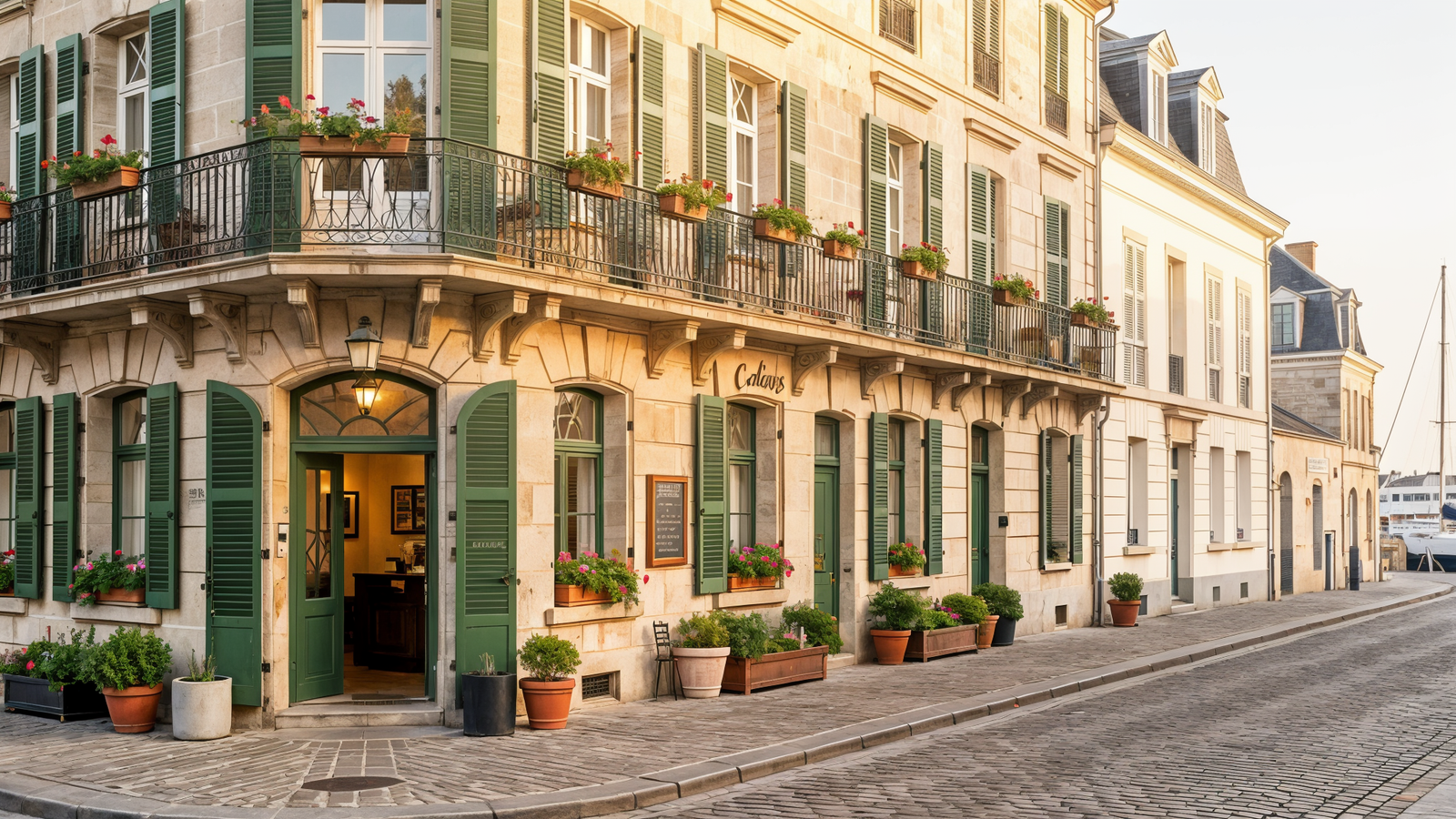
Small, central, and straightforward — the practical pick when you want a quiet street and walking access without paying for design theater. Close to Parc Richelieu, the museums, and the evening restaurant stretch. Rooms are simple; location does the work.
ibis Styles Calais Centre
46 rue Royale, 62100 Calais
A reliable midrange base on one of the main central streets. Modern, predictable in the best sense, and useful if you are arriving late off a train or early for a crossing. Breakfast is easy, and the beach and Courgain are realistic walks.
Hôtel Meurice
5 rue Edmond Roche, 62100 Calais
The character stay: an old house of a hotel near the park, with history in the walls and a calmer mood than the pure transit boxes by the highway. This is where I would spend the money on a short trip. Evenings feel less like a layover.
A day that ignores the timetable
If the Channel crossing can wait, try this. Early walk through Courgain while the fish still feels like news. Coffee nearby. Then the digue as far as your legs and the wind allow. Late morning at the lace museum when your hands are still cold from the sea wall. Lunch on rue Royale. An hour with the belfry and the Burghers only after you have already met the working town. Early dinner, then back to the sand for the last light.
Calais will not put on a show. Between the ferry wake and the lace frames, you get a northern French day with no costume required. Just leave time to walk the digue and let the port air do the rest.
